
Vandaag of morgen in huis

Kwaliteit gegarandeerd

Welkomstaanbiedingen ontgrendelen: GRATIS bezorging | Tot 80% korting | Gratis 30 dagen JoyPlus-proefperiode
Download de app
A Type 2 EV charger may seem straightforward at first glance: plug it into the car, plug it into the socket and start charging. In practice, the charging power, electrical connection and built-in safety features are what make the real difference. Choosing the wrong charger can result in long charging times, an overloaded consumer unit or a charging cable that does not suit your everyday needs.
This buying guide helps private EV and plug-in hybrid owners in the Netherlands and Belgium choose a suitable electric car charger, charging cable or wallbox.
An 11 kW EV charger does not automatically charge every car at 11 kW. The car’s built-in inverter determines how much AC power it can handle. For example, a model with a single-phase onboard charger may use less power than a three-phase model.
Before buying, check:
A portable EV charger with a Schuko plug is practical for occasional charging at home or on the road. However, a standard household socket is not always suitable for a prolonged 16A load. The quality of the socket, wiring and relevant circuit are all important.
An adjustable 16A EV charger offers greater flexibility. For example, you can charge at 8A or 10A when the electrical installation is limited. If in doubt, ask an installer to check the circuit, earthing and connections.
An IP65 rating provides information about protection against dust and water under certain conditions. It does not mean that every charger can be left permanently exposed to wind and rain without additional protection. Also consider the position of the charging point, the cable holder and how the plug is protected when it is not in use.
The key combinations are:
A 7 kW EV charger uses approximately 32A at 230V. An 11 kW EV charger generally uses 16A per phase at 400V. The actual power may be lower due to limitations imposed by the car, the mains connection or dynamic load balancing.
A fixed Type 2 cable is convenient if the charger is always mounted in the same place. A wallbox with a Type 2 socket offers greater flexibility: you use a separate Type 2 EV charging cable, which can also be used at public charging points if required.
For a socket version, check whether the Type 2-to-Type 2 cable is included. With some charging stations, you need to buy it separately. A shorter charging cable may be sufficient for a plug-in hybrid, while a driveway or garage will often benefit from a length of 5 or 7 metres.
An EVSE charging station should, among other things, provide information about charging status and faults. Product descriptions may list features such as residual-current protection, overheat protection, overvoltage protection and overcurrent protection. Treat these as product specifications; actual safety also depends on correct installation and use.
A smart EV charger with a Wi-Fi app can be useful for:
An app is not essential for safe charging. For some users, simple controls on the control box are easier to understand.
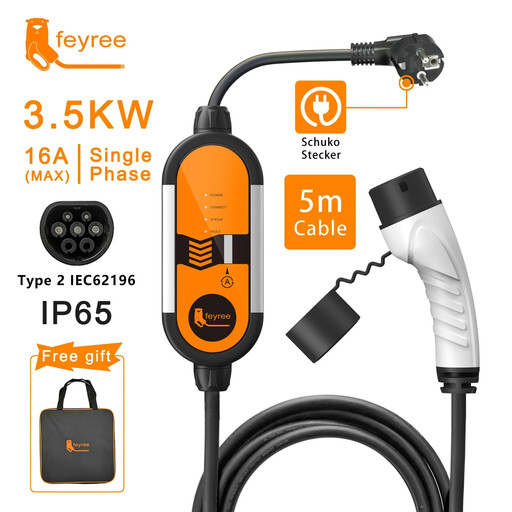
Why it suits this profile: This portable EV charger uses a Schuko plug and has a 5-metre cable. The charging current can be set to 8A, 10A, 13A or 16A, making it suitable for users who charge at home or at family members’ homes using different connections.
The maximum power is clearly specified at approximately 3.5 kW, while the adjustable current means you do not always have to charge at 16A. However, check that the socket is suitable for prolonged use.
OLED status display, memory function for the selected charging current, 5-metre cable and IP65 rating according to the product description.
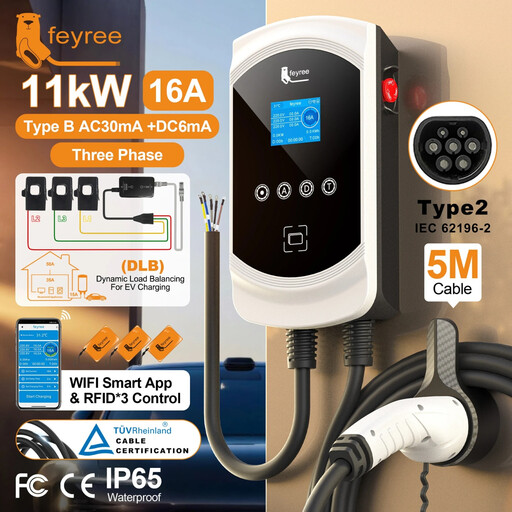
Why it suits this profile: For anyone looking for a fixed wallbox for an electric car with app control. The charger is designed for three-phase charging up to 11 kW and the product information states that it supports dynamic load balancing.
According to the stated specifications, the current can be adjusted, while load balancing can match the charging power to other household consumption. Have the installation carried out in accordance with local regulations.
Wi-Fi app, RFID function, 2.8-inch colour screen, adjustable charging current and IP65 rating according to the product description.
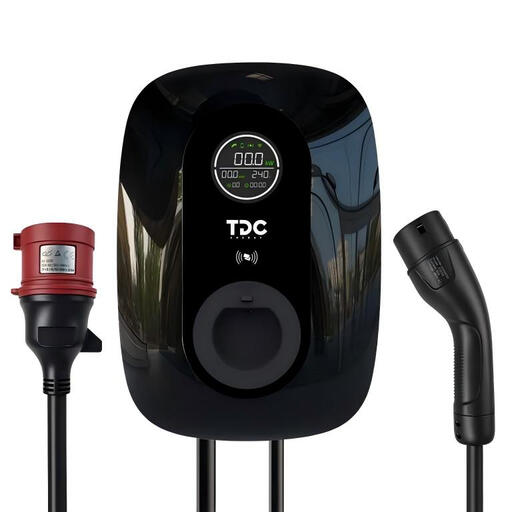
Why it suits this profile: This wallbox is aimed at users with a suitable 400V three-phase connection. It has a 5-metre cable, RFID, app control and a 3-inch segment display.
The product information explicitly states a 16A 400V three-phase connection and installation by a qualified electrician. This makes it clear in advance what infrastructure is required.
Type A RCBO residual-current protection with AC and DC detection, RFID cards, Wi-Fi and Bluetooth support, and IP65 protection with a cover according to the product description.
An electric car home charger with 7 kW or 11 kW should generally be connected to a suitable, separate circuit. With a three-phase model, the phases, earthing, residual-current protection and mains capacity must be checked. Use a qualified electrician for a permanent installation and follow the instructions.
When using your charger every day, keep the following points in mind:
The cost per charging session mainly depends on your electricity tariff and the car’s consumption. An app with scheduling can help you charge outside peak hours, but the benefit varies depending on your energy contract.
We have compiled a complete, up-to-date list of products that fully meet these strict selection criteria and the applicable European safety regulations.
You can use a portable charger with a Schuko plug, provided that the installation and socket are suitable for the selected current. For regular 16A charging, it is advisable to have the electrical installation checked. A wallbox generally requires a separate connection.
Only if both the car and the electrical installation support it. A car with a single-phase onboard charger will not make full use of an 11 kW three-phase charger. Therefore, check the car’s specifications before buying an 11 kW EV charger.
Its lifespan depends on use, storage, pulling loads, moisture and the number of connection cycles. Store the cable in a dry place, avoid sharp bends and hang it on a cable holder. Replace the cable if it shows visible damage or recurring charging faults.
