
Vandaag of morgen in huis

Kwaliteit gegarandeerd

Welkomstaanbiedingen ontgrendelen: GRATIS bezorging | Tot 80% korting | Gratis 30 dagen JoyPlus-proefperiode
Download de app
A Type 2 EV charger may seem straightforward at first glance: plug it into the car, plug it into the charging point and start charging. In practice, differences in phases, charging capacity, connections and installation can have a major impact on usability. Choosing the wrong charger could mean your car charges much more slowly than expected, a cable does not reach your parking space or the electrical installation needs to be upgraded.
This guide will help you choose a suitable electric car charger, home EV charger or portable EV charger without relying solely on marketing claims.
A charger rated at 11 kW or 22 kW will not automatically deliver that charging speed to every car. The car’s built-in AC charging system determines how much power it can draw. A vehicle that accepts a maximum of 7.4 kW will therefore not charge any faster with a 22 kW wallbox.
Your home electrical connection also matters:
Always check both the vehicle specifications and the consumer unit before buying a Type 2 charging station.
A rating such as IP65 or IP66 indicates protection against dust and water under certain conditions. It does not mean that a charging station can be left submerged or cleaned with a pressure washer.
Also consider the position of the connector, cable holder and control unit. According to the TDC ENERGY RAC11 product information, the vehicle connector is IP54 when placed in the holder and IP65 when used with the protective cap. This difference is relevant when the wallbox is installed outdoors.
An electric car wallbox must be connected to a suitable dedicated circuit. A 7 kW model rated at 32 A is not designed for an ordinary socket or a circuit that also powers other high-load appliances. Have the installation checked and connected by a qualified electrician in accordance with local regulations.
The connection is equally important with a portable charger. A Schuko plug is practical for occasional charging, while a CEE connection may be better suited to regular charging at higher power. Never use an unsuitable extension lead or a damaged socket.
The Type 2 connection, also known as Mennekes, is a widely used European standard for AC charging. Products that refer to IEC 62196-2 are designed around this connector standard. However, check that your car actually has a Type 2 connection and whether the product includes a cable with a plug or only provides a Type 2 socket.
A wallbox with a Type 2 socket may require a separate Type 2 to Type 2 charging cable. This is not necessary with a permanently attached cable.
Read the stated power rating together with the current. For example, an 11 kW model on three phases uses 16 A per phase. A 7 kW model on a single phase typically uses 32 A. Adjustable current is useful when the electrical installation cannot always handle the same load.
Some products offer settings such as 8, 10, 13, 16, 20, 25 and 32 A. This makes an EVSE charger more flexible, but the selected current must always be suitable for the connection and cabling.
Pay attention to which features are actually listed in the product description:
According to the product descriptions of various Feyree and WOLFBOX models, the stated safety features include protection against residual current, overheating and overvoltage. These are claims made in the relevant brands’ product information; check the manual, supplied documentation and local installation requirements before purchasing.
Dynamic load balancing may be useful for households with solar panels or several high-load appliances. According to the product descriptions of certain Feyree wallboxes, this feature monitors household consumption and adjusts the charging current accordingly. Check whether it requires a separate meter, cable or professional configuration.
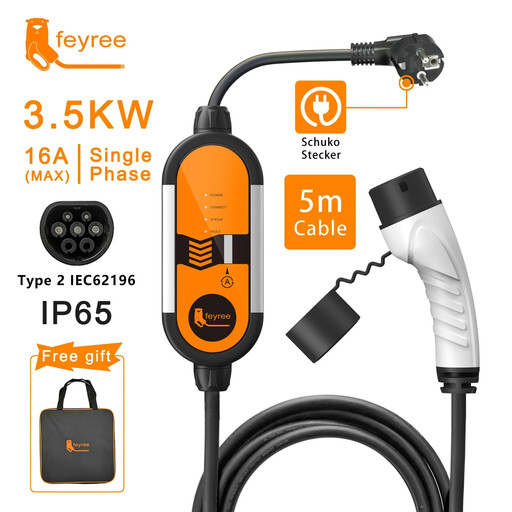
Why it suits this profile: This portable charger uses a Schuko plug and is suitable for occasional charging at home, at family members’ homes or while travelling.
The stated power is clearly limited to around 3.5 kW and the current can be adjusted from 8 to 16 A. So do not expect 11 or 22 kW from a standard household socket.
5-metre cable, OLED status display, adjustable charging current and stated safety features such as residual-current and overheating protection.
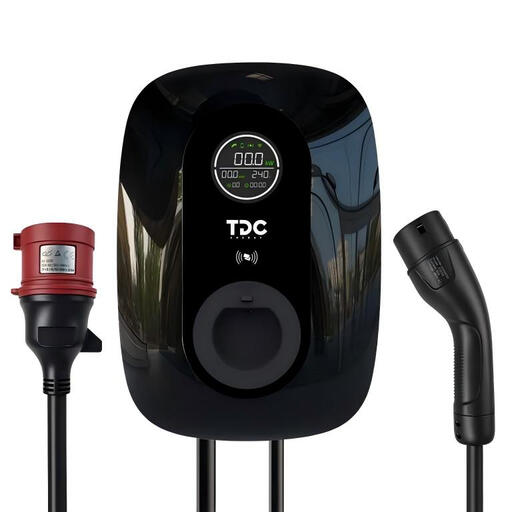
Why it suits this profile: A regular user with a suitable three-phase connection gets a wallbox with a display, RFID and app control in one system.
The specifications explicitly state 400 V, three phases, 16 A and a 5-pin CEE connection. This makes it clear in advance what type of installation is required.
11 kW charging capacity according to the product specifications, 5-metre cable, 3-inch display, Wi-Fi/Bluetooth, two RFID cards and stated Type A RCBO residual-current protection.
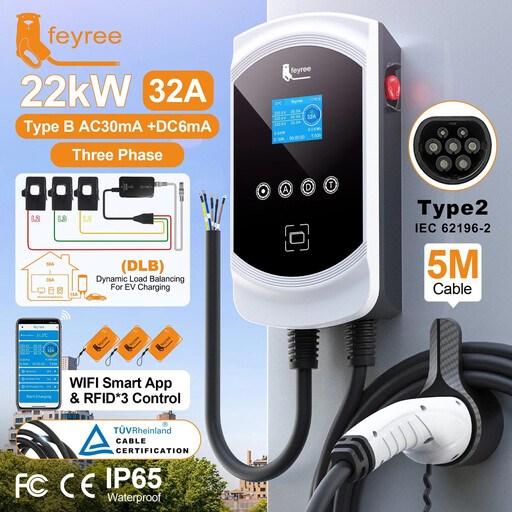
Why it suits this profile: Suitable for anyone considering a fixed wallbox with app control, charging schedules and automatic adjustment of the charging current.
The product description mentions dynamic load balancing. However, check that your home has the required metering setup and a three-phase connection.
According to the product information, the model offers app control, charging schedules, adjustable current, a 2.8-inch colour display, RFID and IP65 protection.
Install a fixed Type 2 charging station on a level surface, leaving enough room for the cable and connector. Ask an electrician to check that the residual-current protection, cable cross-section, consumer unit and phase distribution are suitable. When used outdoors, shelter and correct storage of the connector are advisable, even if the product has an IP rating.
Before every charging session, check that the plug, cable and connection are clean and undamaged. With a portable PHEV charger, it is important to select a low enough current setting for the socket being used. Only use an RFID charging station with cards that you keep secure, and do not give others app access unnecessarily.
We have put together a complete, up-to-date list of products that fully meet these strict selection criteria and the applicable European safety regulations.
No. Check your car’s charging capacity, the number of phases and the available electrical connection. An 11 kW or 22 kW model usually requires a suitable three-phase installation. An electrician can determine whether a dedicated circuit or upgrade is needed.
That depends on the socket, cabling and selected current. Choose a product with adjustable current and the safety features specified in the manual. Use a suitable, earthed socket without any damage and avoid unsuitable extension leads.
The electricity costs depend on the car’s energy consumption, charging losses and your electricity tariff. According to the product description, a smart EV charger with an app may allow you to schedule charging times, for example during a cheaper tariff period. Check which app functions are actually available with the product and whether your Wi-Fi signal is strong enough at the installation location.
