
Vandaag of morgen in huis

Kwaliteit gegarandeerd

Welkomstaanbiedingen ontgrendelen: GRATIS bezorging | Tot 80% korting | Gratis 30 dagen JoyPlus-proefperiode
Download de app
A Type 2 EV charger may seem straightforward at first glance: plug it into the car, connect the charger to the socket and start charging. In practice, charging power, connections, safety features and installation requirements vary considerably between models. Choosing the wrong charger can result in slower charging, an overloaded circuit or a charger that is incompatible with your car or electrical installation.
This guide will help you compare an electric car charger, portable EV charger and home wallbox. The recommendations are based on verifiable product specifications and intended usage scenarios.
A 22 kW EV charger sounds appealing, but your car must also be able to handle this power. Many electric cars and PHEVs have an onboard AC charger that accepts a maximum of 3.7, 7.4 or 11 kW. In that case, a more powerful charging point will not shorten charging times.
Always check:
A portable charger with a Schuko plug can be practical for occasional use. However, a standard socket is not the same as a specially installed electric car wallbox. Charging at high current for extended periods requires careful consideration of the cabling, consumer unit, earthing and heat generation.
Use a portable EV charger in accordance with its product specifications. For a permanent home charging point, installation by a qualified electrician is sensible and often essential.
A smart EV charger with an app, an RFID EV charger or scheduled charging can be useful. However, these features cannot compensate for an unsuitable phase configuration, missing earthing or an incompatible connection. Check the essentials first: Type 2 in accordance with IEC 62196-2, the charging power and the power supply.
Also pay close attention to what the manufacturer actually promises. According to Feyree’s product description, for example, certain models support protection against overvoltage and undervoltage, residual current and overheating. This is a product specification, not a guarantee that every installation will be safe in all circumstances.
A Type 2 connection, also known as a Mennekes connection, is widely used by European electric cars and plug-in hybrids. Check that your car’s charging port actually supports Type 2. With an EV charger for PHEVs, it is also important that the car supports AC charging.
A wallbox with a Type 2 connection may have a fixed cable or a Type 2 socket, in which case you will need your own Type 2 charging cable. So check carefully whether a cable is included.
The actual charging speed depends on the car, charging point, mains connection and selected current. An 11 kW EV charger will therefore not automatically charge at 11 kW if the car only supports 7 kW.
Look for features such as overcurrent, residual current, earthing, overheating and short-circuit protection. An IP rating provides information about protection against dust and water, but it does not mean that a device can be left outdoors without protection in all conditions.
The product information for some models, for example, states IP65 or IP66. Even so, it is best to position an outdoor charger under cover, prevent it from being submerged and never use a pressure washer on the housing or plug.
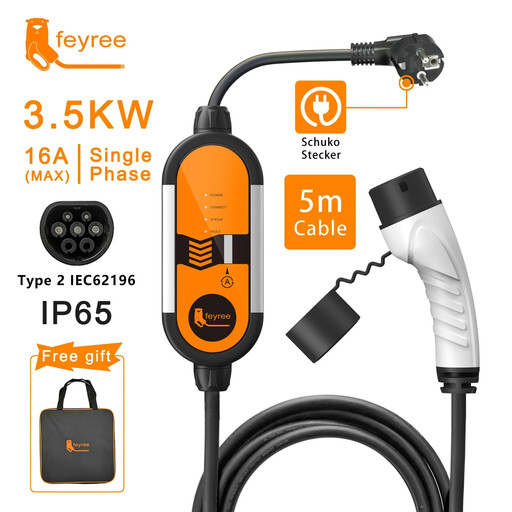
Why it suits this profile: This portable charger uses a Schuko plug and is suitable for slow charging at home, while visiting others or on the go with a compatible socket.
The current can be set to 8, 10, 13 or 16 A. This lets you adjust the setting to the available connection instead of always using the highest current.
5-metre cable, OLED status display and IP65 according to the product description.
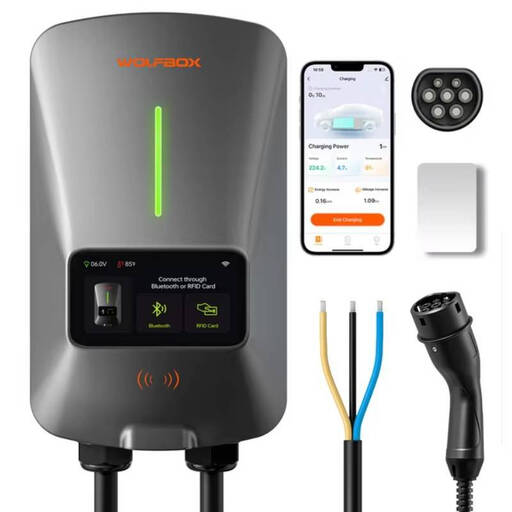
Why it suits this profile: A fixed wallbox with app control and RFID is ideal for daily charging in a permanent parking space.
The specifications state single-phase, 230 V and an adjustable current of up to 32 A. This makes the requirements clearer than a general claim about fast charging.
7 kW, LCD screen, Wi-Fi app and RFID cards according to the product specifications.
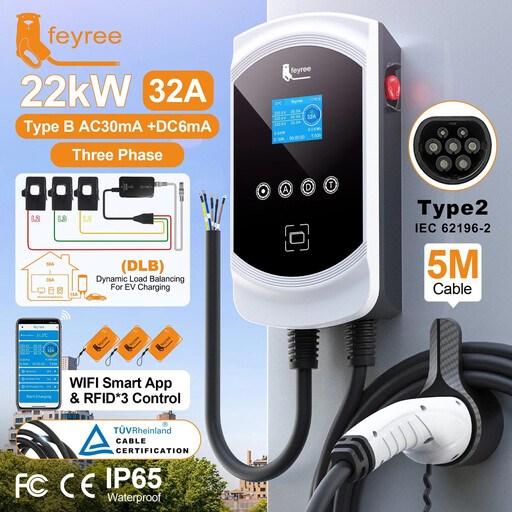
Why it suits this profile: Suitable for users with a three-phase installation who run multiple appliances at the same time and want charging power to adjust to household consumption.
The product description mentions dynamic load balancing and adjustable current. Have the installation checked in advance to ensure this function can be connected correctly.
22 kW, app control, RFID function, colour display and IP65 according to the product description.
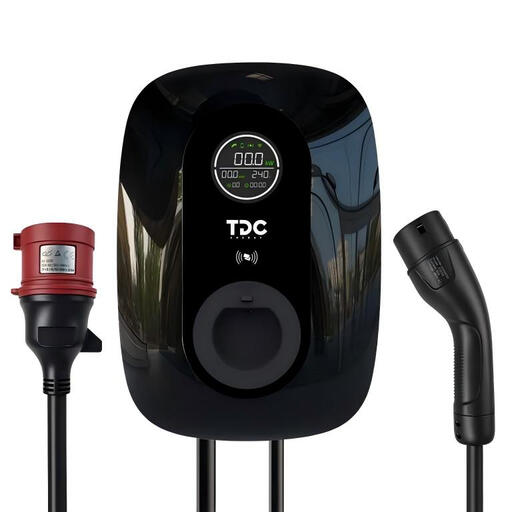
Why it suits this profile: This wallbox is designed for 400 V three-phase charging and offers app or RFID control for households with a permanent charging point.
The connection, 16 A, 400 V and three-phase configuration are clearly stated. According to the product information, installation and commissioning must be carried out by a qualified electrician.
11 kW, 5-metre cable, 3-inch display, Wi-Fi, Bluetooth and two RFID cards according to the product specifications.
We have put together a complete, up-to-date list of products that fully meet these strict selection criteria and the applicable European safety regulations.
Have a fixed wallbox connected to a dedicated circuit with suitable residual-current and overcurrent protection. Before buying, check that the 5- or 7-metre cable can reach the car without being taut or lying on the ground.
A few simple points are worth bearing in mind for everyday use:
This is possible with a portable charger designed for that purpose, such as a model with a Schuko plug. Use the lowest suitable current setting when the installation is unknown, and avoid extension leads or multiway adapters. For regular charging, a fixed wallbox is generally a more straightforward option.
Its lifespan depends on usage, storage, pulling forces, moisture and maintenance. Do not coil the cable too tightly, do not leave the plug in puddles and do not use a cable with visible damage. The mechanical lifespan stated by a manufacturer is a product specification, not a guarantee for every real-world situation.
Charging costs depend mainly on your electricity tariff and the car’s energy consumption. A smart EV charger with an app can help you schedule charging when a cheaper tariff is available. Also take installation costs, any required upgrade to the electrical connection and charging efficiency into account.
