
Vandaag of morgen in huis

Kwaliteit gegarandeerd

Welkomstaanbiedingen ontgrendelen: GRATIS bezorging | Tot 80% korting | Gratis 30 dagen JoyPlus-proefperiode
Download de app
A Type 2 EV charger might seem straightforward at first glance: plug it into your car, charge, and you’re done. Yet many EV and PHEV drivers end up buying a charger that doesn’t suit their fuse box, charging capacity, or usage scenario. Three common pitfalls keep cropping up:
Below, I explain which specifications you need to compare and which solutions suit different user profiles.
Charging power depends on three factors: your electrical installation, the charger, and your car’s built-in AC charger.
An 11 kW EV charger can therefore be a smarter choice than a 22 kW wallbox if your car only accepts 11 kW. Have the installation and necessary circuits assessed by a qualified electrician.
A fixed wallbox can have a built-in Type 2 cable or work with a detachable one. A charging station with a socket offers more flexibility, but you’ll then need to buy a suitable Type 2 charging cable yourself.
Bear in mind:
A portable EV charger is handy when travelling or visiting family, but only use it with a socket and connection that are suitable for the chosen current. A standard household socket is not the same as a dedicated charging circuit.
Product descriptions often mention features like overcurrent, overheat, overvoltage and residual current protection. According to the product description of the Feyree models mentioned, they include IP65 or IP66 protection and Type B residual current monitoring. These are manufacturer specifications; they don’t replace a full check of your home’s electrical installation.
Before you buy, check:
Dynamic load balancing can distribute the available power between the EV charger and other appliances in your home. According to the manufacturer of the Feyree models, this function measures your household consumption and adjusts the charging current accordingly. However, its operation depends on correct installation, configuration and compatible metering equipment.
A smart EV charger with Wi-Fi or an EV charger with an app can be useful when you want to:
A scheduled session can be worthwhile if you have a dynamic energy tariff or want to charge deliberately at certain times. The potential savings depend on your contract, rates and usage. What’s more, an app is only practical if the Wi-Fi connection at the installation point is stable.
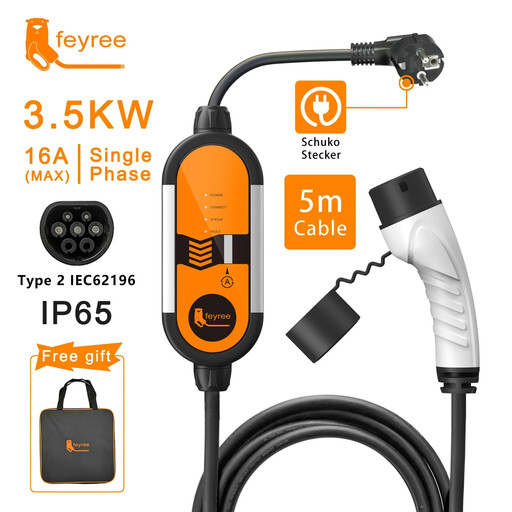
Why this fits the profile: This portable electric car charger uses a Schuko plug and is suitable for gentle charging at home, provided the socket is suitable.
The current is adjustable from 8 to 16 amps. This means you can tailor the setting to the socket you’re using, rather than always charging at maximum current.
5-metre cable, OLED display, adjustable current and, according to the product description, IP65 protection.
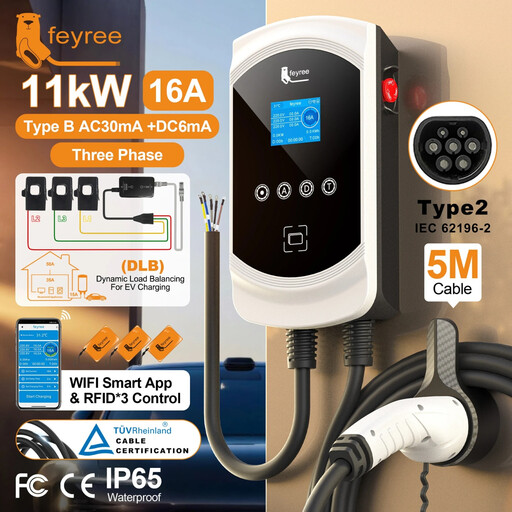
Why this fits the profile: A fixed wallbox for those who regularly charge at home and value app control, scheduling and load balancing.
The stated DLB function is designed to factor in your household consumption. Do check that the necessary installation and configuration are in place.
11 kW on three phases, Tuya app, 2.8-inch colour screen and, according to the description, multiple safety features.
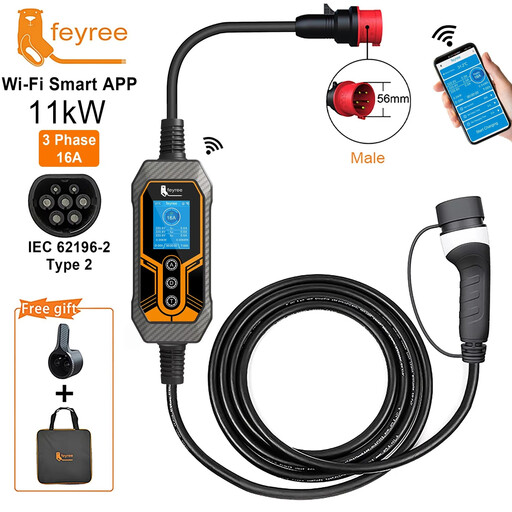
Why this fits the profile: For drivers who want to make the most of 11 kW but also need a charging solution they can take to a suitable CEE socket.
The 8–16A setting lets you adjust the charging power to match the available socket. A CEE socket is still required for the intended configuration.
Portable design, 5-metre cable, LCD screen and, according to the product description, Type B residual current protection.
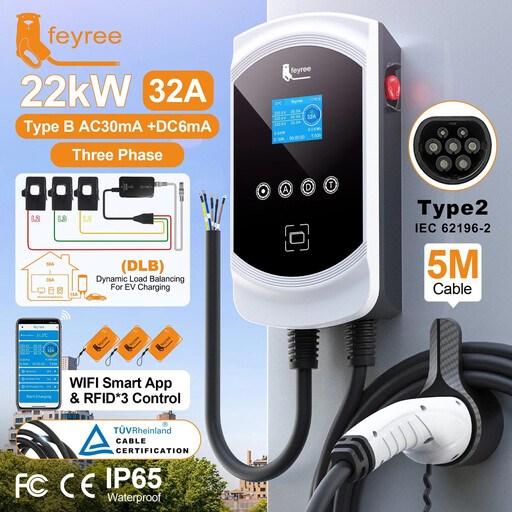
Why this fits the profile: Aimed at users with a suitable three-phase installation and a vehicle that can handle 22 kW AC.
The DLB function and adjustable charging current are designed to distribute the available power more effectively. Have it checked in advance that your home and car support 22 kW.
Adjustable up to 32A, Wi-Fi and app control, Type B residual current protection according to the product description, and IP65 protection.
We’ve put together a full, up-to-date list of products that fully meet these strict selection criteria and comply with current European safety regulations.
Yes, you can with a portable model that has a Schuko plug, such as a 3.5 kW charger, provided the socket and circuit are suitable. Don’t use an extension lead, and choose a lower current setting if your installation requires it. For regular, faster charging, a dedicated electric car charging station is safer and more practical.
The lifespan depends on usage, storage, strain, moisture and maintenance. Store a portable cable in a dry place, check the plug and cable regularly, and avoid the cable being taut under tension. A fixed wallbox should be serviced by an electrician if faults, overheating or damage occur.
Charging costs are mainly determined by the number of kilowatt-hours you use and your electricity tariff. The higher power of a 22 kW charger doesn’t necessarily make a charging session more expensive; it can shorten the session if your car and installation support it. With a smart EV charger with Wi-Fi, you can schedule charging times, but the financial impact varies depending on your energy contract.
