
Vandaag of morgen in huis

Kwaliteit gegarandeerd

Welkomstaanbiedingen ontgrendelen: GRATIS bezorging | Tot 80% korting | Gratis 30 dagen JoyPlus-proefperiode
Download de app
A Type 2 EV charger might seem simple at first: plug it in and charge. But making the wrong assumptions could leave you with a charger that works more slowly than expected, isn’t compatible with your electrical installation or proves inconvenient for everyday use. This applies to drivers of Tesla, Volkswagen, BMW, Audi, Mercedes-Benz, Renault, Hyundai, Kia, Volvo and other electric cars or plug-in hybrids with a Type 2 socket.
An 11 kW EV charger won’t automatically deliver 11 kW to every car. The vehicle’s onboard AC charger determines how much power the car can actually draw. The same applies to a 22 kW EV charger: you’ll generally need both a suitable three-phase installation and a vehicle that supports 22 kW AC charging.
So, a car with a single-phase onboard charger may draw considerably less power from a three-phase Type 2 charging station. Check your car’s technical specifications before ordering a charging station.
A portable EV charger with a Schuko plug can be handy for occasional charging, but a household socket isn’t the same as a dedicated charging circuit. Charging at a high current for extended periods can put strain on the socket and wiring.
For a fixed EV wallbox, 7.4 kW EV charger, 11 kW model or 22 kW model, the connection must be suitable for your consumer unit, wiring, residual-current protection and available grid capacity. Have the installation assessed by a qualified electrician.
A smart EV charger with an app can schedule charging, adjust the current and show charging data. That’s useful, but the app will only work properly if the connection, network and software are set up correctly. Check whether manual controls, a screen or RFID are also available. That way, you can still use the charger if your Wi-Fi is temporarily unavailable.
Type 2 refers to the IEC 62196-2 connector, which is widely used for AC charging in Europe. Check that your car has a Type 2 charging inlet. A charging station with a Type 2 socket may also require a separate Type 2-to-Type 2 cable.
An EVSE charging cable contains electronics that manage charging communication and certain safety functions. On a portable EV charger, this electronics unit is often housed in a compact control box attached to the cable.
The actual charging speed also depends on the battery’s state of charge, temperature, charging settings and the car’s onboard charger.
Look for stated protection against issues such as overcurrent, overvoltage, overheating, earthing problems and residual current. A product description might specify Type B AC 30 mA + DC 6 mA or Type A with additional DC detection. Always check how the installation’s protective devices need to be configured; a built-in feature doesn’t automatically replace all the components required in your consumer unit.
An IP rating indicates protection against dust and water under certain test conditions. An IP65 or IP66 rating doesn’t automatically make a product suitable for every outdoor location. Shelter, correct installation and a clean, dry connector are still important.
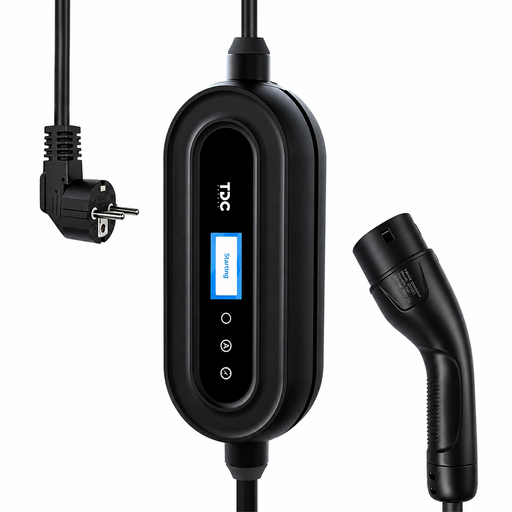
Why it suits this profile: According to the product information, this portable EV charger runs on 230 V and has adjustable current settings of 8, 10, 13 or 16 A. That makes it a good option for drivers who want the flexibility to charge at home, at a relative’s house or on the go.
The adjustable current helps you avoid charging at maximum load without checking. Use it only with a suitable, correctly earthed socket, and don’t use an unapproved extension lead.
5 m cable, LCD screen, Wi-Fi and Bluetooth according to the product description; stated charging capacity of up to 3.5 kW.
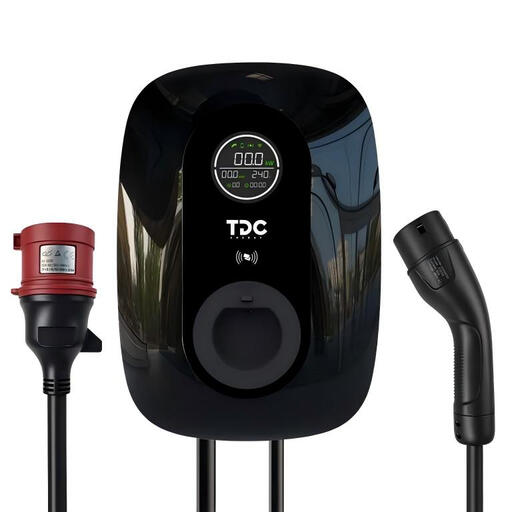
Why it suits this profile: For everyday home charging, a fixed three-phase charging solution can be more convenient than having to put away a portable cable each time.
The specifications state 400 V, three-phase, up to 16 A and a 5-pin 16 A CEE connection. This makes it clear in advance what type of installation is needed.
11 kW, 5 m Type 2 cable, app and RFID control, and a 3-inch display according to the product specifications.
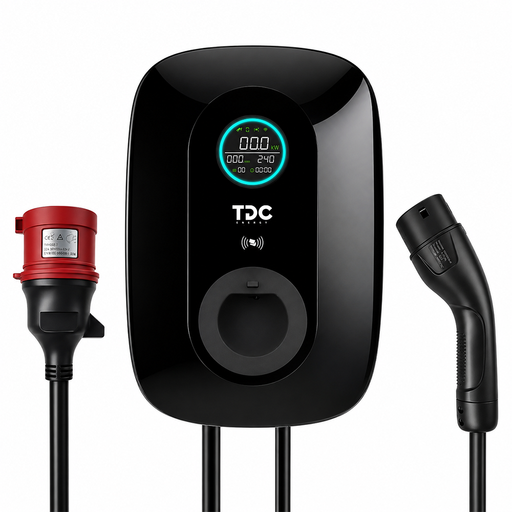
Why it suits this profile: This model is designed for users with a suitable 400 V three-phase connection, a car that supports 22 kW AC charging and a need for fixed installation.
The product information recommends professional installation and a suitable 400 V supply. Check this before buying rather than focusing only on the high charging capacity.
22 kW at up to 32 A, 5 m cable, app and RFID control, and a screen; the product page lists several safety features.
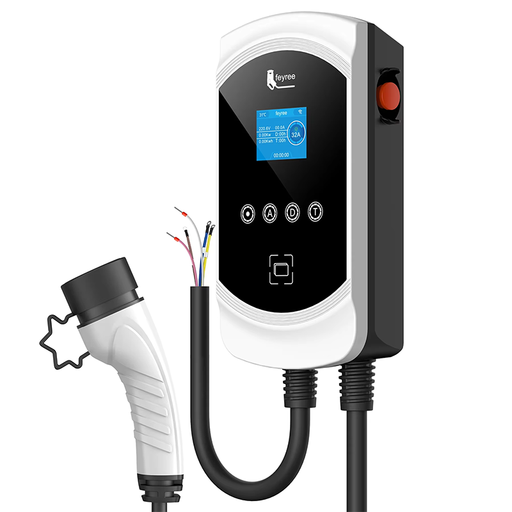
Why it suits this profile: If your home has a single-phase connection and several appliances running at the same time, you could consider a wallbox that adjusts its charging capacity to household consumption, according to the product description.
The stated Dynamic Load Balancing feature is designed to adjust charging capacity when other appliances are using electricity. Have its operation and connection checked in advance.
7.6 kW, adjustable from 8 to 32 A, app control, scheduled charging, Type B residual-current detection and IP65, according to the product information.
We’ve put together a complete, up-to-date list of products that meet these strict selection criteria and the applicable European safety regulations.
Some portable models can be used this way, if the manufacturer says so and the socket is correctly earthed and suitable for the selected current. Don’t use random adaptors or extension leads. For regular charging, a dedicated charging circuit or wallbox is often more practical. If in doubt, have the installation checked.
No. An 11 kW charger generally uses a three-phase connection and requires a car with a three-phase onboard charger. A vehicle that only accepts single-phase AC won’t make full use of that capacity. So check both your mains connection and your car’s AC charging specifications.
The cost mainly depends on your electricity tariff, charging losses and how much energy you use. An app with scheduled charging can help you charge during cheaper periods, but any savings depend on your energy contract and settings. A higher charging capacity doesn’t automatically reduce the cost per kilowatt-hour.
