
Vandaag of morgen in huis

Kwaliteit gegarandeerd

Welkomstaanbiedingen ontgrendelen: GRATIS bezorging | Tot 80% korting | Gratis 30 dagen JoyPlus-proefperiode
Download de app
A Type 2 EV charger may seem straightforward to choose at first glance: check the plug, select a charging capacity and mount the wallbox on the wall. In practice, an incorrect phase connection, missing safety features or an overly optimistic speed claim can lead to unnecessary costs.
This buying guide helps Dutch owners of electric cars and plug-in hybrids compare technical specifications. It focuses on verifiable details such as charging capacity, current, connection, controls and installation requirements.
A 22 kW EV charger can only charge at 22 kW if both the car and the electrical installation are suitable for it. Many vehicles have an internal AC charger that accepts a maximum of 7.4 or 11 kW. A PHEV may also have a much lower charging capacity.
Therefore, check:
A Type 2 connection complying with IEC 62196-2 is widely used with European electric cars and PHEVs. However, charging capacity, cable length and vehicle variant may differ. Some models require a separate Type 2-to-Type 2 cable, particularly when using a wallbox with a Type 2 socket rather than a fixed cable.
According to the product descriptions of the chargers mentioned, they are intended for vehicles with a Type 2 inlet. Always check the car’s manual and the contents of the packaging before purchase.
A charger with a Wi-Fi app, RFID or dynamic load balancing can make operation easier. However, these features do not replace correct earthing, suitable consumer unit protection or professional installation.
Claims about protection, IP rating or temperature control come from the brands’ product descriptions. Treat these as product specifications and check that the installation meets Dutch regulations in your particular situation.
The most common options for home use are:
A three-phase EV charger requires a suitable 400V connection and sufficient grid capacity. Ask an installer to assess whether a dedicated circuit, residual-current protection and any changes to the consumer unit are required.
An adjustable current, for example from 8 A to 32 A, can be useful when the electrical installation cannot always handle the same load. You can then adapt the charging capacity to the available capacity.
Dynamic load balancing goes a step further. According to Feyree’s product description, the feature measures the consumption of other appliances and adjusts the charger’s current accordingly. However, check whether a specific meter, installation method or configuration is required. The feature will not work automatically in every home without correct installation.
Pay attention to these points:
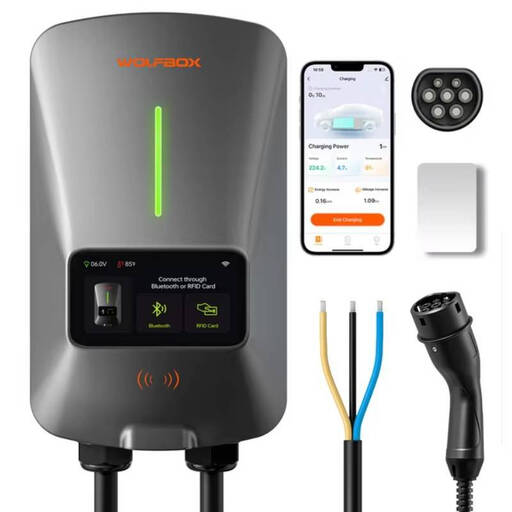
Why it suits this profile: This single-phase wallbox is suitable for drivers who want to charge an electric vehicle at home without immediately choosing a three-phase model. The product description states that it offers adjustable current up to 32 A, an LCD screen, a Wi-Fi app and RFID cards.
The stated 7 kW capacity is clearly linked to 230V and single-phase operation. However, check that the car can actually accept 7 kW.
7 kW, adjustable up to 32 A, Type 2 in accordance with IEC 62196-2, LCD screen, Wi-Fi app and RFID control.
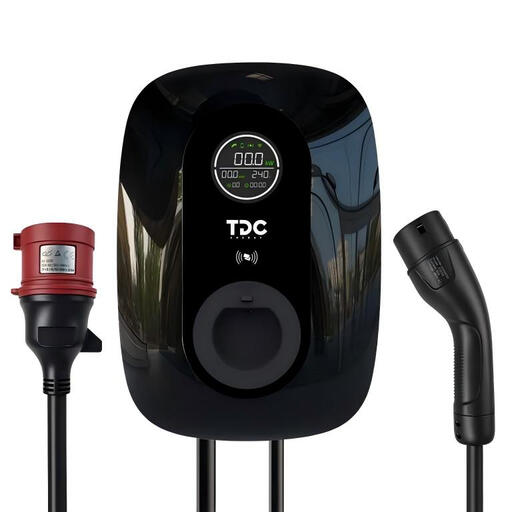
Why it suits this profile: This model is designed for everyday use at home or at work, offering 11 kW three-phase charging, a fixed 5-metre cable, app control and RFID.
The required 400V three-phase connection and CEE 5-pin 16A plug are stated in the product information. This makes it clear in advance what type of installation is required.
11 kW, 3-inch LCD screen, Wi-Fi and Bluetooth, two RFID cards, 5-metre cable and stated IP65 protection with cover.
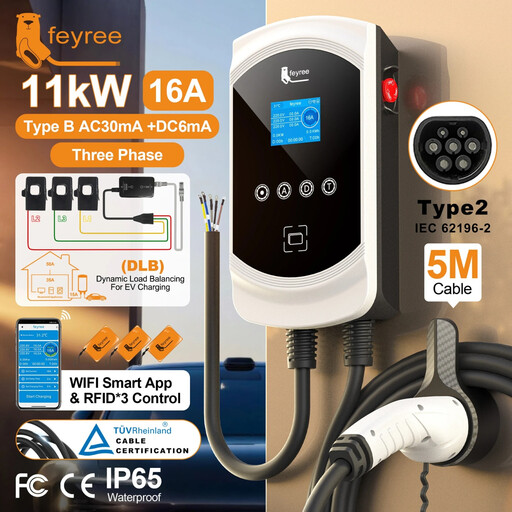
Why it suits this profile: Suitable for households or small fleets where several appliances use electricity at the same time and app-based charging management is preferred.
According to the product description, dynamic load balancing adjusts the charging current to match other electricity consumption. Before installation, check how the measuring function is connected.
11 kW three-phase, Tuya Wi-Fi app, charging schedules, LCD screen, RFID function and stated Type B residual-current protection.
We have put together a complete, up-to-date list of products that fully meet these strict selection criteria and the applicable European safety regulations.
Have a fixed EV wallbox installed by a qualified electrician. They will check the residual-current protection, cable cross-section, main fuse, earthing and available phase capacity, among other things. For outdoor installation, choosing a suitable location, protecting the unit from direct weather exposure and storing the cable correctly are important.
If your energy supplier offers a lower electricity tariff at certain times, consider scheduling charging for those periods. An app can help with this, but check whether charging schedules operate locally in the charger or require an active internet connection.
A portable charger can sometimes be used with a suitable socket, but a fixed wallbox should be connected by a qualified electrician. An appropriate three-phase installation is required for 11 kW or 22 kW.
Its service life depends on usage, installation, weather conditions and maintenance. Regularly check the cable, plug, housing and mounting. Do not use a charger if the cable or connector is damaged, and follow the manufacturer’s maintenance instructions.
The cost is mainly determined by your electricity tariff and the number of kilowatt-hours charged. The charging capacity primarily affects how quickly the car is ready, not automatically the price per kilowatt-hour. An app with charging records can help you track consumption for each session.
