
Vandaag of morgen in huis

Kwaliteit gegarandeerd

Welkomstaanbiedingen ontgrendelen: GRATIS bezorging | Tot 80% korting | Gratis 30 dagen JoyPlus-proefperiode
Download de app
A Type 2 EV charger may seem straightforward at first glance: plug it into the car, plug it into the charging point and wait. In practice, an incorrect phase connection, insufficient grid capacity or an awkward cable can slow down charging or even make it unsuitable for your situation.
For Dutch owners of an electric car or plug-in hybrid, these are the three main pitfalls to watch out for:
A Type 2 connection is the standard AC connection for electric cars and plug-in hybrids in Europe. The IEC 62196-2 standard describes, among other things, the shape and electrical properties of the charging connector. Always check that your car actually has a Type 2 charging port and what charging capacity its onboard charger supports.
A Type 2 EV charger can take several forms:
If you choose a wallbox with a Type 2 socket, check the contents of the packaging carefully. Some models do not include a fixed charging cable. In that case, you will need your own Type 2-to-Type 2 cable.
A single-phase EV charger typically uses around 230 volts. At 32 amps, the theoretical charging power is approximately 7.4 kW; product information may sometimes list this as 7 kW or 7.6 kW. A 7 kW EV charger is often suitable for homes with an appropriate single-phase circuit.
A three-phase EV charger uses a 400-volt connection. At 16 amps, approximately 11 kW is possible, while at 32 amps this rises to around 22 kW. This requires a suitable three-phase installation, appropriate cabling and often a dedicated circuit. Have the connection checked by a qualified installer.
The car may limit the available power. For example, a plug-in hybrid will often charge more slowly than a fully electric car. Not every car supports 11 kW or 22 kW AC charging either.
An adjustable charging current offers flexibility when other appliances in your home are using electricity at the same time. Many portable models support settings such as 8, 10, 13 and 16 amps. More powerful models may offer settings of up to 32 amps.
That does not mean you can use every setting without checking. The circuit, cable, plug and wall socket must all be suitable for prolonged loads. Always use a portable electric car charger according to the instructions and check that the socket and installation are correctly earthed.
Product descriptions often mention protection against overcurrent, overvoltage, overheating, residual current and earthing faults, among other features. According to the product information from the brands concerned, some models also offer Type B residual-current monitoring or a combination of AC and DC leakage detection.
Also check the IP rating:
For fixed outdoor installation, shelter, a dry cable holder and correct mounting are important. A wallbox must be connected by a qualified electrician when a new circuit or three-phase connection is required.
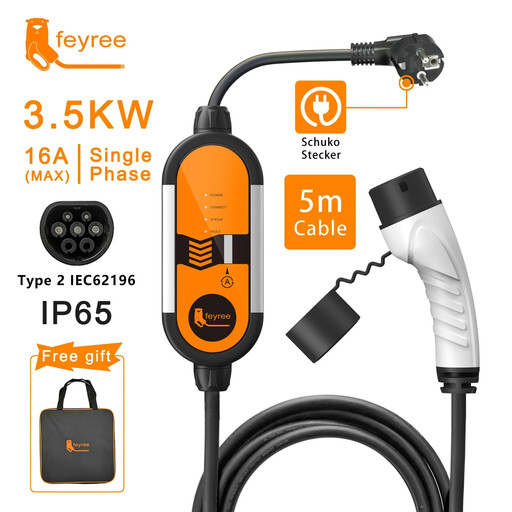
Why it suits this profile: This portable EV charger uses a Schuko plug and is suitable for leisurely charging at home, while visiting friends or during a trip. The charging current can be adjusted from 8A to 16A.
The 8A to 16A setting helps you adjust charging to the available circuit. Before use, however, check the quality of the socket and installation.
5-metre cable, OLED display, IP65 according to the product information, and built-in protection against residual current and overheating, among other risks.
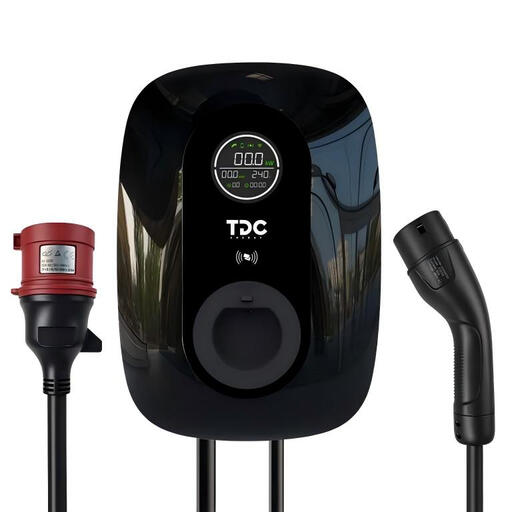
Why it suits this profile: A fixed three-phase wallbox for households that regularly charge at home and want to combine app or RFID control with a clear display.
The specifications state that it requires a 400V three-phase connection and 16A, with installation by a qualified electrician. This makes it clear in advance what infrastructure is needed.
11 kW charging power, 5-metre cable, RFID cards, app via Wi-Fi and Bluetooth, and a 3-inch display according to the product description.
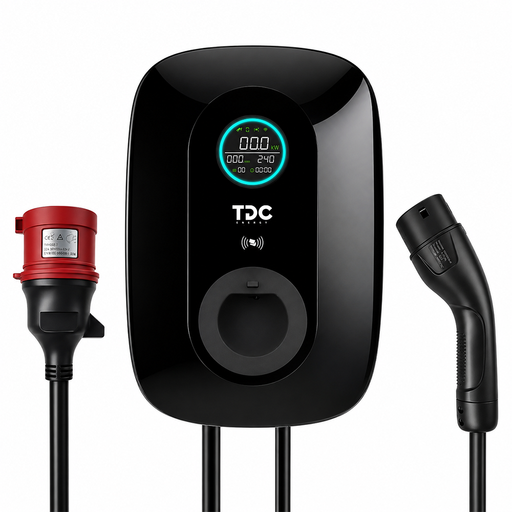
Why it suits this profile: Designed for users with a suitable three-phase installation and a car that supports 22 kW AC charging, for example those charging several times a day.
The product information explicitly states 400V, 32A and a 5-pin 32A CEE connection. This makes the installation requirements easy to check before you place your order.
22 kW, 5-metre Type 2 cable, app and RFID control, display, and protection against overloading and overheating, among other features.
With dynamic load balancing, the charging installation measures how much electricity other appliances in your home are using. The charging current can then be adjusted according to the remaining capacity. This is particularly useful when you are using a hob, heat pump, boiler or second charging point at the same time.
Before purchasing this feature, check:
A smart EV charger with Wi-Fi can also schedule charging sessions, display energy consumption and adjust the charging current. According to the product information from the brands mentioned, these functions depend on the associated app, connection and installation.
We have compiled a complete, up-to-date list of products that fully meet these strict selection criteria and the applicable European safety regulations.
You can use a portable charger with a Schuko plug, but the charging current must be suitable for the circuit and socket. Do not use an extension lead or a damaged socket, and have the installation checked if you are unsure. A fixed 7 kW, 11 kW or 22 kW wallbox will generally require a dedicated, correctly protected connection.
Its lifespan depends on usage, storage, temperature and maintenance. Do not leave the cable in puddles, avoid sharp bends and hang the connector in a holder after use. Regularly check the plug, housing and cable for cracks, discolouration or heat build-up.
Charging costs depend on the electricity tariff, charging losses and the amount of energy the car requires. An app with a scheduling function can help you charge at favourable times, but the final tariff is determined by your energy contract. Also consider the cost of installation, a dedicated circuit and, if required, a load-balancing module.
