
Vandaag of morgen in huis

Kwaliteit gegarandeerd

Welkomstaanbiedingen ontgrendelen: GRATIS bezorging | Tot 80% korting | Gratis 30 dagen JoyPlus-proefperiode
Download de app
A two-slice toaster is often a good fit for a kitchen, student room or compact flat. You can toast two slices of bread at once without taking up too much worktop space. Many models look similar, though, and differences in slot width, controls, cleaning and extra features can make a noticeable difference in everyday use.
Look out for these common pitfalls:
A two-slice toaster usually has two short slots. These are practical for standard sliced bread. A model with long slots may accommodate larger or longer slices, while a toaster with wide slots is better suited to thick-cut bread, bagels and English muffins.
Before you buy, check:
Automatic centring helps heat a slice of bread more evenly on both sides. It’s a technical feature, not a guarantee of identical results with every type of bread.
A toaster with adjustable browning settings lets you tailor the toasting time to your preference. Models in this selection have five, six, seven, eight or nine settings, for example. Start with a medium setting when you use a new appliance, then adjust as needed.
A toaster with a defrost function is handy for bread straight from the freezer. This function usually extends the heating cycle according to the product settings. A reheat function warms previously toasted bread without browning it as much as a standard cycle. Always check the manual for instructions on using these functions.
A stop or cancel button is useful if you want to pop the bread up early. A high-lift feature helps you remove smaller slices without reaching too close to the hot slots.
A toaster with a crumb tray is easier to keep clean than a model that collects crumbs at the bottom. Empty the tray regularly and let the appliance cool down completely first. Never immerse a toaster, cord or plug in water.
A stainless steel toaster may have a smooth surface that’s easy to wipe clean. Bear in mind that fingerprints can show, and check which parts are actually made of stainless steel. Some models combine metal with plastic components.
Use your toaster on a flat, heat-resistant surface, away from curtains and other flammable materials. Don’t put cutlery, aluminium foil or oversized food into the slots. If bread gets stuck, unplug the appliance first and let it cool down.
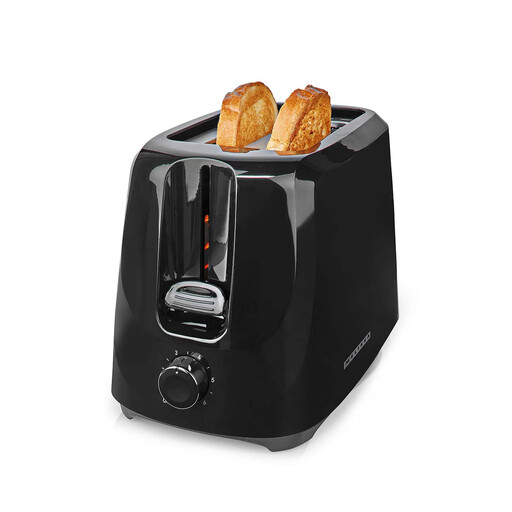
Why it suits this profile: This compact model is designed for everyday use in a small kitchen, student room or flat. The controls are straightforward, with six browning settings and a cancel function.
The specifications give its dimensions as 150 × 267 × 173 mm and list a crumb tray and six adjustable settings. So you know what you’re getting, without unnecessary extra features.
700 W, two slots, crumb tray, cord storage and non-slip feet.
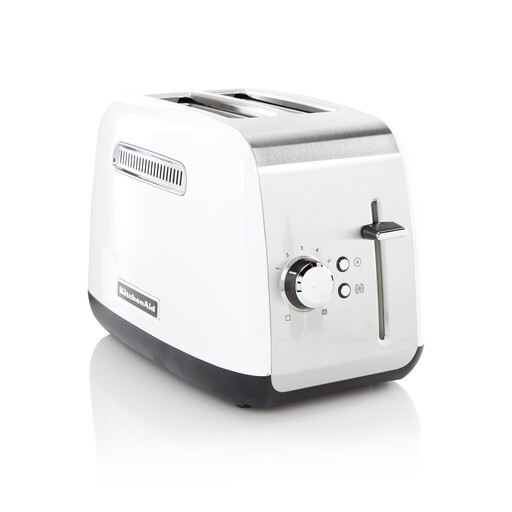
Why it suits this profile: Its metal finish and extra-wide slots make it a good match for households that enjoy different types of bread and value a sturdy, distinctive design.
The product information specifies 3.8 cm slots, automatic centring and a crumb tray. This makes it easy to check whether it’s suitable for thicker slices.
Two extra-wide slots, five browning settings, bagel function, reheat function and high-lift feature.
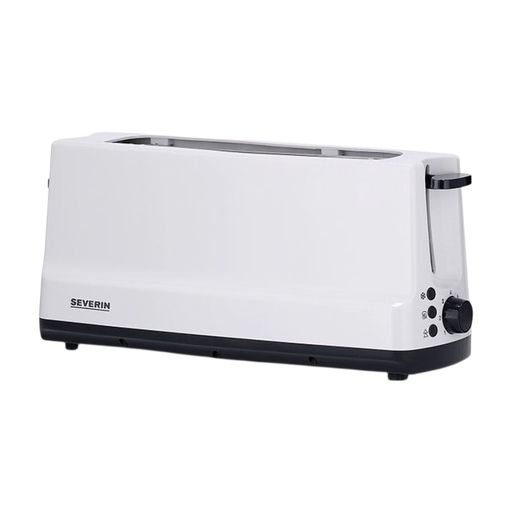
Why it suits this profile: This model is a good choice if you regularly switch between fresh, thicker or frozen bread, and want to use a warming rack.
Its functions are clearly described: defrost, reheat, electronic browning control, bread centring and an integrated warming rack.
800 W, crumb tray, cool-touch exterior, defrost function, reheat function and warming rack.
We’ve put together a complete, up-to-date list of products that meet these strict selection criteria and current European safety regulations.
The models in this selection have a power rating of around 700 to 1,100 watts. A higher wattage can affect heating time, but doesn’t tell you on its own how evenly the toaster will toast. Consider the browning control, centring and the functions you’ll actually use alongside the wattage.
Unplug the appliance and let it cool down completely. Remove and empty the crumb tray. Wipe the outside with a slightly damp cloth, and never immerse the appliance in water. Don’t use metal objects to dislodge stuck bread.
Wide slots give you more room for thick slices, bagels or rolls, but you should still check the maximum size in the product details. A compact toaster with standard slots may be enough for everyday slices of bread. A warming rack is designed to warm rolls, not to put them into the slots.
