For watching opera recordings during the day, a bright mini-LED LCD is a sensible option if the room stays light. But compare reflections and measured SDR brightness for the exact model. OLED may suit you if a wide viewing angle or deep blacks matter more, provided the screen remains clear enough to see in your chosen spot. Also assess the sound with music, and check that your recordings and audio equipment will work with the available connections.
Who is this guide for?
Daytime viewers
You regularly watch opera recordings in a bright living room and want to take incoming light and reflections into account. RTINGS.com explains how light opposite the screen can affect visibility; the Consumers' Association discusses brightness when choosing a TV.
Music lovers
You want to enjoy the vocals and orchestra, and are weighing up the TV's sound against connecting your own audio equipment. The Consumers' Association includes classical music in its TV sound listening tests.
Viewers in different seats
You sometimes watch from an angle and want the screen size, viewing angle and subtitles to work well from other seats too. The Consumers' Association highlights viewing angle and screen size as things to consider when choosing a TV.
What should you look for when buying?
First compare the light in the room and where you plan to put the screen. Then consider viewing angle, sound and how you'll play your own recordings.
Bright mini-LED LCD
Best for: daytime viewing when you can't place the TV away from windows or lamps. Compare reflections and measured SDR brightness for each model.
Keep in mind: high brightness won't automatically eliminate direct reflections; viewing angles and black levels may differ from OLED.
OLED
Best for: a viewing area with several seats or watching in subdued light, provided the specific screen is still visible in your bright room.
Keep in mind: the Consumers' Association describes OLED as a good option for wide viewing angles and deep blacks; some LCD or QLED TVs may be brighter. Also check for reflections from windows opposite the screen.
| What to consider |
What to look for when buying |
Who is it for? |
| Daytime visibility |
Check reflection ratings and measured SDR brightness for the exact model, especially if windows or lamps are opposite the screen. |
If I watch during the day with light opposite the TV, I want to be able to see dark scenes and subtitles clearly. Around 39% of consumers give daytime visibility top priority. |
| Vocals and orchestra |
Look for a listening assessment of the exact model. If you're using external audio equipment, check that the TV and audio system have compatible connections. |
For opera, I want to follow the vocals and orchestra through the TV or my own sound system. Around 23% of consumers put music sound first. |
| Size and viewing angle |
Measure the distance between your seat and the screen, and compare the viewing angle of the exact model. |
If we watch from different seats, I want a suitable size and a picture that works from the side. Around 23% of consumers give viewing position and screen size top priority. |
| Playing your own recordings |
Check how you'll play your recordings, their resolution and which connections or apps you'll need. |
I want to be able to play my existing recordings through my player, an app or another device. Around 15% of consumers put playback compatibility first. |
Pitfalls to avoid when choosing
-
Relying on a brightness claim alone
A window reflected directly in the screen can still be visible, even on a bright display. SDR and HDR brightness are also different measurements.
Compare reflections and measured SDR brightness for the exact model, and consider where you plan to put the screen.
-
Assuming picture specifications mean great opera sound
Picture features don't tell you how a TV sounds. The Consumers' Association assesses TV sound separately and also uses classical music in its listening tests.
Look for a listening assessment of the exact model and check that it can connect to your existing audio equipment before you choose.
-
Assuming a 4K TV guarantees 4K recordings
A 4K screen won't automatically make a recording 4K; the resolution of the source material and how you play it also matter.
Check the resolution of your own recordings and how you'll play them.
-
Assuming an extended warranty is your only protection
According to the Government of the Netherlands, a manufacturer's or seller's guarantee doesn't replace your statutory rights. There is no fixed statutory guarantee period in the Netherlands; what you can expect in terms of a product's lifespan also depends on the product and the information provided.
Read the guarantee terms to see what extra rights they offer, and report any fault to the seller.
Brands to consider
Samsung
Samsung Netherlands lists the QE55QN90FATXXN as a 55-inch mini-LED TV in its Neo QLED range. It's a specific model you can compare for a bright room.
- The manufacturer describes this model as a 55-inch mini-LED TV.
- The screen technology alone doesn't tell you how well the model handles reflections; compare reviews of the specific model.
Sony
Sony Netherlands describes the K75XR70PAEP in its BRAVIA 7 range as a 75-inch mini-LED TV with Google TV and built-in audio technology.
- Sony lists XR Clear Image and Acoustic Multi Audio for this model.
- These manufacturer specifications aren't independent assessments of sound or reflections. Also check whether 75 inches will suit your viewing distance and available space.
Philips
Philips describes the 75MLED950/12 as a QD mini-LED TV with Ambilight plus; the product information also mentions automatic adjustment to ambient light.
- Ambilight plus is a separate feature to consider if ambient lighting matters to you.
- Automatic adjustment to ambient light doesn't prove that a window opposite the screen won't cause reflections.
TCL
TCL describes the C8K range as a QD mini-LED option, including a 65-inch model.
- TCL lists dimming zones and Audio by Bang & Olufsen for the range.
- Don't assume these features tell you how a particular model performs with vocals, reflections or off-centre viewing without checking a review. TCL notes that some design specifications are approximate.
Joybuy products
This selection includes mini-LED LCD and OLED TVs, as well as bundles combining a TV with separate audio equipment. Compare reflections for each model, and check that the screen size, playback method and connections will suit your living room and recordings.
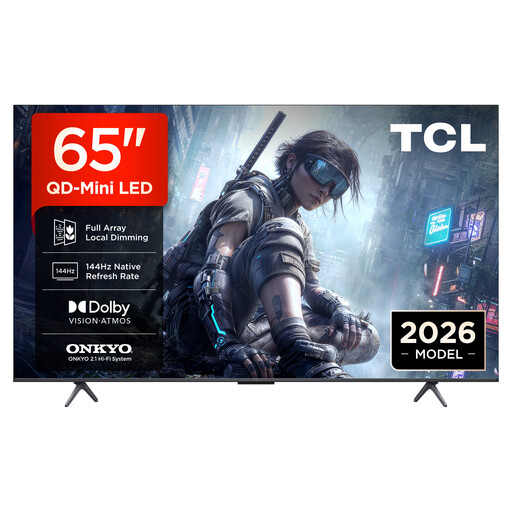 Image unavailable
TCL 65T8D 65-inch QD mini-LED TV
A mini-LED LCD model to compare for a bright room; the screen technology alone doesn't tell you how this model handles reflections.
65 inches, 4K, 144 Hz and Google TV. The product information lists Onkyo 2.1 audio and Dolby Atmos.
View on Joybuy
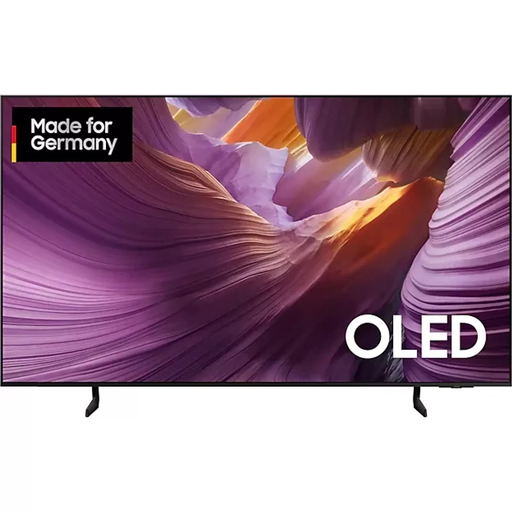 Image unavailable
Samsung S85F Series GQ55S85FAU 55-inch OLED 4K
An OLED model to compare if viewing angle and deep blacks matter to you; also assess visibility where you plan to put the TV.
55 inches, OLED, 4K and four HDMI ports.
View on Joybuy
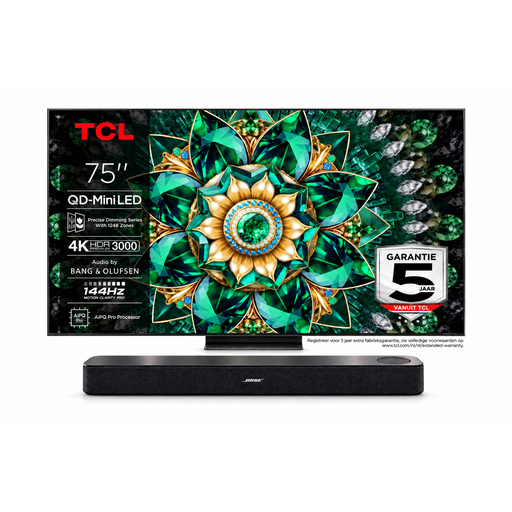 Image unavailable
Bose Lifestyle Ultra + TCL 75Q7C 75-inch TV bundle
This bundle combines a 75-inch TV with a separate soundbar; make sure you have room for both the screen and the audio equipment.
The product information lists a 4K Mini-LED TV, 144 Hz, HDMI ARC/eARC and a Bose soundbar with Dolby Atmos.
View on Joybuy
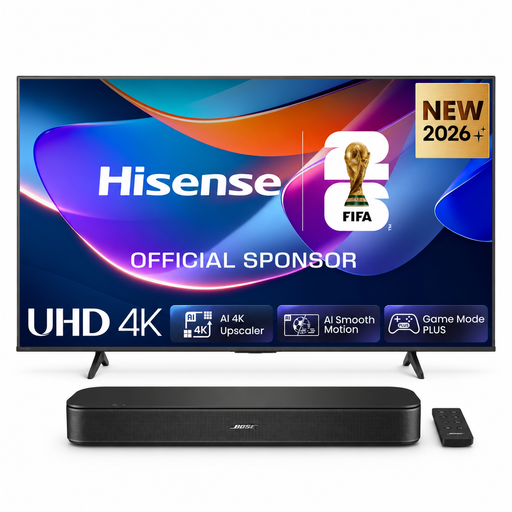 Image unavailable
Bose TV Speaker 2nd Gen + Hisense 65A6S 65-inch TV bundle
A TV bundle with a separate speaker to include in your comparison; check that the connections suit your set-up.
The product information lists a 65-inch 4K TV, a Bose TV Speaker with Dialogue Mode and HDMI ARC.
View on Joybuy
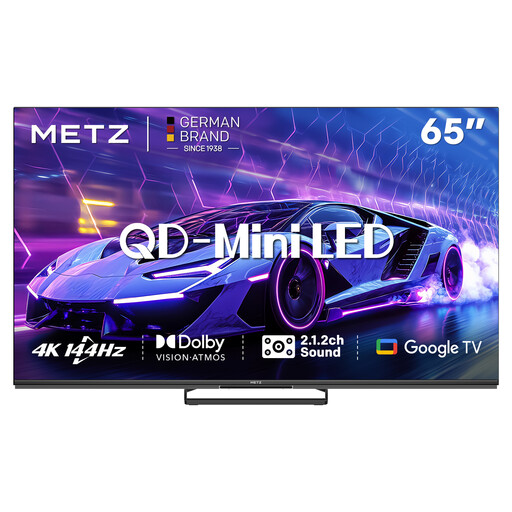 Image unavailable
METZ 65MNE8000Z 65-inch QD mini-LED TV
A QD mini-LED model to compare for watching in a bright living room; assess reflections and viewing angle for this model separately.
65 inches, 4K, 144 Hz and Google TV. The product information lists a 2.1.2 sound system and Dolby Atmos.
View on Joybuy
Frequently asked questions
Is OLED or mini-LED a better choice for a bright living room?
It depends on the light in the room and where you sit. In bright daylight, compare both reflections and SDR brightness. OLED may appeal if wide viewing angles or deep blacks matter, as long as the specific screen remains clear enough to see where you plan to put it.
How do I work out which screen size is right?
Measure the distance between your seat and the planned screen position, and check the available space and other seating positions too. The Consumers' Association suggests dividing the viewing distance by 2.4 as a guide to a comfortable screen diagonal in centimetres. It's a preference guide, not a minimum requirement.
Do I need a soundbar for opera recordings?
Not necessarily. First, look for a listening assessment of the TV, ideally one that includes classical music. If you want to connect your own audio equipment, check the connections on both the TV and audio system; eARC can send audio to a compatible audio system over a single HDMI cable.
Will a 4K TV make my opera recordings 4K too?
No, not automatically. The resolution of the source material and how you play it both affect how much of the original detail you can see. So check how you play your existing recordings and what resolution they are.
What does a TV's energy label tell me about its power consumption?
As the European Commission explains, the EU energy label shows consumption in kWh per 1,000 hours and uses an A to G scale for electronic displays. It doesn't give a fixed annual bill: that also depends on how long you use the TV and which settings you choose.


