
Daytime viewer dealing with window reflections
You watch TV during the day and can see tall windows reflected on the screen from your seat. The position of the light and direct reflections are therefore important things to compare.


Start by considering what you can see on screen from your usual seat. If a tall window is directly opposite, compare direct reflections for the exact TV model rather than relying on brightness claims alone. RTINGS.com often describes mini-LED TVs as a good option for bright rooms, while OLED can generally offer advantages for viewing angles and deep blacks. These broad differences won’t tell you how a particular model will perform in your room, though. Also compare viewing angles, speech clarity, screen size and the energy label for the version you’re considering.
You watch TV during the day and can see tall windows reflected on the screen from your seat. The position of the light and direct reflections are therefore important things to compare.
You watch cooking programmes from different spots and want the picture to remain clear from those viewing angles, with the commentary easy to hear.
You’re looking for a screen size that suits your viewing distance and also want to take the energy label, installation and your statutory guarantee rights into account.
A good fit if: you mainly watch TV while the room is bright and want a sufficiently bright picture.
Keep in mind: reflection handling and viewing angles vary by model. The panel type alone won’t tell you how it handles light from windows.
A good fit if: you can see a tall window directly opposite the TV and direct reflections are your main concern.
Keep in mind: a matte or anti-reflective finish doesn’t guarantee better picture quality on its own. Compare the brightness and reflections of the exact model too.
A good fit if: you also watch in the evening or sit in different places at the table, and window reflections are manageable.
Keep in mind: OLED generally offers advantages for viewing angles and deep blacks, but check the daylight performance of the specific version.
| What to consider | What to look for when buying | Who should consider this? |
|---|---|---|
| Window reflections | From your usual seat, check whether the window is directly opposite the screen and compare test results for direct reflections on the exact model. | If the reflection of the window could obscure ingredients or on-screen actions, you’ll want to know how that specific screen handles direct reflections. Around 36% of consumers put reducing window reflections first. |
| Daytime visibility | Compare both brightness and reflections for the exact model. Where possible, look at standard TV footage rather than HDR demo clips alone. | If you watch cooking programmes during the day, you’ll want standard footage to be easy to follow in a bright room. Around 29% of consumers give sufficient daytime brightness top priority. |
| Viewing angles and speech clarity | Assess the picture from your different seats and look for information about speech clarity on the exact model. | If you move between the kitchen, dining table and sofa, you’ll want to follow the commentary without having to sit directly in front of the screen. Around 21% of consumers prioritise different viewing positions and clear commentary. |
| Screen size and everyday use | Measure your viewing distance and the space available for the screen, including its stand. Check the energy label for the exact version. | If the screen needs to fit in a particular spot and you want to factor in running costs, it helps to choose a suitable size and compare energy labels. Around 14% of consumers prioritise screen size and running costs. |
Based on its own research, Consumentenbond gives around 2.4 times the screen diagonal as a general preferred viewing distance. Treat this as a guide and also check your distance from the dining table. The Dutch government says an energy label is required for TVs, using classes A to G. The label helps you compare versions, but it doesn’t recommend a particular class.
Brightness and handling direct window reflections are different things. So a bright screen won’t automatically stop you seeing a window reflected in it.
Check both types of test results for the exact model and consider the position of the window in relation to your seat.
Features and specifications can vary by model, screen size and region. A brightness figure for a different TCL version doesn’t automatically apply to the 55Q6C.
Check the full model number and documentation for the version sold in the Netherlands before comparing specifications.
Your statutory guarantee is separate from a commercial warranty and doesn’t depend on buying an additional warranty product.
First check what the seller must put right under the statutory guarantee, then compare any additional cover.
The QE48S94HAEXXN is a 48-inch OLED TV. Samsung lists Glare Free for this specific model.
The 55MLED820/12 is a 55-inch QD MiniLED TV; the 55MLED910/12 is a model from a different range with Ambilight.
The 55Q6C sold in the Netherlands is listed as a 55-inch QD-MiniLED TV with Google TV.
The OLED65G56LS is a 65-inch G5 OLED model. LG describes this model as offering deep blacks.
This selection focuses on mini-LED and LCD TVs for daytime viewing, with a range of screen sizes and features to compare.
 No image available
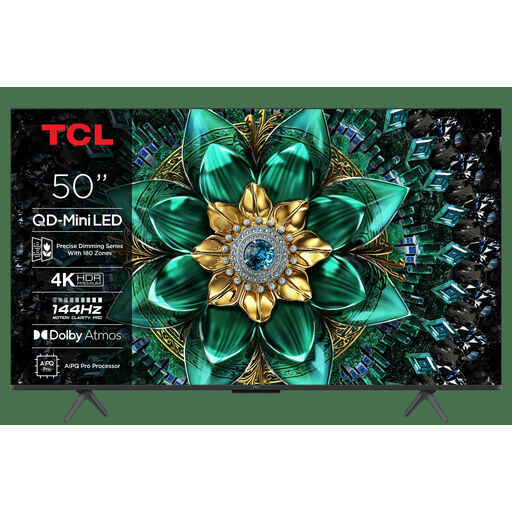
An option for anyone looking for a mini-LED TV for daytime viewing in a 50-inch size.
The product title lists 4K HDR, 1000 nits and energy label E. These specifications aren’t independent measurements of performance in daylight; compare reflections for this model too.
 No image available
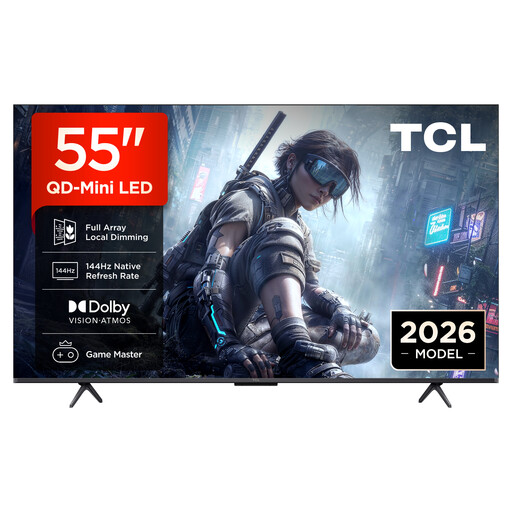
A 55-inch mini-LED option to compare if you mainly watch cooking programmes during the day.
The product title lists 4K, Google TV and 144 Hz VRR. These features alone don’t tell you how the screen handles window reflections.
 No image available
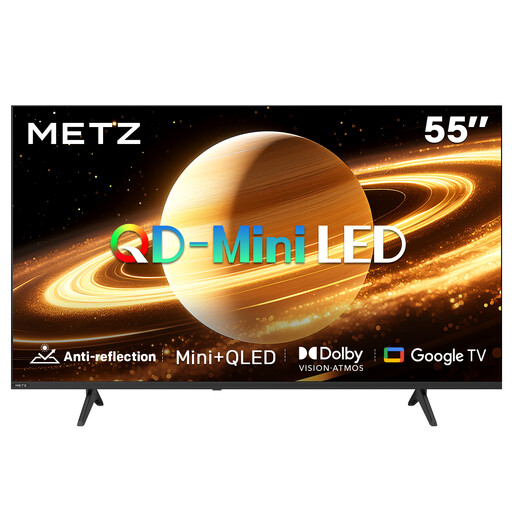
A 55-inch model to compare if you’re considering a matte screen for daytime viewing.
The product title lists Matte Screen Ultra, 60 Hz and Dolby Vision & Atmos. The matte-screen description isn’t an independent measurement of reflections.
 No image available
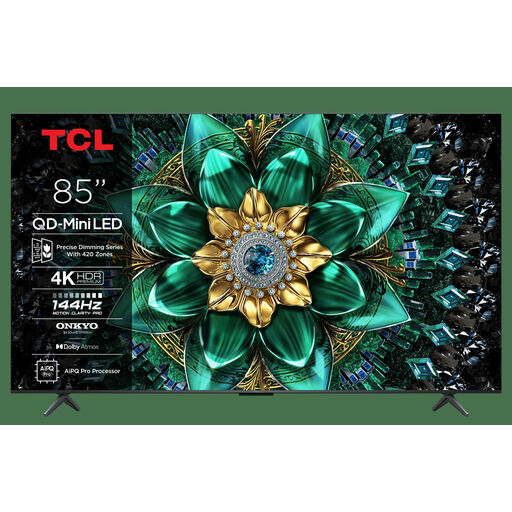
A large-screen option for anyone looking for a mini-LED TV. Check beforehand that the screen and stand will fit in the intended spot.
The product title lists 4K HDR, 1000 nits and a matte HVA panel. These aren’t independent measurements of reflections or brightness in your room.
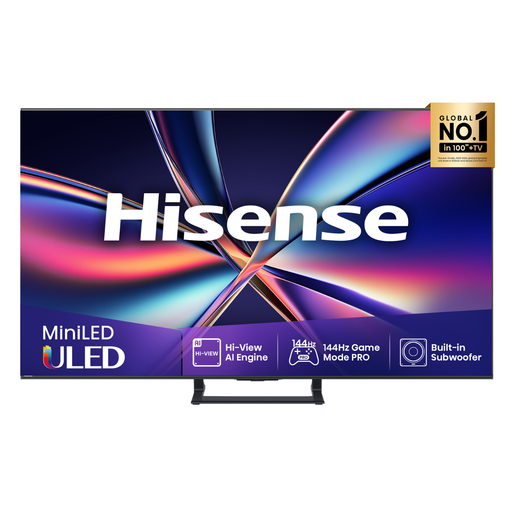 No image available
A 75-inch option to compare if you watch from several spots. Check the viewing angle from your own seats.
The product information lists a wide viewing angle, energy label E, VIDAA and a 20 W RMS sound system. A wide viewing angle doesn’t tell you how clear speech will sound.
No. Compare both direct reflections and brightness for the exact model. Screens can reflect or diffuse incoming light in different ways, and a matte finish alone doesn’t tell you what the overall picture will look like.
Measure the distance from both your usual viewing spot and the dining table, and check that the screen fits with its stand. Based on its own research, Consumentenbond gives around 2.4 times the screen diagonal as a general preferred viewing distance; this isn’t a fixed rule for every viewer.
No, not automatically. According to Consumentenbond, the programme must also be available in 4K, and in practice the difference from Full HD isn’t always easy to see.
Compare the energy label for the exact version and check for any installation costs before buying. According to ACM ConsuWijzer, when you buy a new TV online in the usual way, you generally have a 14-day cooling-off period from delivery. Your statutory guarantee is separate from the manufacturer’s warranty or any additional cover.
The Dutch government lists TVs among the appliances that must have an energy label. The classes run from A to G; this requirement doesn’t mean you have to choose a particular class.