
Viewer with limited space
Wants to follow the race clearly without the screen or stand taking over the available space. Measure your viewing distance and the space for the TV before choosing a size.


First, measure your viewing distance and the space available for the screen and stand; a larger screen for sport won’t automatically be right for your room. Then compare motion handling, viewing angles and reflections from the seats you’ll be using. OLED may be worth considering if people will be watching from an angle, while some LCD TVs may be an alternative in rooms with lots of ambient light. The specifications of the exact model and how you receive the race will still be key.
Wants to follow the race clearly without the screen or stand taking over the available space. Measure your viewing distance and the space for the TV before choosing a size.
Pay particular attention to how the TV handles camera movements and fast action. A quoted refresh rate alone doesn’t prove how well it will display a cycling broadcast.
Has seats outside the central viewing position or needs to account for incoming light. The Consumers’ Association generally describes OLED TVs as having wider viewing angles; also compare reflections from the position where you plan to watch.
In its own research, the Consumers’ Association found that a viewing distance of around 2.4 times the screen diagonal is comfortable. Divide the distance in centimetres by 2.4 to get a starting point for the screen diagonal, then check that the TV and stand will fit in the space available.
| What to consider | What to look for when buying | Who is this important for? |
|---|---|---|
| Screen size and placement | Measure the viewing distance and the space for the TV, stand and connections; use the distance divided by 2.4 as a starting point for the diagonal in centimetres. | If my living room is narrow, I want to check first that the TV and stand will fit my viewing distance and available space. Around 36% of consumers put finding a suitable size first. |
| Fast-paced racing | Compare the motion handling of the exact models; don’t treat the quoted screen refresh rate as a performance test in its own right. | If I’m mainly concerned with motion handling during fast action, I want to assess the exact model with sports footage. Around 29% of consumers put smooth racing footage first. |
| Viewing angles and reflections | Take the position of side seats and windows into account; compare the viewing angles and reflections of models that fit the room. | If we watch from seats beside the TV or a lot of light falls on the screen, I want to know what the picture looks like from those positions. Around 21% of consumers prioritise side seats or incoming light. |
| How you watch and additional costs | Check the broadcaster’s rights to the race, app availability for the exact TV model and country, and the connections you’ll need. | If I first want to find out how I can watch the race and what equipment I’ll need, I check how I’ll receive it before buying. Around 14% of consumers put access and additional costs first. |
In a narrow living room, your viewing distance and the dimensions of the screen and stand may make a different size more suitable.
First measure your viewing distance and the available space, then compare screen sizes that will genuinely fit.
The technology name or quoted refresh rate alone won’t tell you how a particular model handles fast-paced racing, viewing from the side or daylight.
Compare the exact models for motion handling, viewing position and incoming light; assess each feature separately.
The range of apps can vary between smart TVs, and apps can be removed, which could leave you unable to watch the way you planned.
Check app availability for the exact model and country, and see whether your provider or an HDMI connection offers a suitable alternative.
These brands offer examples of compact TV models you can compare for their features and viewing options. The features of each model aren’t a recommendation of the brand as a whole.
LG’s range includes the 42-inch OLED42C68LA. It’s an OLED option to consider if you’re looking for a compact screen and have seats to the side.
Samsung’s range includes the 43-inch QE43Q7F4AUXXN, a compact QLED TV.
The Philips 43PUS8000/12 is a 43-inch LED TV with 4K, Ambilight and Titan OS.
This selection includes 42- to 43-inch TVs, with OLED and QLED models to help you compare screen size and technology.
 No image available
This compact OLED model may suit you if you also watch from side seats. The Consumers’ Association generally describes OLED TVs as having wider viewing angles, but check for reflections from your own viewing position.
42 inches; 4K Ultra HD; OLED; webOS; HDMI 2.1.
 No image available
This 43-inch QLED model is a compact LCD option to compare with other screen technologies. The product name alone won’t tell you how it will display cycling footage in your room.
43 inches (109 cm); 4K UHD; QLED; Google TV; MEMC and VRR are listed as features, not as an independent measurement of motion handling.
 No image available
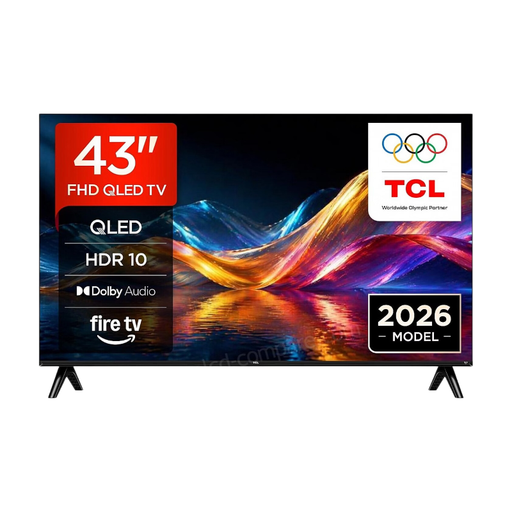
This 43-inch model could be a compact option if it fits your space; compare the picture quality of the exact TV with the other models.
43 inches; FHD; QLED; smart TV; 120 Hz is listed as a specification and isn’t an independent assessment of racing footage.
 No image available
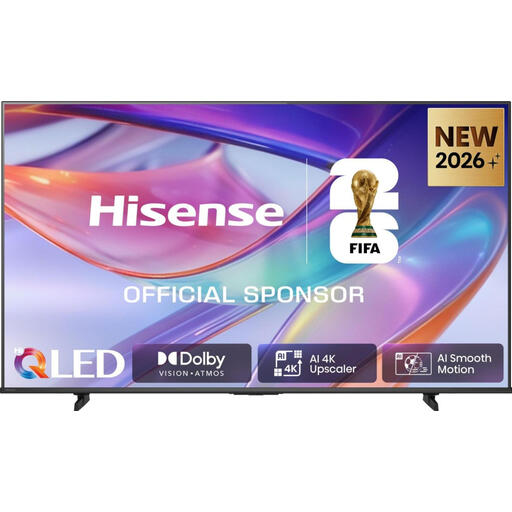
This 43-inch QLED TV is a compact option to compare for size and technology; check for yourself whether its dimensions and viewing angle suit your set-up.
43 inches; 4K; QLED; smart TV; 120 Hz is included in the product name and isn’t, on its own, a measure of motion handling.
No. First measure your viewing distance and the space available. In its own research, the Consumers’ Association found that a viewing distance of around 2.4 times the screen diagonal is comfortable. Use this ratio as a starting point and compare screen sizes that will fit your room.
No. Don’t assume the broadcast you want will automatically be available through an app. Check the provider and app availability for the exact TV model and country. The Consumers’ Association says that not every app is available on every smart TV, and apps may be removed later. A media player connected via HDMI could be an alternative.
If you’re putting the TV on a unit, measure the space it will take up with the stand. For wall mounting, check the instructions for your chosen model and make sure the TV and bracket are compatible before ordering any parts or installation service.
If a product is faulty, the seller must deal with your statutory guarantee. The Dutch government says there is no fixed statutory guarantee period in the Netherlands. For online purchases, ACM ConsuWijzer says you generally have up to 14 days after delivery to change your mind, subject to exceptions and conditions.
Yes. The Dutch government lists televisions among the appliances that must have an energy label. Compare the energy consumption shown on the label for the exact model.