
Vandaag of morgen in huis

Kwaliteit gegarandeerd

Welkomstaanbiedingen ontgrendelen: GRATIS bezorging | Tot 80% korting | Gratis 30 dagen JoyPlus-proefperiode
Download de app
A TV wall mount saves space and gives your living room, office or meeting room a tidy, streamlined look. However, it’s not wise to choose based solely on price or maximum screen size. A bracket for a small television won’t automatically work for a 65-inch screen, let alone an 86-, 90- or 100-inch screen.
The main problems usually arise from three pitfalls:
With the right checks beforehand, you can avoid unnecessary drilling, returns and an unstable installation.
The VESA size indicates the horizontal and vertical distances between the screw holes, for example 200 × 200 mm, 400 × 400 mm or 600 × 400 mm. Measure this distance on your television or look up the specification in the manual.
A VESA TV wall mount must fall within the range of your screen. A universal TV mount is therefore not literally suitable for every television; “universal” usually means that multiple VESA patterns are supported.
Also pay attention to the type of screw and its length. Screws that are too short won’t hold sufficiently, while screws that are too long can damage internal components. Use the fixings that match your TV and bracket.
Check the weight of the television without the separate stand, but take into account any accessories that will be attached to the mount. The maximum load of the bracket must be higher than the combined weight.
Examples:
Screen size alone, therefore, doesn’t tell you enough. A heavy 65-inch television can place greater demands than a lighter model of the same size.
Concrete, brick and wooden studs each require suitable wall plugs and screws. A plasterboard wall is not automatically suitable for a heavy television. Only use specialist fixings there if the construction and fixing point are designed for it.
A fixed TV wall mount keeps the screen close to the wall and works well when you sit directly in front of the TV. A tilting TV wall mount is more practical when the screen is mounted higher, for example above a cabinet or in a meeting room. Check how many degrees the bracket can tilt and whether there is enough space behind the TV for cables.
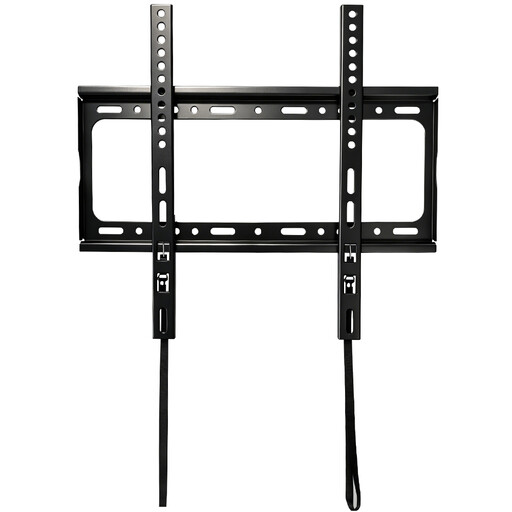
Why this fits the profile: This model is designed for televisions of 32–55 inches and offers a simple fixed mount without a tilting function. The specification states support up to 45 kg and VESA up to 400 × 400 mm.
The sizing is clearly defined. Check beforehand whether your TV falls within 32–55 inches, 45 kg and a maximum VESA of 400 × 400 mm.
Fixed construction, low profile and suitable for concrete, brick and wooden studs according to the product description.
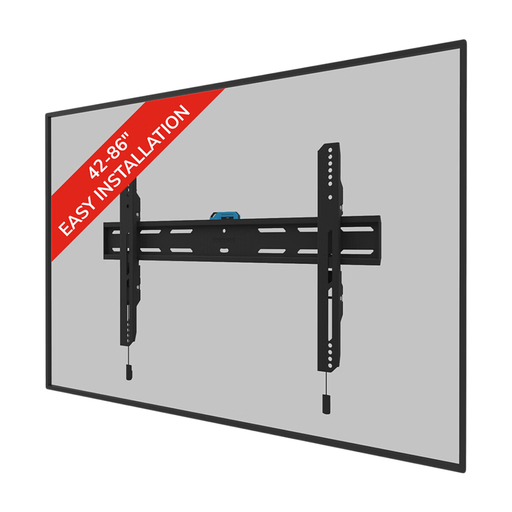
Why this fits the profile: This fixed Neomounts TV wall mount is suitable for 42–86 inches, VESA 100 × 100 to 600 × 400 mm and screens up to 60 kg. The wall distance is 3.3 cm.
The VESA range and maximum load are clearly stated. Use the included mounting template and spirit level, and choose wall plugs that suit your wall.
Height and level adjustment, magnetic pull-and-release system and the option to lock with an anti-theft screw.
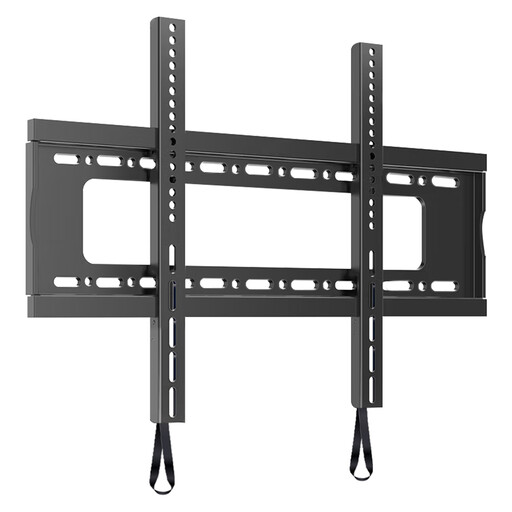
Why this fits the profile: For a large TV, such as a 65-, 86- or 90-inch screen, this model offers support up to 100 kg and VESA up to 600 × 600 mm. The design keeps the TV approximately 25 mm from the wall.
The product limits are focused on large screens: maximum 90 inches, 100 kg and 600 × 600 mm VESA. Also check whether your wall can handle this combined load.
Fixed mount, 25 mm wall distance and support for concrete, brick and wooden studs. Two-person installation is recommended.
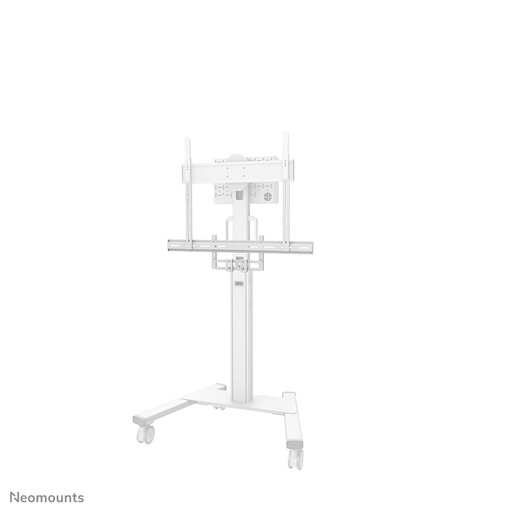
Why this fits the profile: This video bar wall mount is designed for screens of 43–110 inches and VESA 200 × 200 to 800 × 600 mm. According to the product specification, the bracket supports a maximum of 10 kg and can be placed above or below the screen.
The video bar’s load limit is clearly stated. Check the weight of your device and only install the bracket on a suitable wall, floor, desk or ceiling structure.
Height-adjustable frame, ruler guide for alignment and compatibility with many video bars, PTZ cameras and soundbars.
We’ve put together a full, up-to-date list of products that fully meet these strict selection criteria and comply with current European safety regulations.
Before drilling, read the installation manual for both the TV and the bracket. Mark the holes with a spirit level and use a stud finder to check that there are no electrical cables, water pipes or gas pipes running behind the wall.
For large screens, two-person installation is advisable. Only hang the television when:
A tilting TV wall mount must be checked again after adjustment. For commercial applications, hotels and public spaces, periodically check that screws and locks are still tight.
No. Always check the screen size, weight and VESA pattern. A universal TV mount supports multiple sizes, but it also has clear limits.
The lifespan depends on the material, load, wall installation and usage. A fixed bracket generally has fewer moving parts than a tilting model. Periodically check for loose screws, bending or damage, and replace parts if in doubt.
You can, with a lightweight TV and a suitable wall, provided you use the correct fixings. For a wall mount up to 100 kg, a TV mount for a 100-inch screen or installation on a complex wall, professional installation is a wise choice. The wall must be able to support the combined weight of the TV, bracket and accessories.
