
Vandaag of morgen in huis

Kwaliteit gegarandeerd

Welkomstaanbiedingen ontgrendelen: GRATIS bezorging | Tot 80% korting | Gratis 30 dagen JoyPlus-proefperiode
Download de app
Mounting a new TV on the wall can instantly give a room a more modern and spacious feel. But the search for the perfect TV wall mount is often trickier than you might think. The market is flooded with options that all look the same at first glance. This often leads to frustration and bad purchases. As a Joybuy Product Recommendation Officer, I'll help you cut through the marketing jargon and make a choice based on facts.
Before you purchase a television mount, it's important to know the most common pitfalls. Many people make mistakes that are easily avoidable.
To avoid a bad purchase, there are a few technical specifications you must check. These determine the safety, compatibility, and ease of use of your TV mount.
Every TV has a VESA size, which represents the standardised distance between the four mounting holes on the back, measured in millimetres (e.g., 200x200 mm or 400x400 mm). Check this size in your TV's manual or measure it yourself. The TV wall mount you choose must support this exact VESA size.
Additionally, the maximum weight capacity of the mount is of great importance. Don't just look at the recommended screen size (like 65-inch TV mount), but focus on the weight. An older 65-inch TV can be significantly heavier than a new model. Always choose a mount with a weight capacity well above the weight of your TV.
The functionality of the mount determines how you can position the TV. There are three main types:
Based on these criteria, we have selected a few popular choices that suit different user profiles and living situations.
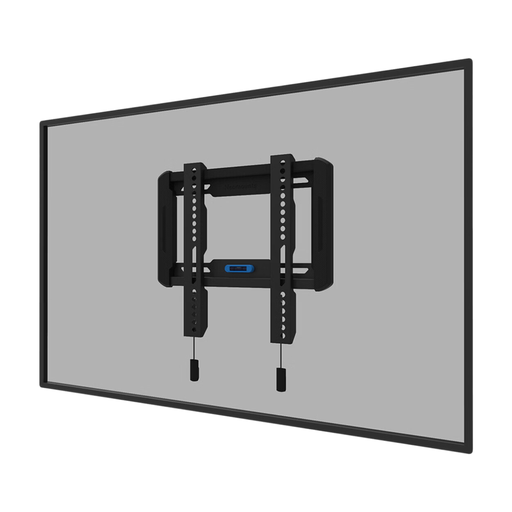
Why This Fits Their Persona: Perfect for those who want a sleek and minimalist interior. This mount hangs the TV like a painting on the wall, which is ideal for living rooms where efficient use of space is important.
This model is a fixed mount, which avoids the pitfall of an unnecessarily complex model. Its clear VESA compatibility (50x50 to 200x200 mm) prevents a mismatch with small to medium-sized TVs.
Ultra-slim profile: With a depth of only 2.3 cm, the TV hangs very close to the wall.
Easy installation: According to Neomounts, the magnetic 'pull & release' system and the integrated spirit level ensure quick assembly.
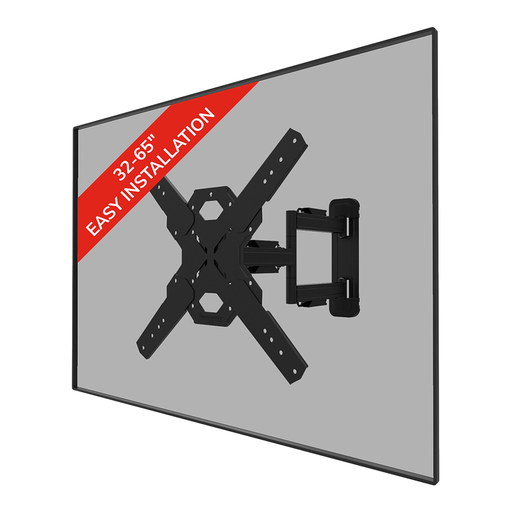
Why This Fits Their Persona: Ideal for households with an open-plan layout or an awkward viewing angle. With this mount, you can easily turn the TV from the seating area to the dining table, giving you the perfect viewing experience anywhere in the room.
This full-motion TV wall mount avoids the limitation of a fixed model. You'll no longer be bothered by glare and can always position the TV at the right angle. The wide VESA support (100x100 to 400x400 mm) makes it suitable for many different TVs.
Complete freedom of movement: The mount can tilt 14° and swivel 45° for an optimal viewing angle.
Convenient extras: Comes with a spirit level and mounting template to make mounting the TV easier.
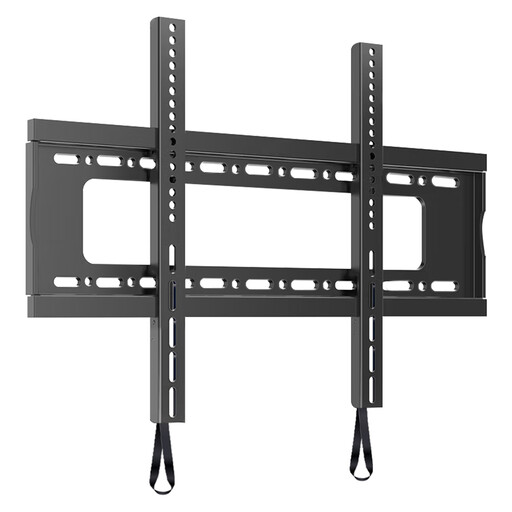
Why This Fits Their Persona: For those who want to mount a large, heavy TV (up to 90 inches) securely and flush against the wall. Safety and robustness are paramount here, without compromising on a clean finish.
This mount tackles the pitfall of an insufficiently strong construction. With a weight capacity of 100 kg and suitability for concrete and brick walls, it offers the security needed for a heavy TV. Its broad VESA compatibility (up to 600x600 mm) fits almost all large screens.
High weight capacity: Designed to safely support televisions up to 100 kg.
Space-saving design: Despite its strength, the mount has a slim profile with a distance of only 25 mm from the wall.
We have compiled a complete, up-to-date list of products that fully meet these strict selection criteria and safety standards.
Here are answers to some frequently asked questions about choosing and installing a TV wall mount.
Directly mounting a TV wall mount on standard drywall (plasterboard) is strongly discouraged. These walls are not designed to support the combined weight of a TV and mount. For a secure installation on drywall, you must attach the mount to the wooden or metal studs behind the plasterboard. Use a stud finder to locate them. If this is not possible, there are special hollow-wall anchors (toggle bolts) for heavier loads, but always check the maximum weight these anchors can support and consider professional installation for extra peace of mind.
VESA is a global standard that defines the distance between the four mounting holes on the back of a TV. The size is indicated in millimetres, first the horizontal distance and then the vertical (e.g., 400x200 mm). You can find your TV's VESA size in the manual, on the manufacturer's website, or by measuring the distances yourself with a tape measure. Ensure that the VESA patterns supported by the TV hanging bracket match those of your TV.
A good rule of thumb for the ideal viewing height is that the centre of the TV screen should be at eye level when you are sitting on the sofa. For most people, this is about 100 to 110 centimetres from the floor. Measure your eye level while sitting comfortably and use this as a guideline for the centre of the TV. If you are using a tilting TV wall mount, you can hang the TV slightly higher and tilt it downwards for a comfortable viewing angle.
