First, measure the distance between your seat and the TV, then compare a few screen sizes. The Consumers’ Association uses the viewing distance divided by 2.4 as a starting point for the screen diagonal, not as a requirement. Next, assess dark scenes, reflections and dialogue clarity on the specific TV from where you sit. OLED and mini-LED LCD TVs have different characteristics, but a larger screen diagonal alone doesn’t guarantee better picture or sound.
Who is this advice for?
Watching from the far end of the sofa
You want to know what screen size will be comfortable from your usual seat, and whether the TV, including its stand, will fit in the available space. The Consumers’ Association uses the viewing distance divided by 2.4 as a starting point for the diagonal.
Fan of dark crime dramas
You want to make out details in shadowy scenes, so you’re looking at contrast, ambient light and the viewing angle of the specific TV. The Consumers’ Association explains the differences between OLED and LCD, but the results still depend on the model.
Want to catch every word
You want to hear dialogue clearly from your seat and be able to read any subtitles. Netflix says that not all display options are available on connected TV devices.
What should you look for when choosing?
Measure the viewing distance and the space available before choosing a screen size. Treat the Consumers’ Association’s guideline as a starting point, and compare nearby sizes too.
| What to consider |
What to look for |
Who is this important for? |
| Screen size and readability |
Use your measured viewing distance divided by 2.4 as a starting point for the diagonal, and check the width and height, including the stand. Test subtitles from your usual seat. |
I want to follow the picture and any text clearly from my usual seat, without choosing a TV that won’t fit. Around 31% of consumers say finding a suitable screen size is their main concern. |
| Details in dark scenes |
Compare a familiar scene with both dark and light areas on the exact TV you’re considering. Also check how light subtitles look against a dark background. |
If I want to follow shadowy scenes, I check whether details remain visible on the model itself. Around 25% of consumers put detail in dark scenes first. |
| Clear dialogue |
Listen to a quiet conversation at normal volume from your seat. Check the connections and compatibility if you want to use existing audio equipment. |
I want to follow conversations without constantly adjusting the volume; around 19% of consumers give clear dialogue top priority. |
| Visibility in ambient light |
Check reflections and brightness in conditions similar to your room. Also check the viewing angle if you often sit away from the centre. |
If I watch during the day or from different seats, I want to know whether the picture works well from where I sit. Around 13% of consumers focus mainly on visibility in ambient light. |
| Energy use |
The European Commission describes the A–G energy label and consumption figures in kWh per 1,000 hours. Compare the available information for the models you’re considering. |
I want to factor in power consumption as well as screen size; around 12% of consumers put energy use first. |
Common pitfalls
-
Assuming a technology name guarantees a good picture in dark scenes
OLED, QLED and mini-LED describe technologies, but on their own they don’t tell you how picture processing and differences between models will affect a dark scene.
Compare a familiar scene on the exact TVs you’re considering, and take the ambient light and viewing angle into account too.
-
Checking only the screen diagonal
A size that suits your viewing distance could still be too wide or too tall for the space you have in mind.
Measure the viewing distance and available space, and check the TV’s dimensions, including the stand.
-
Assuming you always need an extended warranty
A paid extended warranty is separate from the legal guarantee you’re entitled to from the seller, as explained by ACM ConsuWijzer.
Check exactly what the additional service offers before deciding whether to take it out.
Brands to compare
LG
LG lists the OLED77C67LA.AEU as a 77-inch OLED model, making it one option to compare if you’re looking for a large screen.
- The manufacturer confirms that this specific model is OLED and 4K.
- Check reflections, dimensions and picture quality from your own seat; the manufacturer’s picture-quality claims aren’t an independent test.
Philips
According to Philips’ product information, the Philips 75PML9009/12 is a 75-inch QD mini-LED TV with Ambilight.
- Mini-LED and Ambilight are listed for this model.
- Assess dark scenes, viewing angle and the smart platform separately; manufacturer claims about picture quality aren’t an independent comparison.
Samsung
Samsung describes the QE75QN90FATXXN as a 75-inch Neo QLED 4K TV with mini-LED and an anti-reflection feature.
- The features listed for this model give you specific points to compare in a room with ambient light.
- The listed features don’t prove how the TV will perform in your room; assess dark scenes and viewing angle for yourself.
Hisense
The Consumers’ Association lists the Hisense 75U79SE among tested 75-inch models.
- Its size makes it relevant to compare with other large-screen TVs.
- The listing alone doesn’t confirm a test score or an advantage for dark scenes or sound; check results for the exact model.
TVs at Joybuy
This selection includes TVs in a range of screen sizes, so you can weigh them against your measured viewing distance and the space in your room.
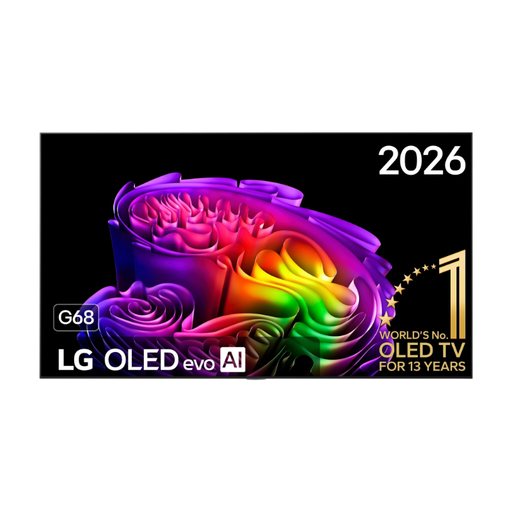 Image unavailable
OLED77G68LW 77-inch OLED TV
This 77-inch OLED model is one option to compare with your measured viewing distance; check the picture on the exact TV in your viewing conditions.
View at Joybuy
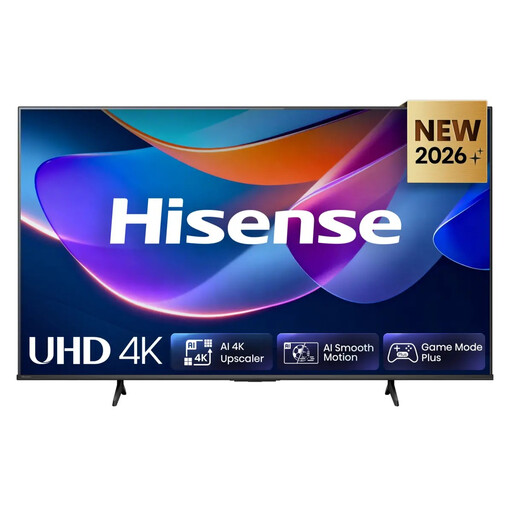 Image unavailable
Hisense 55A6S 55-inch 4K UHD LED Smart TV (2026)
This 55-inch model is a smaller size to compare with your measured viewing distance.
Specifications: 55 inches (139 cm), 4K UHD, LED and energy rating E.
View at Joybuy
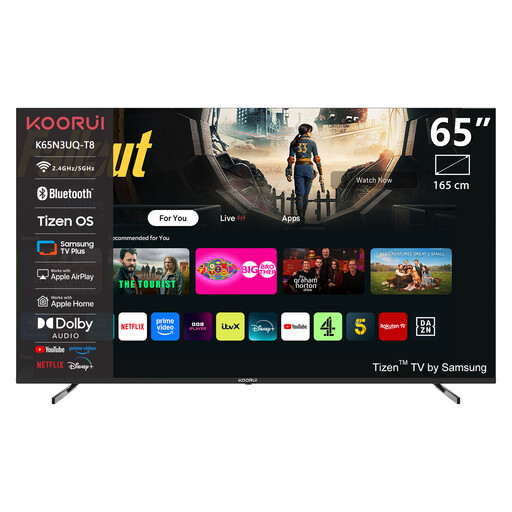 Image unavailable
KOORUI K65N3UQ-T8 65-inch 4K UHD QLED Smart TV
The 65-inch size gives you another option to compare with the distance between your seat and the TV.
Specifications: 65 inches, 4K UHD, QLED and Tizen OS. Check that the platform supports the apps you use.
View at Joybuy
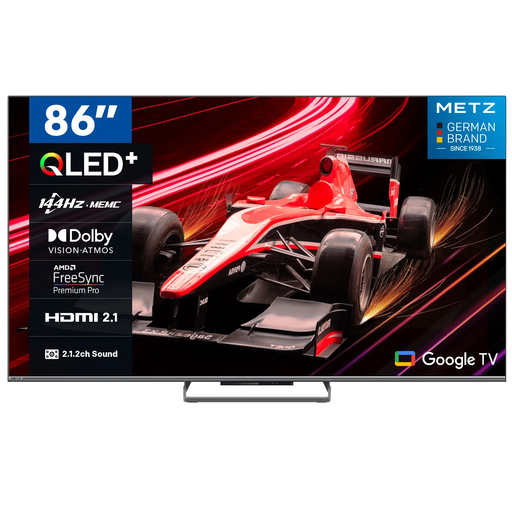 Image unavailable
METZ 86MQE8000Z 86-inch 4K QLED Google TV
Only include this 86-inch model in your comparison if your measured viewing distance and available space can accommodate its size.
Specifications: 86 inches, 4K HDR10+, QLED, Google TV, 144 Hz and a 2.1.2 audio system with integrated subwoofer.
View at Joybuy
Image unavailable
Hisense 43A6S 43-inch 4K UHD Smart TV
This 43-inch model is a more compact option to compare with larger screens and assess against your viewing distance.
Specifications: 43 inches, 4K UHD, 60 Hz, Dolby Vision, VIDAA and Game Mode Plus.
View at Joybuy
Frequently asked questions
How do you choose a screen size if you don’t yet know your viewing distance?
Measure the distance from your eyes to where the screen will be. The Consumers’ Association uses the distance in centimetres divided by 2.4 as a starting point for the diagonal in centimetres. Compare nearby sizes too, and check the dimensions including the stand.
Can you make subtitles larger on every smart TV?
Not always. Netflix says connected TV devices don’t offer all the display options available in a browser. Check the settings for the service, language and playback device you use.
How do you assess dark scenes on a TV at home?
Use your usual room lighting and a familiar scene with both light and dark areas. The Consumers’ Association recommends selecting Home mode and adjusting brightness and contrast so details remain visible in both areas. Picture settings can affect energy use.
Does a new TV in the Netherlands need an energy label?
EU rules on energy labels apply to electronic displays, including TVs. The European Commission describes a scale from A to G, along with separate information about HDR energy consumption. This is a requirement for offering the product for sale, not a requirement for you as the buyer to choose a particular energy class.
What are your rights if a TV you bought online disappoints or develops a fault?
For a standard online purchase of a new TV, ACM ConsuWijzer says you’re generally entitled to a 14-day cooling-off period after delivery; check which exceptions and returns conditions apply. If the TV is faulty, the seller is responsible for the legal guarantee, regardless of any additional warranty you may have bought.


