What should you look for when choosing?
Start with the seats at the sides and the light in the room. Then choose the screen size, dark-scene performance and sound to suit your film night.
| What to consider |
What to look for |
Who should pay particular attention? |
| Viewing angle |
Compare independent viewing-angle measurements for the exact model and assess the picture from the seats at the sides. |
If you want to keep watching from a seat at the side without noticeable changes to colour and contrast, make viewing angle a priority; around 28% of consumers rank this concern highest. |
| Screen size and viewing distance |
Measure the distance from the seats and the space available. The Consumers’ Association (Consumentenbond) suggests around 2.4 times the screen diagonal as a comfortable starting point. |
If viewers will be sitting at different distances, you’ll want a screen that’s easy to watch from the furthest seat and fits in the room; around 22% of consumers prioritise screen size and viewing distance. |
| Room lighting and reflections |
Compare brightness and reflection-handling measurements for the exact model with the lighting conditions in your room. |
If you watch during the day or with the lights on, you’ll want to consider distracting reflections and whether the picture is difficult to see; around 22% of consumers prioritise visibility in room lighting. |
| Dark scenes and HDR |
Compare contrast and HDR performance for each model, and check that both the TV and your film source support the HDR format you want. |
For gripping scenes with dark details, you’ll want to know how contrast and HDR work together; around 17% of consumers give dark film scenes top priority. |
| Dialogue and sound |
Compare the sound of the exact model and check the connections and compatibility with any sound system you plan to use. |
If everyone in the group needs to follow the dialogue clearly, look beyond picture quality; around 11% of consumers prioritise clear film sound. |
Joybuy products
This selection includes OLED, Mini-LED and QLED TVs with large screens, suited to watching films with a group. Choose a screen size to suit your viewing distance and the space available.
 No image available
OLED77G68LW
A 77-inch OLED model to consider for a large film set-up; check that the screen size and viewing distance suit your room.
The product information lists 4K, Dolby Vision and Dolby Atmos.
Native refresh rate: 120 Hz; VRR up to 165 Hz.
View at Joybuy
 No image available
TCL T8D 85-inch 4K QD-Mini LED Smart TV (2026)
The 85-inch screen may suit a spacious group set-up; measure the viewing distance and available space before choosing.
The product information lists Dolby Vision, HDR10+, 144 Hz and VRR.
Onkyo 2.1-channel sound with Dolby Atmos is listed; check the connections if you use a different sound set-up.
View at Joybuy
 No image available
METZ 86MQE8000Z 86-inch QLED Google TV
An 86-inch model to compare for a large group, provided the screen suits your viewing distance and room.
The product information lists 4K, Dolby Vision, HDR10+ and 144 Hz.
The stated sound system is 2.1.2, with an integrated subwoofer and Dolby Atmos.
View at Joybuy
 No image available
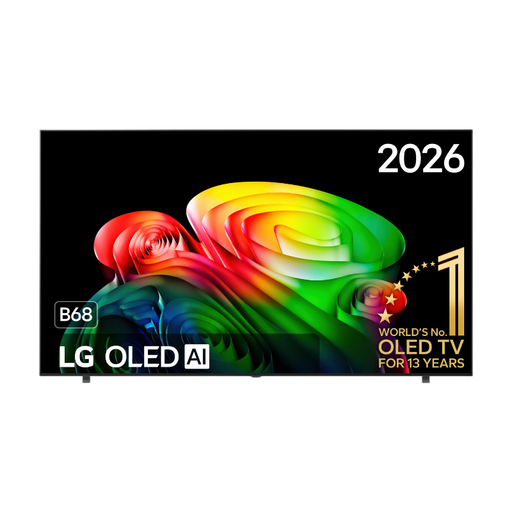
LG OLED77B68LA 77-inch 4K OLED Smart TV
A 77-inch OLED model for a large film set-up; measure the viewing distance and check that the TV fits in the available space.
The product information lists Dolby Vision and Dolby Atmos.
Native refresh rate: 120 Hz; VRR up to 144 Hz.
View at Joybuy
 No image available
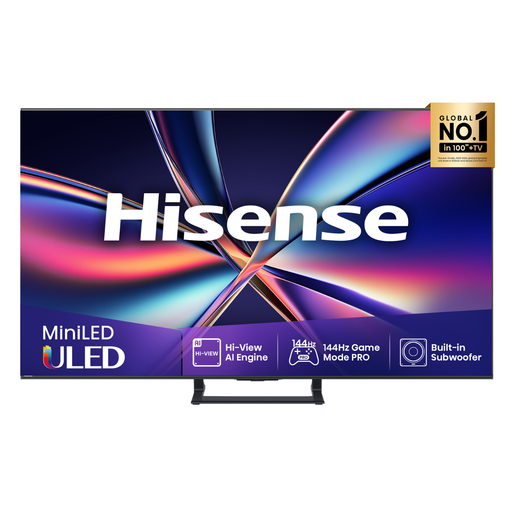
Hisense 75E8Q 75-inch 4K Mini-LED TV
This 75-inch screen is an option for a spacious seating arrangement; the right size depends on your viewing distance and the space available.
The product information lists Dolby Vision, HDR10, HLG and 144 Hz.
The product description mentions a wide viewing angle; compare this with measurements for the exact model.
View at Joybuy
Frequently asked questions
How do you work out whether the TV is big enough for your group?
Measure the viewing distance from the seats. The Consumers’ Association (Consumentenbond) suggests around 2.4 times the screen diagonal as a comfortable starting point, not a fixed measurement for everyone. Also check that the TV, including its stand, fits in the room.
Which picture setting should you use for your first film night?
At home, choose a picture mode you like and adjust the brightness and contrast using a familiar scene with both light and dark areas. The Consumers’ Association (Consumentenbond) points out that shop settings are designed to showcase the TV in store. So assess the settings in the lighting conditions you usually watch in.
How do you compare TVs’ energy consumption?
Compare the consumption per 1,000 hours on the EU energy label for the exact models. The label shows consumption for SDR and HDR; actual consumption also depends on viewing time and settings.
Is the statutory guarantee on a TV in the Netherlands always two years?
No. According to ACM ConsuWijzer, there is no fixed time limit for the statutory guarantee in the Netherlands: what matters is what you could reasonably expect from the product under normal use. If a fault is covered by the statutory guarantee, the retailer is responsible for providing an appropriate solution.


