For animated films watched by people sitting in different places, the viewing angle of the exact TV model is an important place to start. A picture that retains its colour and contrast when viewed from the side helps everyone follow the film. OLED is usually an appealing choice for wide seating arrangements and dark film scenes, but reflection handling and brightness vary by model. An LCD TV may also be suitable if a test of that specific model confirms its viewing angle. Be sure to consider contrast, ambient light, viewing distance and the energy label too.
Who is this choice relevant to?
Families with a wide sofa
If you watch animated films together from several seats, you’ll want colours and contrast to remain clear for viewers sitting to the side. RTINGS.com and Consumentenbond identify viewing angle as something to consider with a wide seating arrangement.
Viewers in a bright living room
If you watch during the day from a seat off to the side, consider both the viewing angle and how reflections and brightness are affected by the light in your room. RTINGS.com and Consumentenbond describe viewing angle and lighting conditions as relevant factors in picture quality assessments.
Film lovers who mainly watch in the evening
For dark film scenes, assess black levels and contrast from your usual seat without overlooking the viewing angle. RTINGS.com describes differences in viewing angle and contrast between LCD panel types.
What should you consider when choosing?
RTINGS.com and Consumentenbond highlight viewing angle, contrast and reflections as relevant factors when watching TV from different seats. The right priorities depend on your room and viewing habits.
| Factor to consider |
What should you look for? |
Who is this important to? |
| Viewing angle and colour retention |
Check a test of the exact model for changes in colour, brightness and contrast when viewed horizontally from an angle. |
When I watch from different seats on the sofa, I want everyone to be able to follow the animated film. Around 38% of consumers prioritise colour and contrast retention when viewed from the side. |
| Daylight and reflections |
Assess reflections and the screen finish in lighting conditions similar to those in your living room. |
In a bright room, I want to enjoy the picture during the day without distracting reflections. Around 23% of consumers prioritise visibility in daylight. |
| Contrast in dark scenes |
Compare black levels and viewing angle together, ideally in the lighting conditions in which you watch films. |
If I mainly watch films in the evening, I want to see dark scenes clearly from my seat. Around 23% of consumers prioritise film contrast. |
| Screen size and power consumption |
Measure the viewing distance from your seats and compare the model-specific EU energy label, including SDR and HDR consumption. |
I want a screen size that suits my viewing distance, and I also consider power consumption. Around 16% of consumers prioritise screen size and running costs. |
Common pitfalls
-
Assuming QLED or mini-LED automatically means a wide viewing angle
The label alone doesn’t tell you how much the picture on a specific model changes when you sit at an angle to the screen.
Compare a viewing-angle test of the exact model and check the screen from the seat furthest to the side. RTINGS.com generally reports a wider viewing angle for IPS LCD than for VA LCD, but the panel type alone doesn’t determine the experience of the whole TV.
-
Choosing a screen without considering windows and lights
Reflections can make the picture harder to see during the day. A screen finish may also involve other picture-quality trade-offs.
Assess reflections from the windows and lights in your room, as well as the picture from seats to the side. Consumentenbond advises considering picture features such as viewing angle when choosing a TV.
-
Assuming OLED will either definitely suffer burn-in or has no risk at all
Displaying the same static elements for a long time is different from watching a variety of films. Extreme-duration tests don’t necessarily predict a TV’s lifespan under normal use.
Consider how you’ll actually use the TV and check the care instructions for your chosen model. In its discussion of OLED burn-in, RTINGS.com distinguishes between test conditions and everyday use.
-
Looking only at screen size
The screen size needs to suit your viewing distance, and power consumption varies between TVs and according to how they’re used.
Measure the distance from your eyes in your usual seats to the screen, then compare the energy information for specific models. The European Commission lists consumption for SDR and HDR, among other details, on the EU energy label.
Brands worth comparing
LG
LG’s OLED range in the Netherlands includes the C6 and B6, among others. Compare the exact model for viewing angle, brightness and screen size.
- LG Netherlands confirms the model identities OLED55C67LA and OLED55B68LA.
- A manufacturer’s claim about colour isn’t an independent viewing-angle measurement. Features of a different size or version don’t necessarily apply.
Samsung
The QE65S95HFTXXN is a Dutch S95H version to consider if you have both a wide seating arrangement and a bright room.
- RTINGS.com gives the tested S95H a positive assessment for off-angle viewing.
- The test doesn’t necessarily cover the exact Dutch version. RTINGS.com also notes that blacks can change in a bright room.
Sony
The BRAVIA 8 II is a Dutch QD-OLED option to compare by model, screen size and your own seating arrangement.
- Sony describes the BRAVIA 8 II as QD-OLED and lists Dutch versions in 55 and 65 inches.
- Sony’s product information isn’t an independent viewing-angle measurement. Check a test of the exact model.
Philips
The OLED910/12 combines OLED with Ambilight and is worth comparing if that extra room-enhancing experience suits your needs.
- Philips states that the 65OLED910/12 delivers a bright picture from every viewing angle.
- This is a manufacturer’s claim, not an independent comparison with the other models mentioned. Consider the placement and check a test of the exact version.
Joybuy products
This selection includes OLED models and a portable QLED TV. For each TV, consider the exact model, seating arrangement and ambient light. The panel label alone doesn’t determine how well the picture holds up when viewed from the side.
 No image available
LG OLED83C67LA 83-inch OLED evo AI C6 4K Smart TV
An OLED model to compare if several people watch from different seats. Check the viewing angle of this exact version.
83 inch; 4K; α11 AI Processor 4K Gen3; 120Hz; VRR up to 165Hz; Dolby Vision; webOS; G-SYNC Compatible; FreeSync Premium.
View at Joybuy
 No image available
LG OLED65C68LA 65-inch OLED evo AI C6 4K Smart TV
An OLED model to compare for watching films from different seats. Assess the viewing angle alongside the light in your room.
65 inch; 4K; α11 AI Processor 4K Gen3; 120Hz; VRR up to 165Hz; Dolby Vision; Dolby Atmos; webOS 26; G-SYNC Compatible; FreeSync Premium.
View at Joybuy
No image available
LG OLED55C68LA 55-inch OLED evo AI C6 4K Smart TV
An OLED model to compare if you’re considering a 55-inch screen for watching films from seats beside the central viewing position.
55 inch; 4K; α11 AI Processor 4K Gen3; 120Hz Native; VRR up to 165Hz; Dolby Vision; Dolby Atmos; webOS 26; G-SYNC Compatible; FreeSync Premium.
View at Joybuy
 No image available
Samsung S85F Series GQ55S85FAU 55-inch OLED 4K
A 55-inch OLED model to compare with other options when watching films from several seats. Check the viewing angle of the exact version.
55 inch; 4K; DVB-C; DVB-S2; DVB-T2.
View at Joybuy
 No image available
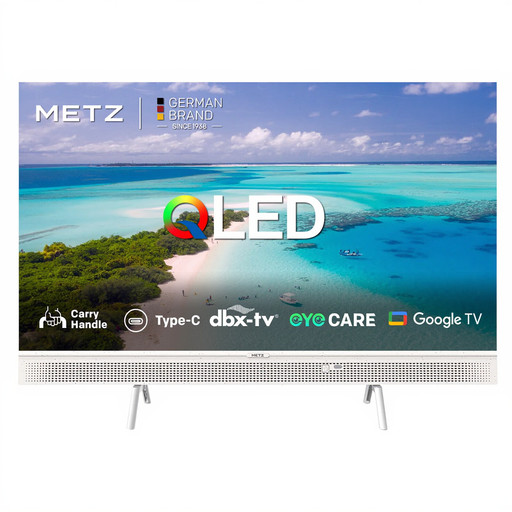
METZ Lifestyle Portable TV 32MQE7100Z 32-inch HD QLED TV
A portable TV to compare if moving it around is part of your viewing setup. Check the viewing angle from the seats you plan to use.
32 inch; HD; QLED+; HDR10; Chromecast; Dolby Audio; voice control; DVB-T/T2/C/S/S2.
View at Joybuy
Frequently asked questions
How can I check the viewing angle if the sofa isn’t directly in front of the TV?
Compare a test of the exact model that assesses changes in colour, brightness and contrast when viewed horizontally from an angle. Then check the picture from the furthest seat to the side that you use at home. The panel type is only a starting point.
How do I choose a screen size for different seats?
Measure the distance from your eyes to the screen from each of the different seats. Consumentenbond suggests around 2.4 times the screen’s diagonal as a comfortable starting point based on research, rather than a strict rule. When setting up the picture, also watch a familiar scene with both light and dark areas.
What do the energy label and warranty tell me?
Compare the EU energy labels for specific models, which show consumption for SDR and HDR, among other details. In the Netherlands, there is no fixed end date for the statutory guarantee. According to ACM ConsuWijzer, contact the seller if a product used normally develops a fault sooner than you could reasonably expect.
Is an EU energy label compulsory for TVs in the Netherlands?
TVs covered by EU rules for electronic displays must meet requirements for energy labels and product information. The European Commission sets out these obligations for offering the product for sale; they don’t require buyers to choose a particular energy class.


