What should you look for when buying?
Compact LCD or QLED TV
Choose this if: you often watch during the day and brightness is a major priority.
The trade-off: QLED TVs can often be brighter, according to the Consumentenbond, but that doesn’t tell you how a specific model handles reflections or tennis action.
Compact OLED TV
Choose this if: contrast and viewing from different seats are important to you.
The trade-off: OLED TVs generally offer a wider viewing angle and deeper blacks, according to the Consumentenbond. Also compare the brightness and reflections of the model you’re considering.
The Consumentenbond uses viewing distance as a starting point for choosing a screen size, and recommends paying attention to smooth picture quality for sport. Also view the specific TV in the lighting conditions and from the seats you use at home.
| What to consider |
What should you check? |
Who should pay particular attention? |
| Movement during rallies |
Look for a review of the specific model’s motion handling or watch match footage. Don’t treat a Hz or VRR specification as a test result. |
If I want to follow the ball and camera movement clearly, I pay close attention to how match footage actually looks. Around 26% of consumers give smooth picture quality top priority. |
| Screen size and placement |
Measure the viewing distance and available width. The Consumentenbond uses distance in centimetres divided by 2.4 as a first estimate of the screen diagonal in centimetres; also check the TV’s overall dimensions and stand position. |
If I sit close to the TV or have limited space on my unit, I want to know which size will fit first. For around 26% of consumers, screen size and placement come first. |
| Daylight and reflections |
View the TV from your usual seat and consider daylight and lamps shining on the screen. Assess brightness and reflections separately. |
If I mostly watch during the day, I want to see the court without distracting reflections. Around 21% of consumers put visibility in daylight first. |
| Viewing angle |
Check the picture from seats to the side; a review from the centre doesn’t necessarily show what the picture looks like when viewed at an angle. |
When I’m watching a match with guests, I want to be able to watch comfortably from the side too. Around 16% of consumers say seating away from the centre is their main priority when choosing a TV. |
| Access to the broadcast |
Check whether the app you want is available on the specific TV system, or what connection you need for an external receiver. Also check the broadcast resolution. |
If I want to watch my matches through a particular app or receiver, I want to know in advance that it’ll work. Around 11% of consumers give access to the broadcast top priority. |
TVs at Joybuy
This Joybuy selection includes compact 42- and 43-inch OLED and LCD/QLED TVs to compare for watching tennis in a small living room.
 No image available
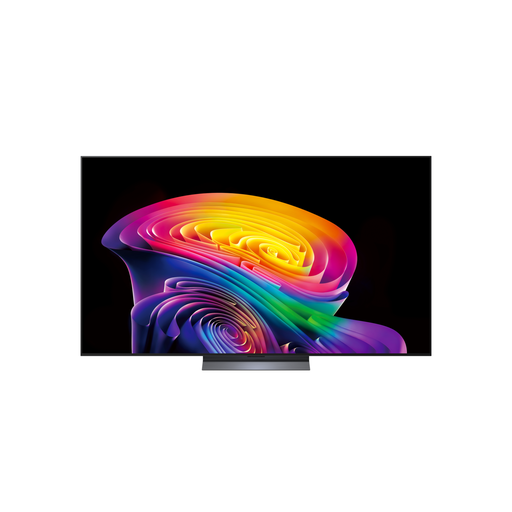
LG OLED42C68LA 42-inch 4K Ultra HD OLED Smart TV
A compact OLED option to compare with LCD and QLED models. Measure your viewing distance and available space first.
42 inch; 4K Ultra HD; OLED; Dolby Vision; HDR10; Dolby Atmos; HDMI 2.1; AMD FreeSync; webOS; Wi-Fi.
Joybuy
 No image available
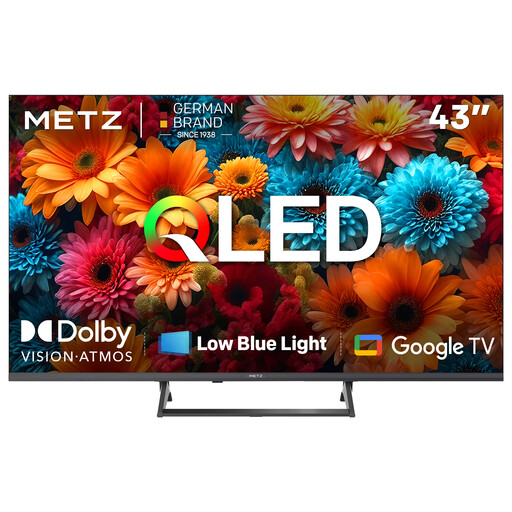
METZ 43MQF7500Z 43-inch QLED 4K UHD TV
A 43-inch LCD/QLED option to compare if you’re looking for a compact screen. Check that the size suits your viewing distance.
43 inch (109 cm); QLED; 4K UHD; Google TV; HDR10+; Dolby Vision; Dolby Atmos; HDMI 2.1; VRR; MEMC.
Joybuy
 No image available
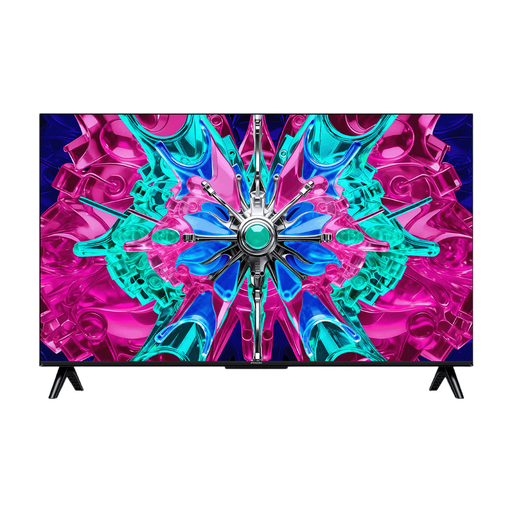
iFFALCON U65A 43-inch 4K LED Smart TV
A 43-inch LED option to compare with OLED and QLED. Measure the space for the TV and your viewing distance before choosing a screen size.
43 inch; 4K LED; 50Hz; Smart TV.
Joybuy
 No image available
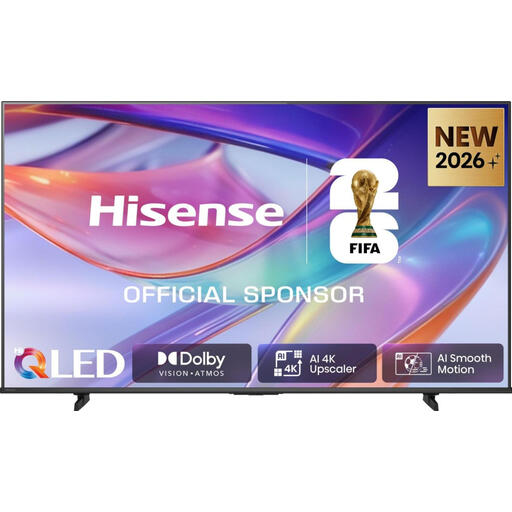
Hisense 43E7S 43-inch 4K QLED Smart TV
A compact QLED option to compare with other screen types; the technology listed alone won’t tell you how tennis footage looks.
43 inch; 4K QLED; 120Hz; Smart TV.
Joybuy
 No image available
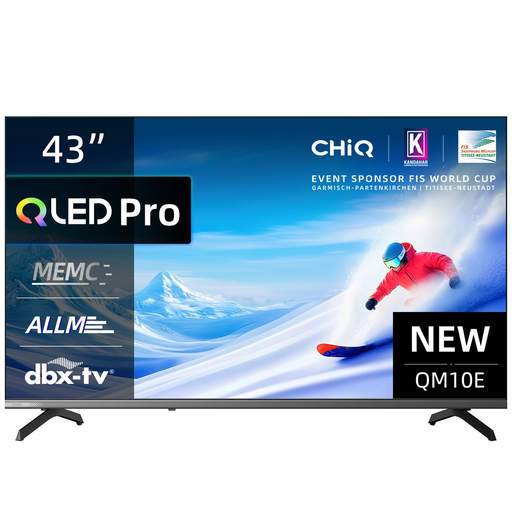
CHiQ U43QM10E 43-inch 4K Ultra HD QLED Smart TV
A 43-inch QLED model to compare if you’re looking for a compact TV. Check that it supports the way you want to watch and that you have enough space.
43 inch; 4K Ultra HD; Google TV; HDR10; VRR; ALLM; Dolby Audio; DVB-C/T/T2/S/S2 tuner; dual-band Wi-Fi.
Joybuy
Frequently asked questions
How do I choose the right screen size?
Measure the distance from your eyes, while seated, to where you plan to place the screen. Divide that distance in centimetres by 2.4 to get a first estimate of the screen diagonal in centimetres, as recommended by the Consumentenbond. Also consider nearby screen sizes and check the overall dimensions against your unit or wall.
What can I do if my tennis app isn’t available on the TV?
Before buying, check whether the app is available on the specific model’s smart TV system. The Consumentenbond says that not every app is available on every TV and that apps can disappear; a separate media player connected via HDMI may be an alternative.
Does a tennis match have to be in 4K to benefit from a 4K TV?
To get the original extra detail of 4K, the programme must also have been filmed and broadcast in 4K. So check the resolution of the broadcast you want to watch.
How do I compare the energy use of TVs?
Compare the EU energy label for the specific models. The European Commission lists a scale from A to G for electronic displays, along with separate information about HDR energy use. A cost comparison also depends on how long you use the TV for.
What warranty applies when buying a TV in the Netherlands?
You’re entitled to a product that works properly, and the retailer is your point of contact if there’s a problem. According to the Dutch government, there’s no fixed statutory warranty period in the Netherlands. Paid-for extended cover is separate from your statutory rights, so ask what extra protection it provides.


