
Housemates sitting to the side
If you watch from a wide sofa or separate chairs, compare how the picture looks from the seats at either end. RTINGS highlights viewing angle as a consideration when watching sport together.


Start by considering the seating, daylight and space available. Then compare each model’s viewing angle, reflection handling and motion performance, rather than focusing only on the refresh rate. RTINGS notes that a wide viewing angle matters when several people watch sport together, but the screen type alone won’t tell you how a particular model will perform in your room.
If you watch from a wide sofa or separate chairs, compare how the picture looks from the seats at either end. RTINGS highlights viewing angle as a consideration when watching sport together.
If there are windows or lights opposite the screen, look at both brightness and reflection handling. RTINGS points out that reflections aren’t determined solely by whether the screen has a matte or glossy finish.
Want to choose a screen size that suits the room and how you’ll use it together? The Consumers’ Association recommends considering factors such as size, picture quality and features, so don’t automatically pay for features your viewing source won’t use.
RTINGS highlights the importance of viewing angle and reflection handling when watching sport; the Consumers’ Association lists size and features as things to consider when choosing a TV.
| What to consider | What should you check? | Who should pay particular attention? |
|---|---|---|
| Viewing angle | Check how colour and contrast change when viewed from the seats at either end. | If we sit in different places, I want to be able to watch comfortably from the side too; around 29% of consumers prioritise viewing angle for this reason. |
| Daylight and reflections | Compare the brightness and reflection handling of the specific model in similar lighting conditions. | If there are windows or lights opposite the TV, I want to be able to see the screen during the day without reflections becoming distracting; around 22% of consumers prioritise visibility in daylight. |
| Motion performance | Compare response-time and motion-artifact test results; don’t treat the refresh rate as a guarantee of a sharp tennis picture. | I want to follow moving details during fast rallies; around 21% of consumers choose primarily on the basis of motion performance. |
| Size and positioning | Measure the viewing distance and available space, including room for a stand or wall bracket. | If we’re sharing the TV and room, I want a screen size that fits the space and suits what we can spend together; around 14% of consumers put space and cost first. |
| Access to the match | Check the service, app or connection you need for the broadcast you want to watch. | If we want to watch a particular match, I want to know in advance that our chosen viewing source will work; around 14% of consumers prioritise access through their intended source. |
The native refresh rate isn’t the same as overall motion performance. A higher refresh rate alone doesn’t prove that a tennis broadcast will look sharper.
Also compare model tests for response time and motion artefacts, and check which features your intended viewing source can use.
The screen type alone doesn’t determine the viewing angle or reflection handling of a specific model.
Compare tests from off-centre angles and check reflection handling in lighting conditions similar to those in your room.
Not every app is available on every smart TV model, and apps can be discontinued later.
Check that the service and connection you need are supported on the exact model. A separate media player may be an alternative if the app is missing or becomes unavailable later.
According to ACM ConsuWijzer, statutory rights in the Netherlands depend on what you could reasonably expect from the product under normal use; these are separate from a commercial warranty.
Read the terms of any additional warranty and, if something goes wrong, check the seller’s responsibilities too.
LG lists an OLED screen and webOS for the OLED48C67LA.AEU; it’s a more compact model to compare with others.
TCL lists the 55C6K as a QD Mini LED TV with a native refresh rate of 144 Hz.
The Philips 55OLED760/12 is a 55-inch OLED TV with Ambilight, for those who want to compare these features with other models.
Samsung lists the QE55QN80HAUXXN as a 55-inch Neo QLED Mini LED TV.
This selection includes LG OLED TVs in a range of screen sizes, plus a 98-inch TCL QD Mini LED TV. Measure your available space and compare the features with your seating arrangement and viewing source.
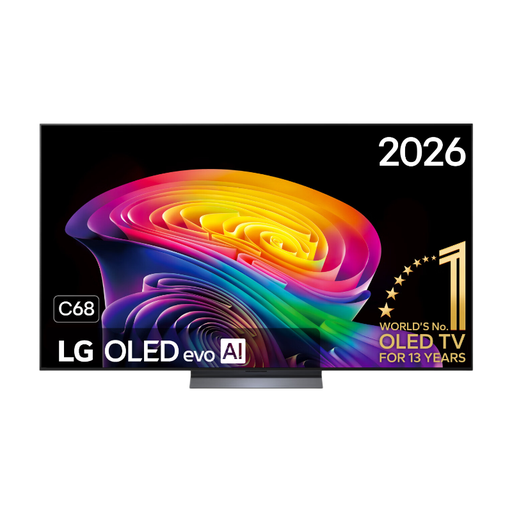 No image available
An option to compare if you have room for a 65-inch screen.
OLED, 4K, 120 Hz native and VRR up to 165 Hz.
No image available
A 55-inch option to compare with the space and viewing distance in your room.
OLED, 4K, 120 Hz native and VRR up to 165 Hz.
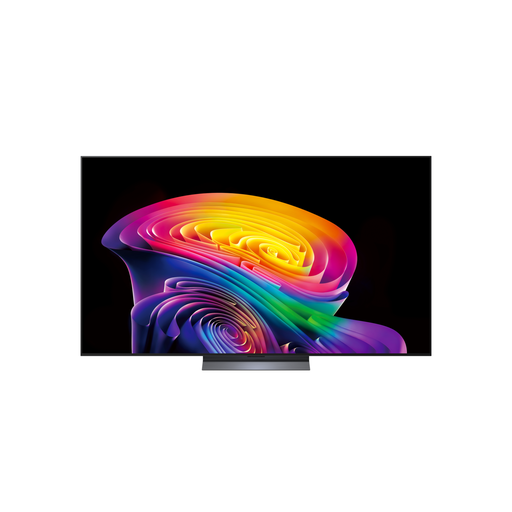 No image available
A 42-inch model to include in your comparison if space is the main consideration.
4K OLED Smart TV with Dolby Vision, HDR10 and HDMI 2.1.
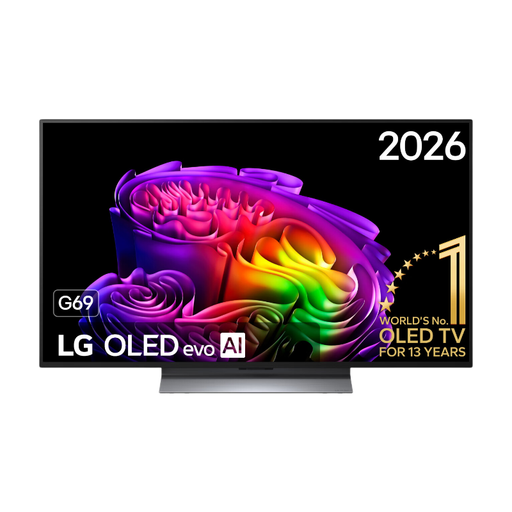 No image available
A 48-inch model to compare if you’re looking for a smaller screen size.
OLED, 4K, 120 Hz native and VRR up to 165 Hz.
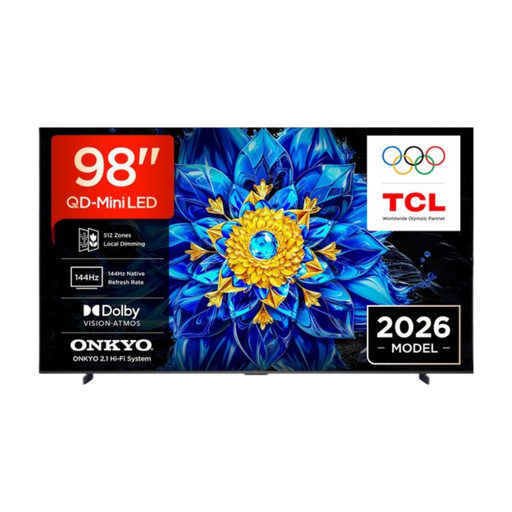 No image available
Only consider this 98-inch model if your room has enough space.
4K QD Mini LED Smart TV.
No, a high refresh rate isn’t essential for everyone. Compare response time, motion artefacts and the viewing source too; the refresh rate alone doesn’t prove that the broadcast will look sharper.
Measure the viewing distance and available space, and check the picture from the seats at either end. If you’re wall-mounting the TV, also check the dimensions and mounting details for the model you choose.
Check that the app you need is available on the exact TV model and through the service you plan to use. Smart TV apps can be discontinued later; a compatible separate media player may be an alternative.
Compare the EU energy labels of models that suit your preferred size and usage, including the stated consumption for SDR and HDR. The label can’t tell you your personal annual usage without knowing how long you watch TV.
According to ACM ConsuWijzer, when you buy a standard new television online, you generally have a statutory 14-day cooling-off period from the day after delivery. The seller is also responsible for your statutory rights if a product is faulty; a commercial manufacturer’s warranty doesn’t replace those rights.