
Tennis fans with a window opposite the TV
You often watch during the day and want to keep seeing the details of the match despite the light and reflections.


Start by choosing a TV that suits the light in your viewing area: high brightness can help, but it doesn’t tell you on its own how well the screen handles reflections. Then compare the motion handling and viewing angle of the exact model you’re considering. Mini-LED LCD and OLED have different strengths, so neither is automatically the right choice for every bright living room.
You often watch during the day and want to keep seeing the details of the match despite the light and reflections.
Focus on how the TV displays movement, not just on a high refresh rate in the specifications.
You want the picture to remain easy to follow from angled seats, and you’ll match the screen size to your viewing distance.
Choose this when: daytime visibility is a priority. Compare the brightness and reflection handling of specific models.
Trade-off: a high stated brightness doesn’t prove that a window opposite the screen won’t cause reflections. Also check the viewing angle if you have a wide sofa layout.
Choose this when: consider OLED if off-centre viewing and deep blacks are important to you.
Trade-off: Consumentenbond generally describes OLED TVs as having wider viewing angles, while QLED LCD TVs can often be brighter. Check how well each model handles reflections in your intended viewing spot.
Choose this when: consider this option too if the screen won’t be directly opposite a bright light source and you want to weigh up different models.
Trade-off: the QLED label alone doesn’t tell you how a particular TV handles reflections or fast movement.
Reflection handling, brightness, motion and viewing angle are separate things to consider. Consumentenbond and RTINGS explain why each can matter for your viewing area.
| Concern | What to look for | Who is this important for? |
|---|---|---|
| Daylight and reflections | Compare the reflection handling of the exact model and take the position of windows and lamps into account. | If I watch during the day with a window opposite the TV, I want to follow the picture without distracting reflections. Around 33% of consumers put reflections first. |
| Fast rallies | Compare the motion handling of the exact model; a stated panel refresh rate doesn’t guarantee the same performance for every broadcast. | If I want to follow the ball during fast rallies, I’d rather focus on motion handling than just a refresh-rate figure. Around 27% of consumers prioritise motion. |
| Viewing angle and screen size | Measure your viewing distance and decide which seats need to have a clear view of the picture. | If we sit spread across a wide sofa, I want to be able to watch comfortably from the side too, and choose a screen size that suits the distance. Around 20% of consumers share this priority. |
| Energy use and warranty | Compare the energy label for the exact model and check what an extended warranty adds to your statutory rights. | If I use the TV often, I want to factor in its energy use and know whether extra cover offers anything more. Around 20% of consumers prioritise energy use and warranty cover. |
Brightness can help in ambient light, but reflections are a separate consideration, and QLED models vary.
Compare the reflection handling of the exact model and take the planned position of the screen into account.
A stated panel refresh rate doesn’t tell you on its own how every source or fast-moving scene will look.
Compare motion ratings for the exact model and, where possible, watch footage from the TV source you plan to use.
An extended warranty doesn’t replace your statutory rights if a product develops a fault.
The Dutch Government advises checking whether the extra cover actually gives you additional rights before paying for it.
The 65C7K is a 65-inch QD Mini-LED model to consider when comparing TVs for watching sport.
The K-65XR70 BRAVIA 7 is a 65-inch mini-LED LCD option available in the Netherlands.
The OLED55G55LW G5 is a 55-inch OLED option for anyone also weighing up viewing angle and black levels.
The 65MLED910/12 is a QD Mini-LED model with Ambilight.
The QE55QN90FATXXN QN90F is a 55-inch Neo QLED 4K mini-LED model.
This selection includes OLED and mini-LED TVs to compare for watching tennis in a bright living room.
 No image available
An OLED option to compare if off-centre viewing and black levels matter to you too. Viewing angle and reflections still depend on your viewing area and the exact model.
The product name lists 120 Hz native and VRR up to 165 Hz. These specifications alone don’t guarantee sharper tennis motion.
 No image available
A 65-inch mini-LED option to compare if that screen size suits your viewing distance. Also check the reflection handling and motion performance of the exact model.
The product name lists 144 Hz, Sports Mode and MEMC. These features don’t guarantee a sharp picture for every tennis broadcast.
 No image available
A 55-inch option to compare if this size suits your viewing distance. Assess reflections in the spot where you plan to put the TV.
The product name lists Matte Screen Ultra and 60 Hz. The screen label alone doesn’t prove how distracting reflections will be in your living room.
 No image available
A large-screen option to compare if 75 inches suits your viewing distance and available space.
The product name lists 144 Hz. That’s a specification, not proof that tennis motion will look sharper.
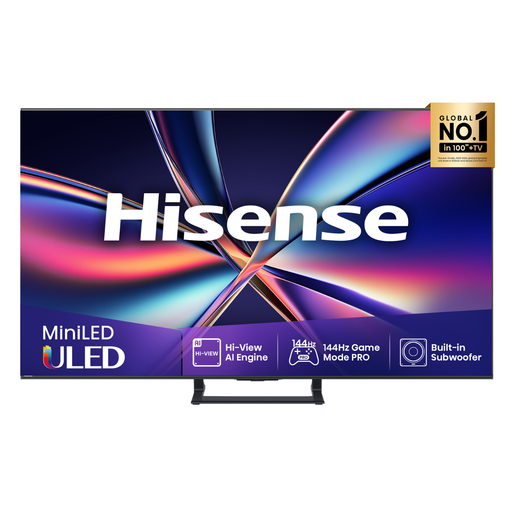 No image available
A 75-inch option to compare if the screen size suits your viewing distance and living room layout.
The product name lists 144 Hz. Also compare the motion performance of the exact model with the source you’ll use to watch tennis.
No. A stated refresh rate is a model specification, not a guarantee of good motion handling for every broadcast. Compare reviews of the exact TV and, where possible, watch footage from the TV source you use.
First, measure the distance between your sofa and the TV, and check where windows might reflect in the screen. Consumentenbond gives around 2.4 times the screen diagonal as a comfortable viewing distance based on its own research. Use this as a guide, not a hard-and-fast rule.
Compare the energy label for the exact model and check what an extended warranty adds. According to the Dutch Government, extra cover is only worthwhile if it gives you more rights than the statutory warranty.
For many distance sales, you have a 14-day cooling-off period. Check the applicable terms and exceptions. According to the Dutch Government, when a consumer buys a new, similar TV, the retailer must take back the old TV free of charge under the like-for-like take-back scheme.