What should you look for when choosing?
First, measure the available space and viewing distance. Then compare the picture from different seats, in your usual lighting, and with the way you plan to watch films.
| What to consider |
What should you check? |
Who is this important for? |
| Screen size and viewing |
Measure the viewing distance and the TV’s full dimensions, including the stand. The Consumentenbond suggests dividing the viewing distance by 2.4 as a starting point for the screen diagonal in centimetres. |
If I’m watching with housemates from different seats, I want a screen that fits and remains easy to view from the side. Around 33% of consumers put viewing experience and screen size first. |
| Light and reflections |
Compare reflections and picture quality under the lighting you usually use. According to the Consumentenbond, OLED TVs generally offer wider viewing angles and deeper blacks, while QLED TVs can often be brighter. |
If you mainly watch in daylight, you’ll want to judge the picture clearly despite windows or lamps. Around 27% of consumers give lighting and reflections top priority. |
| Playback and dialogue clarity |
Check whether your preferred streaming service is available or whether you can connect an external device. Also assess the sound on the exact model you’re considering. |
If I want to start a documentary easily and follow the dialogue, I check the apps, connections and sound. Around 20% of consumers put playback and dialogue clarity first. |
| Shared running costs |
Compare the energy labels of the models you’re considering and agree who will buy the TV and keep the purchase details. |
If you’re sharing the TV with housemates, it’s worth agreeing how it will be bought and used in advance. Around 20% of consumers give shared costs top priority. |
Brands to compare
The model ranges listed here give you different features to compare. What applies to one model should not be taken as a judgement on every TV from the same brand.
LG
LG describes the LG OLED55B68LA as an OLED TV with webOS. This reference model is different from the LG OLED55C68LA in the product selection below.
- The Consumentenbond says OLED TVs generally offer wider viewing angles and deeper blacks.
- These general features are not an independent test of the OLED55B68LA; check reflections and picture quality in your own room.
TCL
TCL describes the TCL 55C7K as a QD Mini LED TV, making it one to compare for a room with changing light levels.
- The product description specifies QD Mini LED.
- The manufacturer’s claims about brightness and contrast are not independent test results for this model. Check the picture from seats at the side.
Philips
Philips lists the 55PUS8500/12 as a 55-inch 4K QLED TV with Ambilight and Titan OS. This model differs from the Philips 55PUS8001 in the product selection.
- Ambilight is an extra feature to consider if you’d like to use it.
- Ambilight alone says nothing about dialogue clarity or viewing angle. Check the apps, picture and sound on the exact model.
Samsung
The Samsung QE55QN90FATXXN is a 55-inch Mini LED model worth comparing for a bright living room.
- Samsung lists Glare Free as a feature of this model.
- That feature does not guarantee that reflections will disappear in every room. Assess the TV under your usual lighting conditions.
Joybuy TVs for watching together
This Joybuy selection includes 55- and 75-inch OLED and QLED TVs for watching documentaries together. Compare the screen size with your viewing distance and available space, and check the picture and playback options for each model.
 No image available
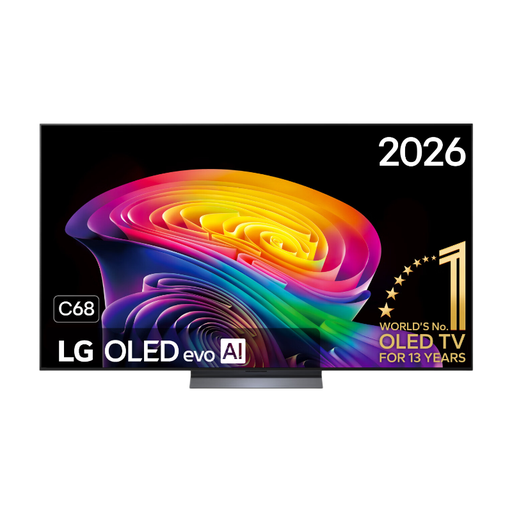
LG OLED55C68LA 55-inch OLED Evo AI C6 4K Smart TV
A 55-inch OLED TV to compare if dark scenes and watching together from different seats matter to you.
55 inches, 4K and Smart TV.
View at Joybuy
 No image available
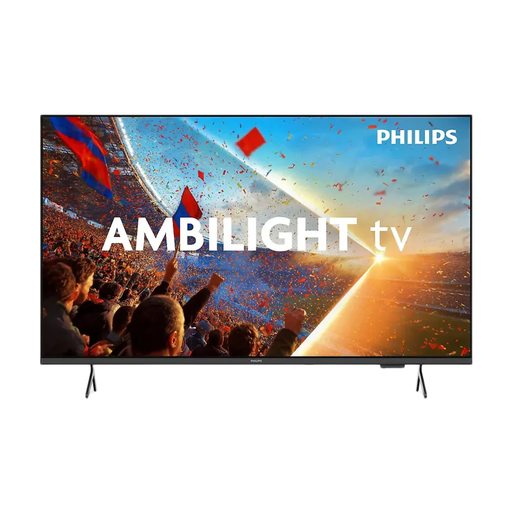
Philips 55PUS8001 55-inch 4K TV
A 55-inch 4K model to consider if this size suits your viewing distance. Check the playback options available on the exact model.
55 inches and 4K.
View at Joybuy
 No image available
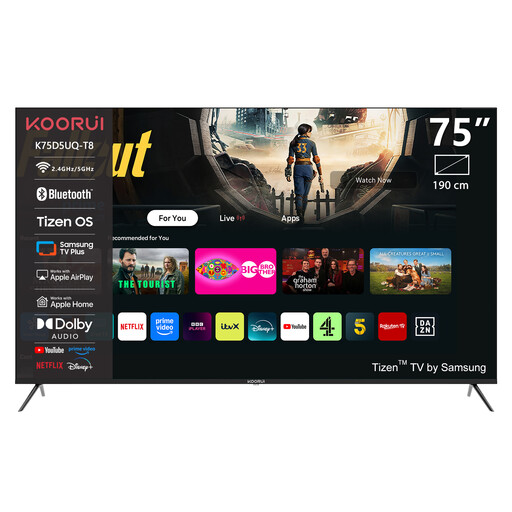
KOORUI K75D5UQ-T8 75-inch 4K UHD QLED Smart TV
The 75-inch size is worth comparing if you have the space and viewing distance for a large screen.
75 inches, 4K UHD, QLED and Tizen OS.
View at Joybuy
 No image available
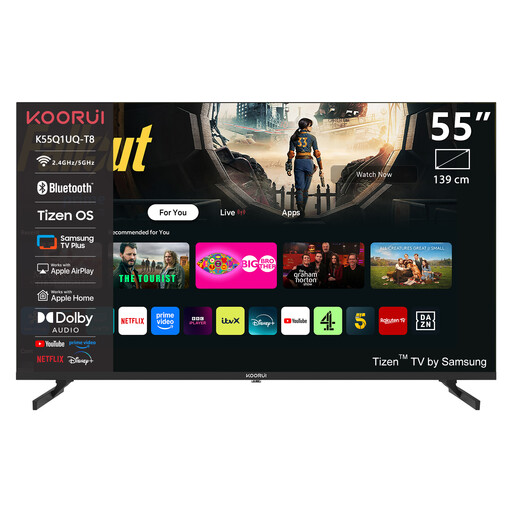
KOORUI K55Q1UQ-T8 55-inch 4K QLED Tizen TV
A 55-inch model to compare if this size suits the seating arrangements and available space.
55 inches, 4K, QLED and Tizen TV.
View at Joybuy
 No image available
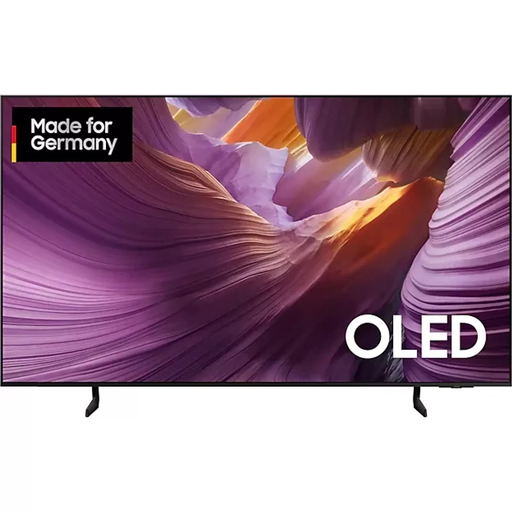
Samsung S85F Series GQ55S85FAU 55-inch OLED 4K
A 55-inch OLED model to compare if dark scenes and the screen size suit your viewing set-up.
55 inches, OLED and 4K.
View at Joybuy
Frequently asked questions
How do you choose a screen size for a group viewing night?
Measure from your usual seats to where the screen will be. The Consumentenbond suggests dividing the viewing distance by 2.4 as a starting point for the screen diagonal in centimetres. Also compare nearby screen sizes and check that the TV fits with its stand attached.
Which picture setting could you try for the screening?
Assess the picture under your usual lighting and try a picture mode you like, such as Film mode. The Consumentenbond recommends checking that details are visible in both light and dark areas; customised settings may increase energy use.
Are you always entitled to exactly two years’ statutory warranty on a TV in the Netherlands?
No. The Dutch government states that there is no fixed statutory warranty period in the Netherlands: you’re entitled to a product that works as it should, depending on what you could reasonably expect. If there’s a problem, contact the seller. When considering additional cover, check what extra rights it provides.
Can you screen a documentary in a student house without permission?
According to Auteursrechtnl, you do not need the creators’ permission for a screening within a strictly domestic circle; this may include family, close friends or a similarly close-knit group. Sharing an address alone does not prove that an evening with invited guests qualifies. Consider the guests and the nature of the event, and check the terms of your streaming service too. For screenings outside the domestic circle, you may need permission from the rights holders.


