
Watching from close up
There’s little space between your sofa and the TV, so you’re looking for a screen that suits your living room. The Consumentenbond recommends measuring the distance from your eyes and comparing nearby screen sizes.


Start by measuring the distance between your eyes and the screen, and consider where everyone watching will be sitting. A larger screen or a higher refresh rate isn’t automatically the better choice. Then compare viewing angles, reflections, motion handling and how you’ll receive the match. The Consumentenbond generally describes OLED TVs as having wider viewing angles, while LCD TVs often offer high brightness. The results depend on the specific model and room.
There’s little space between your sofa and the TV, so you’re looking for a screen that suits your living room. The Consumentenbond recommends measuring the distance from your eyes and comparing nearby screen sizes.
You watch with other people, including those sitting at an angle to the screen. In that case, it’s worth considering the viewing angle and how well the picture can be seen in ambient light.
You want to follow the ball and fast camera movements clearly, and watch the match using the TV service, app or device of your choice. A high stated refresh rate alone doesn’t guarantee good motion handling.
First, measure the available viewing distance and space for the TV. Then consider which viewing positions, lighting conditions and reception method matter most for your match nights.
A good fit for: a living room where not everyone sits directly in front of the screen, if a compact OLED model is important to you.
Consider: if there’s a lot of daylight, check how visible the picture is and how reflective the specific model is. The screen size doesn’t replace measuring your viewing distance.
A good fit for: a bright room, or if you want to compare LCD models in different sizes and price brackets.
Consider: viewing angles, reflections and motion handling vary by model. QLED is a type of LCD, not OLED.
| What to consider | What should you check? | Who should consider this? |
|---|---|---|
| Screen size and placement | Measure the distance from your eyes to the screen and check the TV’s width and stand. The Consumentenbond suggests a viewing distance of around 2.4 times the screen diagonal as a guideline. | If space is limited, I want a screen that’s comfortable to watch and fits in the room. Around 36% of consumers give screen size and placement top priority. |
| Viewing angle and light | Compare the viewing angle from the furthest seat and check for reflections in your room’s lighting. The Consumentenbond generally describes OLED TVs as having wider viewing angles. | If friends are sitting at an angle to the sofa, I want everyone to be able to follow the picture clearly. Around 29% of consumers prioritise visibility from different seats and lighting conditions. |
| Fast-paced football | Look for a review of the exact model’s handling of moving sports images. According to the Consumentenbond, a TV signal is usually 50 Hz, and image processing can cause artefacts during irregular movement. | If I want to follow the ball and camera movements clearly, I need to assess motion handling rather than just the refresh rate. Around 21% of consumers make smooth live viewing their top priority. |
| Reception and use | Check that the app, tuner or connections you need work with your chosen service, and look at the energy label for the exact model. The Dutch government explains that TVs are among the appliances for which an energy label is required. | If I mainly want to be sure my chosen reception method will work and compare running costs, I want to check these points in advance. Around 14% of consumers prioritise reception and running costs. |
The right starting size depends on the distance between your eyes and the screen, not just on how many guests you have.
Measure first and compare neighbouring sizes. Also check that the TV and stand will fit on your furniture or wall.
Frame interpolation can cause artefacts during irregular movement. A stated gaming refresh rate doesn’t automatically tell you how a live broadcast will look.
Look for a review of the exact model’s motion handling and compare the available picture settings.
QLED is a type of LCD. According to the Consumentenbond, OLED and LCD have different general characteristics when it comes to viewing angles, black levels and brightness.
Compare the specific model from the furthest seat and in the lighting conditions you’ll have when watching the match.
A TV won’t automatically give you access to a particular match; the app, connection or receiver you need depends on the service you choose.
Check in advance how you’ll receive the broadcast and test the complete set-up. An external receiver or separate sound system may require extra equipment and connections.
LG lists the OLED42C68LA as a 42-inch OLED model, making it a compact option to include in your comparison.
Philips describes the 43PUS7000/12 as an LCD LED TV and the 43PUS9050/12 as a QLED TV with Ambilight. These are different models and should be assessed separately.
Sony describes the XR42A90KAEP as a compact 42-inch OLED TV with Google TV.
This selection includes compact OLED, LED and QLED TVs to compare for a small living room. Viewing distance, ambient light and motion handling will still depend on the room and the exact model.
 No image available
A compact OLED model to compare if you watch from several seats; the Consumentenbond generally describes OLED TVs as having wider viewing angles.
42 inches, 4K, OLED and Smart TV.
 No image available
A 43-inch 4K model to include in your comparison for a small living room; check in advance that its width and stand will fit.
43 inches, F and 4K.
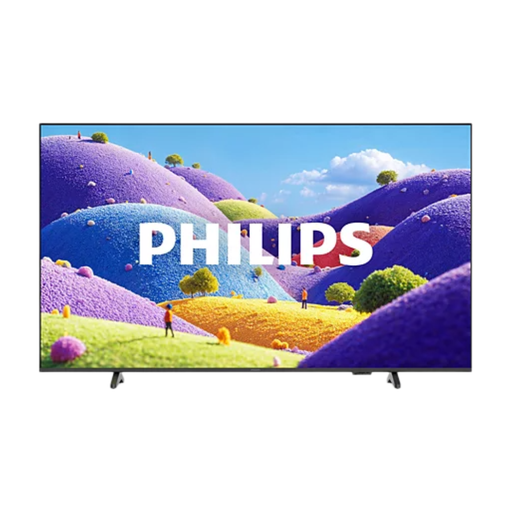 No image available
An LED model to assess alongside other TV technologies; see how this exact model performs with the lighting and seating positions in your room.
4K and LED.
 No image available
A 43-inch QLED model to compare if you’re weighing up LCD and OLED options; assess viewing angles and reflections from the seats you plan to use.
43 inches, 4K, QLED and Smart TV.
 No image available
A 43-inch model to compare for a compact living room; assess the motion handling of the exact model rather than relying on the refresh rate alone.
43 inches, 4K UHD, Smart TV and 60 Hz.
Measure the distance from your eyes to where you plan to put the TV. The Consumentenbond suggests around 2.4 times the screen diagonal as a comfortable starting point and recommends comparing nearby sizes. Also check that the TV and stand will fit. It’s a guideline, not a hard-and-fast rule.
No. A higher refresh rate alone doesn’t guarantee a better picture for football. According to the Consumentenbond, a TV signal is usually 50 Hz, and generating extra frames can cause picture errors during irregular movement. So compare the motion handling of the exact model.
Test your chosen app, tuner or external receiver and the connection you need in advance. Check the picture and sound from the seats you’ll be using; the Consumentenbond assesses picture, sound and ease of use as separate aspects.
Extra cover isn’t a condition of your statutory guarantee; if a product is faulty, the retailer is responsible under the applicable rules. ACM ConsuWijzer says that for a TV bought online, you’ll generally have a statutory 14-day cooling-off period after delivery. Check the exceptions and returns terms that apply to your specific purchase.
Yes. According to the Dutch government, TVs are among the appliances that must have an energy label. Use the label to compare the energy consumption of the specific models you’re considering.