What should you look for when choosing?
Start with your viewing distance and where you’ll put the TV. Then compare picture quality for films, viewing options and running costs.
| What to consider |
What to look for |
Who should pay particular attention? |
| Size and placement |
Measure your viewing distance and the usable space on your furniture. Check the TV’s dimensions with its stand; the Dutch Consumers’ Association suggests dividing the distance in centimetres by 2.4 as a starting estimate for the diagonal measurement. |
I want a TV that’s comfortable to watch and fits securely on my furniture; about 33% of consumers put a suitable size and placement first. |
| Picture quality and light |
Compare contrast, reflections and visibility in daylight for each model. QLED is a type of LCD, not the same as OLED. |
When watching films with dark scenes, I also want to take the light in my room into account; about 25% of consumers give picture quality and the effect of ambient light their highest priority. |
| Dialogue and films |
Assess the sound quality of the specific model and check that your preferred app and subtitles are available for the film and streaming service you use. |
I want to follow dialogue and know whether my preferred film is available with subtitles; about 25% of consumers prioritise clear speech and access to films. |
| Running costs and service |
Compare energy figures on the same basis, such as kWh per 1,000 hours. Also check any streaming service fees and the warranty terms. |
I want to know about energy use in advance and who to contact if something goes wrong; about 17% of consumers make running costs and service their top priority. |
TVs on Joybuy
These compact TV options include 42- and 43-inch models with OLED, LED and QLED technology, so you can weigh them up against your viewing distance, available furniture space and how you watch films.
 No image available
LG OLED42C68LA 42-inch 4K OLED Smart TV
A compact OLED option to compare if films with dark scenes are important to you. Also consider its screen size alongside your viewing distance and available furniture space.
42 inches; 4K Ultra HD; OLED; webOS; 20 W audio output.
Displaying static images for long periods is a general consideration with OLED. An older test by the Dutch Consumers’ Association doesn’t predict the risk for this specific model.
View at Joybuy
 No image available
LG 43NU800B6LC 43-inch 4K Nano UHD Smart TV
A 43-inch model to compare with your viewing distance and available space if you’re considering an LED TV.
43 inches; 4K; Filmmaker Mode; webOS.
View at Joybuy
 No image available
Philips 43PUS8001/12 43-inch 4K LED TV
A 43-inch LED option to compare with your viewing distance and available furniture space; Philips lists Ambilight as a feature of this model.
43 inches; 4K; LED; Titan OS; Ambilight.
View at Joybuy
 No image available
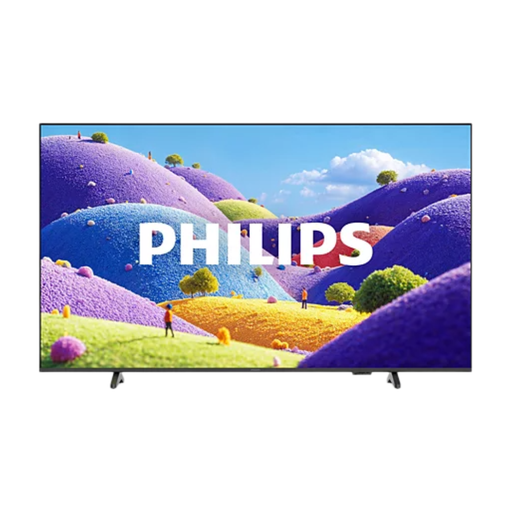
Philips 43PUS7061/12 43-inch 4K LED TV
A 43-inch LED option to weigh up against your viewing distance and the space available on your furniture.
43 inches; 4K; LED; Titan OS; 20 W audio output; HDR10+ and HLG according to the product description.
View at Joybuy
 No image available
Philips 43-PQS7801 43-inch 4K QLED Smart TV
A 43-inch QLED option to compare with OLED and other LCD models, taking your own viewing distance and room as the starting point.
43 inches; 4K; QLED; Titan OS; 20 W audio output.
View at Joybuy
Frequently asked questions
Does a TV in a small room always need to be 32 inches?
No. The Dutch Consumers’ Association suggests dividing your viewing distance in centimetres by 2.4 as a starting estimate for the screen’s diagonal measurement, and recommends looking at nearby sizes too. Also measure the space available for the TV and its stand.
Can I put a TV bracket up in my rented home?
It depends on the alteration involved. The Dutch government refers to minor alterations that can be reversed without too much expense, such as small drill holes. Don’t assume every bracket installation falls into this category; if you’re unsure about a more substantial alteration, ask your landlord. A TV stand is an alternative to wall-mounting.
Are Dutch subtitles available for every film?
They’re not guaranteed for every film. NPO explains how to switch on subtitles through NPO Start or when watching TV; then check whether subtitles are available for the specific title and way you plan to watch it.
Do I need an NPO Start account to watch something?
Not always. NPO says you can watch catch-up programmes and live streams for free without an account. Check whether the film you want to watch is currently available and whether access requires payment.
How do I compare the energy use of two TVs?
Compare the energy figures on the same basis. The European energy label for TVs shows consumption in kWh per 1,000 hours. To work out your own costs, you’ll also need to know how many hours you watch TV and your electricity tariff.


