
Viewer with limited space
You want to watch documentaries from a small living room without the screen or stand taking up too much space. The Consumers' Association recommends measuring your viewing distance at home.


Start by measuring the distance from your eyes to the screen and the space available for the TV: a small living room doesn’t automatically call for one particular screen size. Then consider the light in the room, how important dark scenes are to you and whether dialogue is easy to hear. Also check that your streaming apps work on the exact model.
You want to watch documentaries from a small living room without the screen or stand taking up too much space. The Consumers' Association recommends measuring your viewing distance at home.
You switch between bright nature scenes and dark scenes, and want to match the screen type to the lighting you usually watch in. The Consumers' Association highlights the differences between LCD and OLED, as well as reflections caused by incoming light.
You prioritise spoken commentary and access to your own streaming service over extra picture features. The Consumers' Association notes that not all apps are available on every smart TV.
Choose this if: your measured viewing distance and available space call for a modest-sized screen, or you often watch in daylight. The Consumers' Association notes that LCD TVs can often be bright.
The trade-off: viewing angles, reflections and black levels vary by model, so compare these features for the specific TV.
Choose this if: you often watch during the day and brightness and contrast matter to you. Compare independent reviews of the exact model.
The trade-off: Mini LED is still an LCD technology. The name alone doesn’t tell you how the model performs or handles reflections.
Choose this if: you mainly watch in subdued lighting and dark scenes matter to you.
The trade-off: check how it handles reflections in your room, and bear in mind the risk of screen burn-in with prolonged static images, as described by the Consumers' Association.
| What to consider | What should you check? | Who should pay extra attention? |
|---|---|---|
| Screen size and placement | Measure your viewing distance and the available width, including the TV’s dimensions with its stand. The Consumers' Association suggests dividing the distance in centimetres by 2.4 as a starting estimate for the screen diagonal in centimetres. | I want the screen to be comfortable to view and to fit on my TV unit. Around 29% of consumers put size and placement first. |
| Light, reflections and contrast | Compare reflections, viewing angles, and bright and dark scenes under lighting similar to your room. Don’t judge picture quality by an HDR or Mini LED label alone. | When I watch during the day, I want to be able to see the picture; with dark scenes, I pay more attention to contrast. Around 23% of consumers prioritise picture performance in their usual lighting conditions. |
| Dialogue clarity | Listen to spoken dialogue at the volume you use at home and check a review of the exact model. Also check which audio connections it has if you might want to use external audio later. | I want to follow the narration without constantly adjusting the volume. Around 18% of consumers put clear spoken dialogue at the top of their list. |
| Streaming and controls | Check that the services you use are available on the exact model and that it has a suitable HDMI connection for a separate media player. | I want to open my documentary service directly or use an HDMI alternative. Around 18% of consumers give access to streaming services the greatest weight. |
| Energy use and additional costs | Compare energy labels and model-specific information for SDR and HDR on the same basis. Also factor in any installation or extra equipment costs. | I want to know in advance what it will cost to run the TV and what extra expenses I might have. Around 12% of consumers start with energy use and additional costs. |
Your actual viewing distance and the space on your TV unit both help determine which size will fit. Even a suitable screen diagonal may be too wide once you include the stand.
Measure the distance from where you sit, and check both the TV’s width and its dimensions with the stand.
Viewing angles, reflections and HDR brightness are different features. A label on its own doesn’t tell you how a particular model displays documentary footage.
Compare reviews of the exact model and consider the conditions you usually watch in.
The streaming app you need may not be available on the model you choose. A separate media player could be an alternative, but it needs a suitable HDMI connection.
Before buying, check that the app is available on the exact model and see which HDMI connections it has.
A manufacturer’s warranty doesn’t automatically determine the extent of your statutory rights. What applies depends on the product and the circumstances.
If a fault occurs during normal use, contact the retailer and assess your rights in light of the situation. ACM ConsuWijzer explains that statutory rights apply alongside a manufacturer’s warranty.
Philips describes the Philips 43PUS8001/12 as a compact 4K LED TV with Ambilight and Titan OS. This may be worth considering if you’re interested in lighting behind the screen and a smart TV platform.
LG’s range includes the 42-inch OLED42C68LA. This compact OLED model is worth considering if dark scenes matter to you.
Samsung describes the Samsung QE43QN72HAUXXN as a 43-inch Neo QLED TV with Mini LED backlighting.
This selection includes compact 42- and 43-inch OLED, LED and QLED models. Measure your viewing distance and available space before choosing a size.
 Image unavailable
A 42-inch OLED model to consider if the size suits your space and dark scenes matter to you. Check how it handles reflections in your room.
The product name lists Dolby Vision, HDR10, Dolby Atmos and HDMI 2.1. The product description mentions webOS, AirPlay 2 and a 20 W audio system.
As the Consumers' Association explains, prolonged static images can pose a risk of screen burn-in on OLED TVs.
 Image unavailable
A 43-inch LED LCD model to compare if this size suits your living room. Check that the apps you need are available for the services you use.
The product information lists Titan OS and Ambilight, as well as HDR10+, Dolby Atmos and IntelliSound.
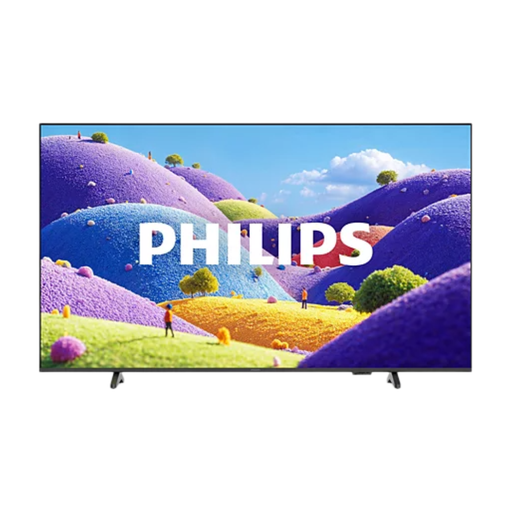 Image unavailable
This 43-inch LED model could suit you if your measured viewing distance and available TV unit space work for this size.
The product information lists HDR10+, HLG and Titan OS, as well as a 20 W audio system, Dolby Atmos and DTS:X.
 Image unavailable
A 43-inch QLED model to compare if it fits your living room. Check the picture performance of the exact model.
The product information lists HDR10+, HLG and Titan OS, as well as Dolby Atmos, DTS:X and IntelliSound.
 Image unavailable
This 43-inch model is one to compare if its size suits your viewing distance and available space.
The product information lists Google TV, built-in Chromecast, HDR10+ and Dolby Vision, as well as Dolby Atmos, MEMC and HDMI 2.1.
Measure the distance from your eyes to where the screen will go. Divide that distance in centimetres by 2.4 to get a starting estimate for the screen diagonal in centimetres, as recommended by the Consumers' Association. Then compare the available sizes and check that the TV fits with its stand.
No. The label alone doesn’t tell you how a particular screen handles brightness, contrast and reflections. You also need HDR content to watch in HDR, so compare reviews of the exact model.
Before buying, check whether the app is available on the exact model. A separate media player connected via HDMI could be an alternative, provided the TV has a suitable connection. Continued support for built-in apps isn’t guaranteed.
Compare the energy label information and the consumption figures for the specific models, paying attention to SDR and HDR. Screen size and picture settings also affect actual energy use. Your costs will depend on how many hours you watch and your electricity tariff, too.
Start with a home setting rather than the often brighter shop setting. Watch a familiar scene with bright and dark areas in the lighting you normally use.
For distance purchases, you usually have a 14-day cooling-off period, according to the Government of the Netherlands. Statutory guarantees are also separate from any manufacturer’s warranty: ACM ConsuWijzer explains that you can contact the retailer if a product doesn’t perform as you could reasonably expect under normal use. The appropriate solution depends on the circumstances.