
Slides from the sofa
You want to follow small text, maps and dates from your usual seat. So measure your viewing distance before choosing a screen size; the Dutch Consumers’ Association offers guidance on viewing distances.


Start by measuring your viewing distance and checking whether slides and subtitles are readable from your seat. A small living room doesn’t automatically mean that a 32-inch TV is the right size. According to the Dutch Consumers’ Association, a 42- or 43-inch screen can display text at a larger size, but takes up more room; viewing distance remains the deciding factor. Consider OLED if viewing angles and contrast matter to you, and compare the screen in your room’s lighting, as the Dutch Consumers’ Association notes that LCD TVs are often bright.
You want to follow small text, maps and dates from your usual seat. So measure your viewing distance before choosing a screen size; the Dutch Consumers’ Association offers guidance on viewing distances.
You want to follow the explanations clearly and use subtitles where available. Test the sound with spoken content, and check whether subtitles are available for the video you’re watching.
You want to know whether you can easily connect your laptop to the TV. The Dutch Consumers’ Association describes HDMI as one possible wired connection, so a smart TV app isn’t your only option.
Choose this size if: you sit close to the screen or have limited space. The Dutch Consumers’ Association gives a range of 32–43 inches for a viewing distance of 200 cm; check how that works for your own viewing position.
Bear in mind: at the same viewing distance, text will look smaller on a 32-inch screen than on a 42- or 43-inch screen.
Choose this size if: you sit further from the screen or find small details hard to read on a smaller screen, and you have room for the TV.
Bear in mind: the TV takes up more space; viewing angles and reflections vary by model.
Choose this technology if: you watch from an angle or contrast matters to you. The Dutch Consumers’ Association says OLED TVs generally offer wider viewing angles and deeper blacks.
Bear in mind: OLED isn’t essential for a history lecture. The Dutch Consumers’ Association notes that LCD TVs are often bright, which may be an advantage in daylight.
Measure the distance from your eyes to the planned screen position, then check how you’ll play your lecture. View a representative slide and a spoken clip from your usual seat.
| What to consider | What should you check? | Who is this important for? |
|---|---|---|
| Slide readability | Measure the distance from your eyes to the screen and check the available width. The Dutch Consumers’ Association uses the viewing distance in centimetres divided by 2.4 as a starting point for the screen’s diagonal measurement. Test a representative slide too. | I want to read small names, dates and map labels from my sofa. Consumers who put readability first account for around 36%. |
| Speech and subtitles | Listen to spoken content from your usual viewing distance, and check whether subtitles are available for the lesson and whether you can adjust them. | I want to follow the explanations, including when I need subtitles. Consumers who prioritise clear speech or subtitles account for around 29%. |
| Playing the lecture source | Check whether the service has a suitable TV app or whether your laptop and TV have compatible connections. The apps available may change; the Dutch Consumers’ Association also describes HDMI as a connection option. | I want to watch lectures through the service itself, a browser or my laptop. Consumers who prioritise source compatibility account for around 21%. |
| Lighting and seating position | Consider windows and seats beside the screen. Compare the specific TV in similar ambient light and from your usual viewing angle. | I watch in daylight or don’t always sit directly in front of the TV. Consumers who prioritise lighting or off-centre viewing account for around 14%. |
Viewing distance helps determine whether small text is readable from the sofa; the size of the room alone won’t tell you which screen diagonal is right.
Measure the distance from your eyes to the planned TV position, then test a real slide before comparing 32 inches with 42 or 43 inches.
A higher screen resolution can’t show image detail that isn’t present in the video source. Resolution also doesn’t tell you whether spoken explanations will be easy to hear.
Check the resolution of the lecture source, and assess the sound separately using spoken content.
Not every app you want will be available, and the apps on offer may change. Playing content from a laptop may require a separate cable or a suitable adapter.
Check whether your service has an app, and whether your laptop or another source device will work with a suitable connection.
LG’s range includes the 43-inch LCD LED UHD UA75 and the 42-inch OLED C6. These models give you two different screen technologies to compare.
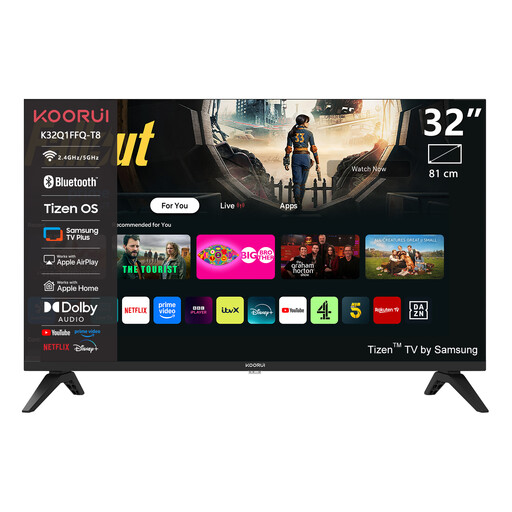
Samsung’s F6000F is an example of a compact 32-inch Full HD smart TV, worth considering if space is limited or you sit close to the screen.
The Philips 43PUS8000/12 is a 43-inch LCD LED TV with Ambilight and Titan OS. It’s one model to consider when comparing 43-inch options and ways to play content.
This selection of Joybuy products includes a 32-inch model and 42- or 43-inch models, so you can match the screen size to your viewing distance and the space available.
 No image available
A good fit if you’re considering a compact OLED TV for its viewing angle or contrast; check the viewing distance and visibility in your room.
Specifications in the product name: 42 inches, 4K Ultra HD, OLED, Dolby Vision, HDR10, Dolby Atmos, HDMI 2.1, AMD FreeSync and webOS.
 No image available
A good fit if you’re looking for a 32-inch screen for close viewing or a tight space; check whether the text on a lecture slide is readable from your seat.
Specifications in the product name: 32 inches, Full HD, QLED and Tizen OS.
 No image available
A good fit if you’re considering a 43-inch screen for viewing slides from the sofa, provided the viewing distance and available space work for you.
Specifications in the product name: 43 inches, 4K UHD, 60 Hz, Dolby Vision and VIDAA.
 No image available
A good fit if you’re considering a 43-inch screen and want to play lectures through a smart TV platform; check that your source works on the TV.
Specifications in the product name: 43 inches, QLED, 4K UHD, Google TV, HDR10+, Dolby Vision, Dolby Atmos, HDMI 2.1 and Chromecast Built-in.
 No image available
A good fit if you’re considering a 43-inch screen and want to connect a laptop or another device; check the viewing distance and the connections you’ll need.
Specifications in the product name: 43 inches, 4K, QLED and 120 Hz.
Measure the distance from your eyes in your usual seat to the planned screen position. The Dutch Consumers’ Association uses the viewing distance in centimetres divided by 2.4 as a starting point for the screen diagonal in centimetres. Consider nearby sizes too, and use a real lecture slide to check whether you can read the smallest relevant text.
No. Subtitles are only available if they’re provided for the video or streaming service. YouTube says you can adjust the style and language when subtitles are available, so check the specific lesson.
A laptop with a suitable HDMI output can be connected to an HDMI input on the TV using an HDMI cable. Check the connections on both devices; wireless playback depends on the app and technology you’re using.
TVs in the EU are given an energy label on a scale from A to G. The kWh/1000h figure shows energy use over 1,000 hours of use; compare the labels for the exact models you’re considering.
In the Netherlands, online purchases generally come with a 14-day cooling-off period after delivery, subject to applicable exceptions. ACM ConsuWijzer also explains that if a product doesn’t meet reasonable expectations during normal use because of a fault, you can seek a remedy from the seller under the statutory guarantee. The cooling-off period and guarantee are separate rights.