
Viewers who want a faithful film experience
If you watch older films, you may want to preserve their original aspect ratio and black-and-white detail. The British Film Institute describes 4:3 as a standard aspect ratio for 35mm film.


First, measure the distance from your eyes to where the TV will go and check that the screen will physically fit. A 42–43-inch TV is a size worth comparing, not a fixed recommendation for every small seating area. Then check whether your playback source displays a film in its original aspect ratio. OLED may be worth considering if deep blacks matter to you, while with LCD you should also take the ambient light and the specific model’s features into account.
If you watch older films, you may want to preserve their original aspect ratio and black-and-white detail. The British Film Institute describes 4:3 as a standard aspect ratio for 35mm film.
If there’s little space between your seat and the screen, you’ll need to weigh the viewing distance against the TV’s diagonal measurement and overall dimensions. The Dutch Consumers’ Association recommends starting with the distance between your eyes and the intended screen position.
If you also watch during the day, consider brightness and reflections as well as black levels. The Dutch Consumers’ Association highlights reflections and viewing angle as factors to consider when choosing a TV.
Start with the aspect ratio and the dimensions that will work in your seating area. Then compare black levels and how the screen performs in your room’s lighting.
| What to consider | What to look for | Who should pay particular attention? |
|---|---|---|
| Original aspect ratio | Test a clip of your own using the app, player or input you plan to use. Apple Support recommends checking the aspect ratio, zoom and overscan settings. | If I don’t want the film to be stretched or cropped when zoomed in, I check whether my playback setup preserves the original framing. Around 28% of consumers prioritise aspect ratio. |
| Size and placement | Measure the distance from your eyes to the screen, along with the available width and height. The Dutch Consumers’ Association uses the viewing distance divided by 2.4 as a starting point for the screen’s diagonal measurement; also check the overall dimensions, including the stand. | If I’m sitting close to the screen and space is limited, I want to choose a size that suits both my seating position and my furniture. Around 22% of consumers prioritise space and placement. |
| Black levels | Watch a familiar dark scene on the exact model and look at both the blacks and the detail in shadowy areas. The Dutch Consumers’ Association explains that LCD backlighting can make it harder to achieve true black. | If dark black-and-white scenes matter most to me, I want to assess the blacks and greys on the TV itself. Around 22% of consumers prioritise black levels. |
| Visibility in daylight | Assess the screen in lighting similar to your own seating area, and from the seats you use. The Dutch Consumers’ Association highlights reflections and viewing angle as factors to consider. | If I mainly watch during the day, I want to know how the picture looks in the ambient light and with the windows in my room. Around 17% of consumers prioritise visibility in daylight. |
| Playback setup and ease of use | Check that your app, player or film file works on the exact model. Sony’s Help Guide notes that available picture settings can vary by model, region and content; compare the models’ energy labels too. | If I mainly want to play films easily and then take day-to-day use into account, I check my own source and the model specifications. Around 11% of consumers prioritise ease of playback and running costs. |
With a film in an almost square aspect ratio, zooming to fill the screen can crop the image, while stretching it can distort the proportions.
Test a clip of your own using the playback setup you plan to use, and check the settings on both the player and the TV.
Viewing distance helps you assess the screen size, but the diagonal measurement won’t tell you whether the TV, including its stand, will fit in the space you have planned.
Measure the distance from your eyes and check the width and height of the available space before comparing models.
OLED and LCD use different ways to create an image. The Dutch Consumers’ Association notes that LCD TVs can find it harder to display true black because of their backlighting. The technology alone doesn’t tell you how a specific model will show an older film.
Compare the picture in lighting that suits your room, and check the energy labels for the exact models.
ACM ConsuWijzer explains that statutory guarantees are separate from the seller’s guarantee; an additional service contract does not replace your statutory rights.
Read about the rights and terms that apply to your purchase before considering an extra service contract.
The LG OLED42C5ELB is a documented 42-inch OLED model worth comparing if you’re looking for a compact screen.
The models listed include a 42-inch OLED and a 43-inch LED option, so you can compare screen technologies at similar diagonal measurements.
The QE43QN90FATXXN is a documented 43-inch Neo QLED model with mini LED, which you can compare with compact OLED and other LCD models.
The K43S32BP.CEI is a documented 43-inch LED option worth comparing if you also want to check the connection for an external player.
Compare these 42- and 43-inch Joybuy TVs with your viewing distance, available space and preferred way to watch older films.
 No image available
A 42-inch OLED TV to compare if this diagonal measurement suits your viewing distance and black levels matter to you.
The product information lists 4K OLED and Filmmaker Mode. Check with your own film source that the aspect ratio and framing are preserved as you want them.
The listed overall dimensions are 932 mm wide and 170 mm deep, including the stand.
 No image available
A 43-inch TV to compare if this size suits your viewing distance and you want to check the film mode for older films.
The product description lists 4K UHD and Filmmaker Mode, and says this mode preserves the original aspect ratio as much as possible. Test it with your own film and playback setup.
 No image available
A 43-inch TV to compare with the space you have available and your preferred viewing distance.
The product information lists QLED, 4K UHD and three HDMI connections. Check that the connections are compatible with the player you want to use.
 No image available
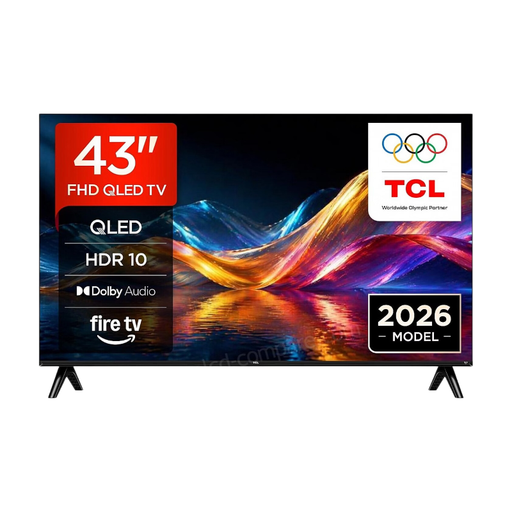
A 43-inch model to compare if its diagonal measurement suits your seating distance and available space.
The product title lists FHD, QLED and 120 Hz. Check the aspect ratio and picture using the film source you plan to use.
 No image available
A 43-inch model to weigh up against your viewing distance and the space available in your seating area.
The product information lists QLED, 4K UHD, Filmmaker Mode and HDMI connections. Check with your own film source that the mode and connections suit the way you plan to use it.
No, not if that means losing the original aspect ratio. The British Film Institute describes 4:3 as a standard aspect ratio for 35mm film. For a source like this, check the settings on both the player and the TV, and look out for zooming and stretching.
Measure from your eyes to where the TV will go. The Dutch Consumers’ Association uses the viewing distance divided by 2.4 as a starting point for the screen’s diagonal measurement and also recommends checking the overall dimensions, including the stand. This isn’t a mandatory minimum viewing distance.
Use a familiar scene with light and dark areas to assess the picture settings. For older films, check the zoom and aspect ratio. According to Sony, the available options can vary by model, region and content.
According to ACM ConsuWijzer, when you buy a new TV online, you generally have a cooling-off period of up to 14 days after delivery. Your statutory guarantee is separate from a manufacturer’s guarantee or an extra service contract. If there’s a problem, contact the seller.