First, measure your viewing distance and the space available for your TV. For a distance of around 2 metres, the Consumers’ Association suggests 32–43 inches as possible screen sizes, rather than a fixed rule. For silent films, choose a TV that lets you preserve the original aspect ratio and assess details in both bright and dark scenes. OLED and LCD have different characteristics; image retention is something to bear in mind with OLED if the same fixed areas of the screen are shown repeatedly.
Who is this advice for?
Fans of the original film presentation
You want to preserve the original frame and judge for yourself whether image processing changes the movement. The British Film Institute describes 4:3 as a widely used film format, while Sony Netherlands explains that image processing can alter motion.
Viewers with limited space for a TV
You’re weighing screen size against viewing distance and the width and height of your TV stand or available wall space. The Consumers’ Association provides screen-size guidance for different viewing distances.
Black-and-white film fans weighing up picture quality
You look for detail in dark and bright scenes and compare LCD with OLED, including the risk of image retention from prolonged display of the same fixed image. The Consumers’ Association discusses the differences between LCD and OLED, while Sony Netherlands explains image retention on OLED TVs.
What should you look for when buying?
Start with viewing distance and available space, then assess aspect ratio and contrast. Finally, check that your film source is compatible with the TV.
| What to consider |
What should you check? |
Who is this important for? |
| Aspect ratio and motion |
Check whether the TV or player can display 4:3 without stretching or cropping the picture. See whether you can adjust the motion settings. |
If I want to preserve the original film frame and assess motion processing for myself, this matters most. Around 26% of consumers put this first. |
| Size and placement |
Measure your viewing distance and the space available for the TV, including its stand. For a viewing distance of around 200 cm, the Consumers’ Association suggests 32–43 inches as possible screen sizes. |
If you first want to know whether a TV will fit your measured viewing distance and available space, these measurements come first. Around 26% of consumers put space first. |
| Black-and-white contrast and detail |
Compare dark and bright scenes in your usual lighting. Assess the picture settings and, if you’re considering OLED, bear image-retention guidance in mind. |
If I care more about shadow detail and adjustable brightness than size or cost, this is what I focus on. Around 21% of consumers put black-and-white contrast first. |
| Purchase and running costs |
Compare the EU energy labels for the exact models on a like-for-like basis, and check the terms of any additional cover. |
If you’re weighing up the purchase price, electricity use and any extra services together, keep the total cost in mind. Around 16% of consumers put cost first. |
| Compatibility with your film source |
Check the connection you need or whether the specific app is available on the exact model sold in the Netherlands. |
If I want to watch films using a particular player, connection or app, I first check that the TV supports that way of playing them. Around 11% of consumers put source compatibility first. |
Common pitfalls
-
Stretching a 4:3 film to remove the black bars
Stretching or zooming can change the original frame or crop parts of the picture. With 4:3 content, bars at the sides may be part of preserving the original frame.
Check the aspect-ratio settings on both the TV and the player, and choose the option that preserves the intended frame.
-
Choosing a TV based only on OLED, QLED or 4K in the product name
A technology name or resolution alone won’t tell you how a particular TV handles older film sources or how much detail you’ll see in black-and-white scenes.
Compare a familiar scene with both bright and dark areas, and see which picture settings you can adjust.
-
Confusing a service plan with your statutory rights
According to the Dutch government, there is no fixed statutory guarantee period in the Netherlands. If a product is faulty, the retailer is your point of contact.
Before buying extra cover, compare what additional rights or services it actually offers on top of your existing rights.
Brands to compare
LG
The OLED42C5ELB sold in the Netherlands is a 42-inch OLED option for those who place a high value on black levels.
- LG describes OLED as delivering deep blacks at pixel level.
- This isn’t a comparative test for silent films. Image retention is something to consider if the same fixed areas are displayed repeatedly for long periods.
Samsung
The UE32F6000FUXXN sold in the Netherlands is a 32-inch Full HD model worth considering if a compact size is your priority.
- The model name specifies 32 inches and Full HD.
- These specifications don’t provide an independent assessment of black levels or performance with low-resolution film sources.
Philips
The 43PUS8500/12 sold in the Netherlands is a 43-inch QLED/LCD option with Ambilight and Titan OS.
- Ambilight and the listed features are Philips product specifications.
- These features don’t prove that it displays silent films better. Philips notes that the range of smart TV apps varies by model and country.
TCL
The 43C655 is a 43-inch QLED/LCD option with Google TV.
- For the sizes listed, TCL describes support for sources with a range of frame rates.
- This isn’t an independent comparison of film accuracy or contrast with OLED.
Joybuy TVs for your viewing needs
These Joybuy TVs offer sizes from 32 to 43 inches, including OLED and QLED models to compare against your viewing distance, available space and preferences for black levels.
 Image unavailable
LG OLED42C68LA 42-inch 4K Ultra HD OLED Smart TV
If black levels matter and a 42-inch TV fits your space, OLED is an option worth comparing. Sony Netherlands notes that image retention is something to consider if you watch 4:3 content repeatedly.
Specifications in the product name: 42 inches, 4K Ultra HD and OLED.
View at Joybuy
 Image unavailable
Philips 43-inch PQS7801 4K QLED Smart TV
Compare this 43-inch option with your measured viewing distance and available space. QLED is an LCD option and doesn’t guarantee deep blacks.
Specifications in the product name: 43 inches, 4K and QLED.
View at Joybuy
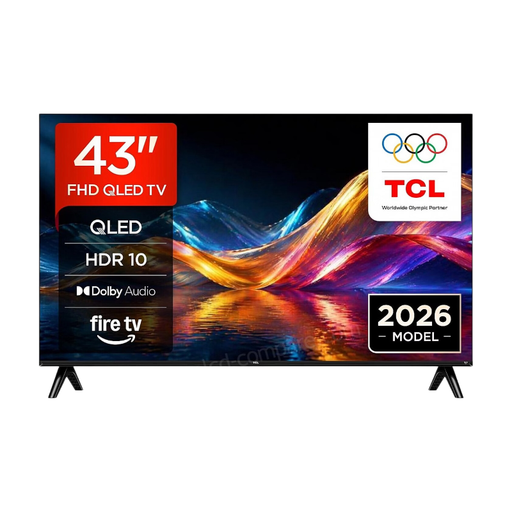 Image unavailable
TCL 43V5D 43-inch FHD QLED Smart TV
This 43-inch option is worth comparing if it suits your viewing distance and available space. QLED is an LCD option and doesn’t guarantee deep blacks.
Specifications in the product name: 43 inches, FHD, QLED and 120Hz.
View at Joybuy
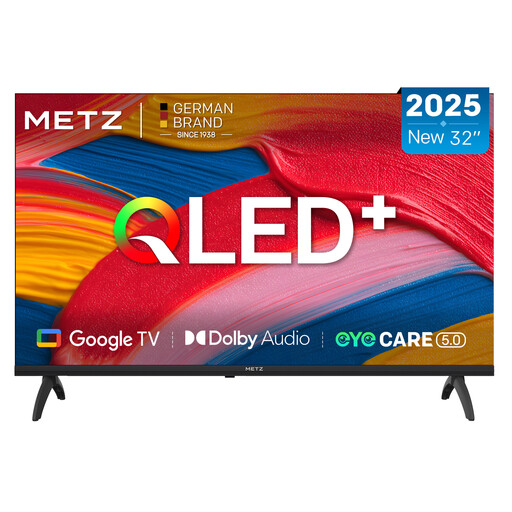 Image unavailable
METZ 32MQF7000Z 32-inch QLED Smart TV HD
A 32-inch TV may suit you if space is a major consideration. Check its external dimensions and whether you can read intertitles from your seat.
Specifications in the product name: 32 inches, QLED and HD.
View at Joybuy
 Image unavailable
CHiQ U43QM10E 43-inch 4K Ultra HD QLED Smart TV
Compare this 43-inch option with your viewing distance and available space. QLED is an LCD option and doesn’t in itself guarantee deep blacks.
Specifications in the product name: 43 inches, 4K Ultra HD and QLED.
View at Joybuy
Frequently asked questions
Should a silent film fill the entire widescreen?
No, not if you want to preserve the original frame. Early 35mm films often used an aspect ratio of around 4:3, so bars at the sides may be part of displaying them correctly. If only one source is stretched, check the player’s settings too.
How should I set up a TV for black-and-white films?
Use the lighting you normally watch in and try a familiar scene with both dark and bright areas. Adjust the picture settings until you can still see detail in both. If movement looks unnaturally smooth, compare the available motion settings; these vary by model.
Is OLED unsuitable for 4:3 films?
Not necessarily. Sony Netherlands flags prolonged or repeated display of fixed areas, such as bars beside a 4:3 picture, as something to consider with OLED. Check the maintenance features and instructions for the model you’re considering.
How do I compare TVs’ energy use?
Compare the EU energy labels for the exact models, including the stated consumption in kWh per 1000 hours. The European Commission explains that the label also provides information for HDR viewing; don’t use the energy rating to draw conclusions about film picture quality.
What are my rights when buying a TV online in the Netherlands?
According to the Dutch government, distance sales usually come with a 14-day cooling-off period. You’re also entitled to a product that meets the required standard. The Netherlands has no fixed statutory guarantee period, and the retailer is your point of contact if there’s a fault. Check the terms and conditions for your specific order.


