Who is this choice relevant to?

Watching close to the screen

If you sit close to the TV, both the viewing distance and the overall size of the TV and stand matter when choosing a screen size. Consumentenbond and RTINGS discuss what to consider when weighing up TV size and viewing distance.

Watching black-and-white films in the evening

If you mainly watch in the evening, you may want to consider dark-scene performance and a comfortable picture, without making the film fill the screen at any cost. The BFI explains how the aspect ratios of early films can vary.

Watching older film copies

With older DVDs or other lower-resolution sources, title cards and image framing may be worth considering. RTINGS discusses upscaling, while the BFI describes historical film aspect ratios.

What should you look for when buying?

Compact OLED TV

A good fit if: you mainly watch in the evening, sit close to the screen and care about dark scenes.

Also consider: check reflections, the energy label and how your own film source looks. The OLED specification doesn’t predict how every older copy will appear.

Compact mini-LED LCD TV

A good fit if: you also watch during the day or want to compare a compact LCD option with OLED.

Also consider: check black levels, viewing angle and reflections for the exact model. The screen type alone doesn’t determine how it performs in these areas.

Compact standard LCD TV

A good fit if: you want to weigh up connections, a suitable size and the overall cost of buying.

Also consider: assess older film sources and energy consumption for each model. Resolution or screen size alone won’t tell you how a source will look.

What to consider What should you check? Who is this important to?
Size and placement Measure the viewing distance and available width. Compare the TV’s overall dimensions, including the stand, not just the screen diagonal. If my seat is close to the TV, I first want to know whether the screen and stand will fit. Around 31% of consumers prioritise suitable size and placement.
Black levels and contrast Compare the models you’re considering using dark film scenes in lighting conditions similar to those in your living room. For evening films, I want to be able to follow dark scenes comfortably and take picture quality into account. Around 25% of consumers give black levels and contrast top priority.
Older film sources If possible, try your own source and check the upscaling, sharpness setting and aspect ratio. If I watch older copies, I want title cards to remain legible and the original film framing to be preserved. Around 19% of consumers prioritise how older sources are displayed.
Reflections Consider the position of windows and lamps, and compare information about reflections for the exact model. If I watch during the day and the screen faces windows or lamps, I want to take reflections into account. Around 13% of consumers say watching in daylight is their main consideration.
Purchase and running costs Compare the energy label for the exact model and check whether any installation service suits your purchase. If I want to weigh my budget and energy use against my viewing preferences, I want to compare those factors side by side. Around 12% of consumers give total costs top priority.

Common buying mistakes

  • Choosing based on screen diagonal alone

    The diagonal doesn’t tell you whether the TV will fit on your stand or feel comfortable to watch from your seat.

    Measure the viewing distance and available width, then check the overall dimensions of the exact model, including the stand.

  • Automatically zooming an old film to fill the widescreen

    Zooming in can stretch or crop a narrower original frame. The BFI describes an aspect ratio of around 1.33:1 for many early films, with some exceptions.

    Check the intended aspect ratio of your version of the film and try the picture settings before zooming in.

  • Assuming a matt finish will solve reflections

    The label ‘matt’ or ‘glossy’ alone doesn’t tell you how distracting reflections will be in your room. RTINGS explains that reflection handling involves more than just the screen finish.

    Check where windows and lamps are in relation to the screen, and compare information about the exact model.

  • Forgetting the energy label and any installation service

    Energy use and any installation service may also affect your decision, alongside the TV itself.

    Compare the energy information for the exact model and check in advance what’s included with any installation service you choose.

    Factor in energy use during operation and the practical terms of any installation service.

Relevant brands to compare

LG

The LG OLED42C5ELB is a 42-inch OLED model to consider if you’re looking for a compact screen.

  • LG lists separate features for black levels and AI upscaling on this model.
  • These are manufacturer descriptions, not an independent test of your films. Check reflections and how your own source looks, too.

Samsung

The Samsung QE43QN90FATXXN is a 43-inch mini-LED LCD model to compare with compact OLED TVs.

  • Samsung identifies this model as mini-LED LCD.
  • The screen type alone doesn’t prove that its black levels or reflection handling will suit your room better.

Philips

According to Philips, the Philips 42OLED810/12 combines a 42-inch OLED screen with Ambilight.

  • Ambilight is a distinctive feature of this model.
  • The immersive effect is a brand description. Consider whether the lighting suits the way you watch films; it isn’t essential for viewing them.

Sony

The Sony KD-43X80L is a 43-inch model to compare on features such as connections and support for film sources.

  • Sony lists four HDMI inputs and two USB ports for this model.
  • Check that your specific film source will play. Support for a file format doesn’t guarantee that every file will work.

Joybuy picks for compact TVs

This selection of TVs from Joybuy includes 42- and 43-inch models. Measure your viewing distance and available space, and check how your film source looks before choosing a screen size or type.

LG OLED42C68LA 42-inch 4K Ultra HD OLED Smart TV

LG OLED42C68LA 42-inch 4K Ultra HD OLED Smart TV

A 42-inch OLED model to assess against your seating distance and available space.

The product name lists 4K Ultra HD, Dolby Vision, HDR10, HDMI 2.1 and webOS. Check separately how your own film source looks.

Joybuy

METZ 43MQF7500Z 43-inch QLED 4K UHD Google TV

METZ 43MQF7500Z 43-inch QLED 4K UHD Google TV

A 43-inch model to compare with your seating distance and available width.

The product name lists QLED, 4K UHD, HDR10+, Dolby Vision, Dolby Atmos, HDMI 2.1, VRR and MEMC. Check how your own film source looks.

Joybuy
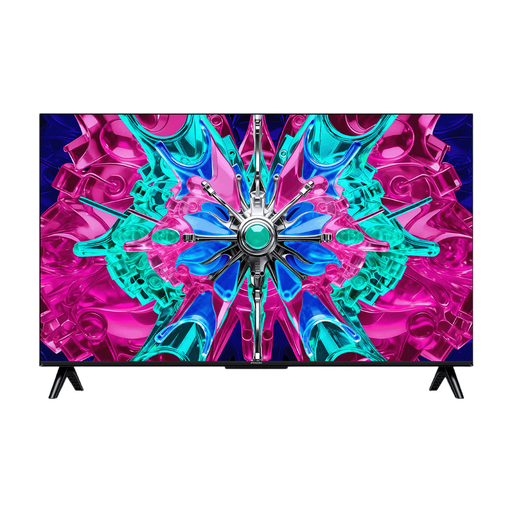
iFFALCON U65A 43-inch 4K LED Smart TV, 50 Hz

iFFALCON U65A 43-inch 4K LED Smart TV

A 43-inch LED model to assess against the size of your room and viewing distance.

The product name lists 4K and 50 Hz. Check how your own film source looks on the TV.

Joybuy
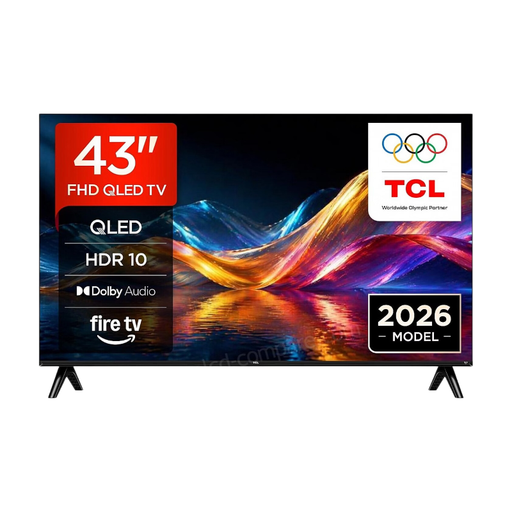
TCL 43V5D 43-inch FHD QLED Smart TV, 120 Hz

TCL 43V5D 43-inch FHD QLED Smart TV

A 43-inch QLED model to assess against your available space and the sources you use.

The product name lists FHD and 120 Hz. Check that the resolution and picture settings suit your film source.

Joybuy
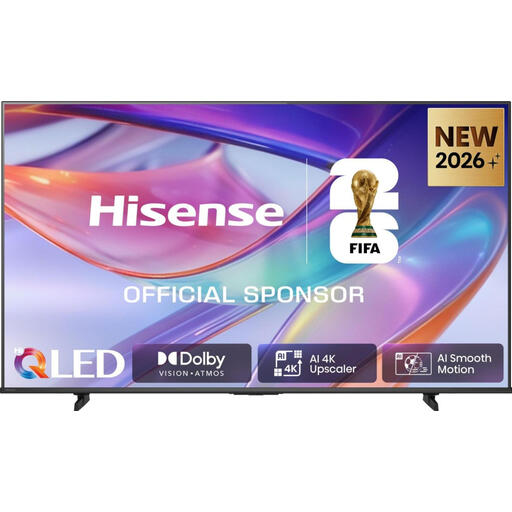
Hisense 43E7S 43-inch 4K QLED Smart TV, 120 Hz

Hisense 43E7S 43-inch 4K QLED Smart TV

A 43-inch QLED model to compare with your viewing distance and available width.

The product name lists 4K and 120 Hz. If you watch older sources, check the aspect ratio and sharpness settings yourself.

Joybuy

Frequently asked questions

Should a silent film fill the whole widescreen?

No, not if that means stretching or cropping the original image. According to the BFI, many early films used an aspect ratio of around 1.33:1, although there were exceptions. Check how your version of the film is intended to be shown and choose a suitable aspect ratio.

Will a 4K TV automatically improve an old DVD?

No. A lower-resolution source won’t automatically look natural. Compare the upscaling with your own DVD player or other source, and bear in mind that excessive sharpening can make the picture look unnatural, as RTINGS explains.

What should I consider when positioning and setting up the TV?

First measure the available space and viewing distance, then check the dimensions of the exact TV, including the stand. For older films, try the aspect ratio and sharpness settings with your own source, too.

How do I compare energy use and the guarantee in the Netherlands?

Use the energy label for the exact TV model to compare energy use. According to ACM ConsuWijzer, in addition to any manufacturer’s guarantee, you have statutory rights against the retailer if a product doesn’t meet reasonable expectations when used normally. This isn’t the same as a fixed two-year period for every TV.

Can I return a TV bought online?

In the Netherlands, online consumer purchases generally come with a statutory cooling-off period of up to 14 days after delivery. Legal exceptions and conditions relating to use and returns may apply. For an in-store purchase, retailers aren’t automatically required to accept a return if there’s no fault, according to ACM ConsuWijzer.
