
Family sharing photos
You want to show photos from a phone or laptop on the TV while everyone is together. Check how to share from your device, and consider keeping HDMI as a back-up option. Supported features vary by TV.


First, check that the TV supports your phone, laptop or USB source, then measure the viewing distance and available space. According to Consumentenbond, OLED TVs generally offer wide viewing angles and deep blacks. Compare the picture on the specific LCD or mini-LED model with the lighting and seating in your room, and bear in mind that OLED screens can be affected by prolonged display of static images.
You want to show photos from a phone or laptop on the TV while everyone is together. Check how to share from your device, and consider keeping HDMI as a back-up option. Supported features vary by TV.
Your guests may be sitting at different distances and possibly beside the screen. So don’t just consider the screen size: also check what the picture looks like from the side.
You may use the TV with the lights on, then later in a dimmed room. Compare the screen in both conditions, paying attention to brightness, reflections and contrast.
| What to consider | What should you check? | Who is this important to? |
|---|---|---|
| Sharing photos | Check compatibility with your phone, laptop and photo app for the exact model, as well as the connection required. Also look for HDMI and, if available, USB photo playback. | I want to show photos from my own device during the evening without any hassle. Around 36% of consumers therefore prioritise easy photo sharing. |
| Viewing from every seat | Measure the distance from the seating and the space available. Also assess the specific screen from an angle. | When guests are sitting in different places, I want the photos to be easy to view from the side too. Around 29% of consumers prioritise visibility for the whole group. |
| Picture quality in evening light | Compare the screen with the lighting in your room, and look out for reflections, brightness and detail in darker photos. | I use the TV with the lights on and in a dimmed room, so I want to take both situations into account. Around 21% of consumers prioritise changing evening light. |
| Use and placement | Check the EU energy label for the exact model code and measure the space where the TV will be placed or mounted. | As well as the slideshow, energy information, placement and support if something goes wrong matter to me. Around 14% of consumers prioritise running costs and after-sales support. |
Cast, AirPlay, screen mirroring and HDMI each have different requirements. The smart TV label alone doesn’t tell you whether your phone and photo app can connect.
Beforehand, test your phone and photo app using the sharing method supported by the exact model. If needed, prepare a suitable HDMI cable and connection.
A wired connection may mean you need to buy a suitable cable.
A diagonal that looks comfortable from one spot may be less suitable for the furthest seat or the space available for the TV. It’s also worth checking the picture from an angle.
Measure the viewing distance and the available width and height. Also view the exact model from an angle.
OLED generally offers wide viewing angles, but you should also consider the effect of the lighting and prolonged display of static images. The panel technology alone doesn’t determine how a specific model will perform in your room.
Compare OLED and LCD screens in the lighting conditions in which you’ll use the TV. Rotate through the photos rather than leaving one image on screen for too long.
Philips’ product information lists the 55PUS8100/12 as a 55-inch 4K LED TV with Google TV and Ambilight. It’s a model worth looking at if you’re also considering ambient lighting.
TCL’s product information describes the 55C6K as a 55-inch QD mini-LED LCD TV to compare if your evening lighting varies.
The LG OLED55C56LB is a specific OLED model worth comparing. LG also describes AirPlay as available on compatible TVs.
Samsung describes the QE55Q7F3AUXXN as a 55-inch 4K QLED TV, making it a model to include when comparing LCD TVs.
Sony describes Google Cast, AirPlay and HDMI as different ways to show images on compatible TVs.
This selection includes LCD, QLED and mini-LED TVs to consider for showing photos at an evening get-together. Check that each model supports your device and photo app.
 No image available
Consider this version if a 55-inch screen suits the viewing distance and available space in your room.
The product name lists 55 inch, F and 4K.
 No image available
Consider this smaller size if it’s a better fit for the viewing distance and where the TV will be placed.
The product name lists 43 inch, F and 4K. Before relying on a sharing method, check that your photo app and device are supported.
 No image available
Consider this model if you want to compare a 55-inch QD mini-LED screen and can check the sharing method in advance.
The product name lists 4K and Google Cast. Check that they work with your device and photo app.
 No image available
Consider this larger size only if it suits your viewing distance and the space available.
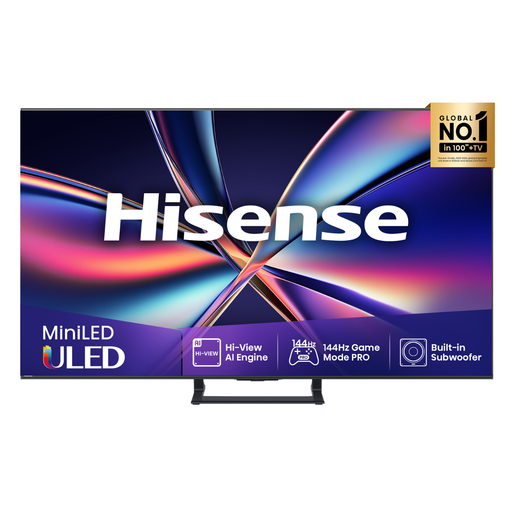
The product name lists 75 inch, 4K and 144 Hz.
 No image available
This 75-inch model is worth comparing if your room has enough space and the viewing distance is suitable.
The product name lists 144 Hz. For wireless sharing, check support for the exact model and your device.
No, it depends on AirPlay support for the exact model and the connection required. LG describes AirPlay as available on compatible TVs and says that features may vary by model. Check the model information before relying on this sharing method.
HDMI can be a wired alternative if the TV and laptop have the right connection. According to Sony, this option also works without Wi-Fi. Test the cable, input and photo playback beforehand. If using USB playback, check that the exact model supports your files.
Check the EU energy label and EPREL information for the exact model code. The European Commission states that electronic displays have an A-to-G label, with separate information for display in HDR.
No. ACM ConsuWijzer distinguishes between a manufacturer’s or seller’s warranty and the statutory guarantee in the Netherlands. If a TV used normally doesn’t meet what you could reasonably expect, the seller is responsible for providing an appropriate solution. There isn’t automatically one fixed statutory warranty period that applies to every TV.