If windows are reflected directly in the screen, choose a TV with a reflection-control rating for the exact model. A high claimed brightness alone won’t tell you whether quiz text will remain easy to read. If the TV mainly gets indirect daylight, compare brightness with standard TV content and choose a screen size and viewing angle to suit your seating.
Who is this advice for?
Watching with windows opposite the TV
During the day, you can see the window reflected in the screen and want to follow quiz questions and faces without distracting reflections. RTINGS.com describes reflection handling as an important factor when dealing with screen reflections.
Watching in a bright living room
There’s plenty of daylight, but the window isn’t reflected directly in the TV. You’re mainly looking for a standard TV picture that remains easy to see during the day.
Families with several viewing spots
You want to be able to read quiz text from different seats and are looking for a screen size that suits your viewing distance. The Consumentenbond recommends considering viewing angle and distance when choosing a TV.
What should you look for when choosing?
First, check whether a window is reflected directly in the screen. Then compare how easy standard TV content is to see, how readable it is from your seats and the energy consumption of the exact models.
| What to consider |
What should you look for? |
Who should pay particular attention? |
| Direct reflections from windows |
Check reflection ratings for the exact model and see whether windows appear in the screen from your seat. |
If I can see a window directly opposite the TV during the day, I want to be able to follow quiz text and faces clearly. Around 36% of consumers say direct window reflections are their main concern. |
| Visibility in indirect daylight |
Compare brightness with standard TV content; a quoted HDR peak brightness isn’t a direct comparison for this. |
In a bright room without direct reflections, I mainly want a standard quiz broadcast to remain easy to see. Around 29% of consumers prioritise this visibility. |
| Readability from several seats |
Measure the viewing distance and check text from the furthest seats. The Consumentenbond suggests that an average comfortable viewing distance is around 2.4 times the screen diagonal; use this as a guide, not a strict rule. |
If we sit in different places, I want to be able to read the questions and answers from every seat. Around 21% of consumers give readability and viewing angle top priority. |
| Energy use and installation |
Compare the energy consumption per 1,000 hours of the exact models and check what your chosen installation service includes. Milieu Centraal recommends taking consumption per 1,000 hours into account. |
When weighing up the purchase, electricity use and installation together, I want to know in advance what my choice involves. For around 14% of consumers, the total cost is the most important consideration. |
Common buying mistakes
-
Focusing only on HDR peak brightness
A quoted HDR peak doesn’t tell you directly how bright a standard quiz broadcast will look, and it doesn’t necessarily say anything about a window reflected in the screen.
Compare the visibility of standard TV content and the reflection handling of the exact model separately.
-
Assuming a bigger screen is automatically better
Readability also depends on your viewing distance and where you sit. A large screen may also need more space.
Measure the distance and available space, then check text from the seats you actually use. Compare energy consumption per 1,000 hours too.
-
Treating a different model code as the same product
Similar model names can refer to different versions. OLED65G51LW and OLED65G56LS, for example, are different model codes, so don’t assume they have the same specifications just because they belong to the same model range.
Check the full model code and the features of each version before comparing models.
Brands to compare
Samsung
Samsung offers Neo QLED mini-LED models, among others. The Dutch QN90F specifications list Glare Free for the 98-inch version.
- The stated screen finish may be relevant if windows are reflected directly in the picture.
- Check the finish for the exact model code and screen size; the specification doesn’t prove that reflections will disappear in your room.
TCL
The C7K series is a QD mini-LED range worth comparing if brightness is also a factor for you.
- TCL lists HDR peak brightness and dimming zones for the C7K series.
- Claims about the series don’t measure performance with a standard quiz broadcast or reflections in your room.
LG
The OLED65G56LS is an OLED model worth comparing if you watch from several angles or often watch in the evening.
- LG says this model is brighter than conventional OLED TVs.
- This claim doesn’t compare every screen technology or explain how the model handles direct reflections from windows.
Philips
The Dutch 65MLED920/12 combines QD mini-LED with Ambilight; compare the screen separately from the mood lighting.
- Philips describes the picture as bright in a range of lighting conditions.
- This description isn’t an independent reflection measurement for this model.
Sony
BRAVIA 7 is a mini-LED range worth comparing if picture processing and sound matter to you too.
- Sony describes the range as bright.
- The Dutch 75-inch version doesn’t provide a comparative reflection measurement for your viewing room.
TVs at Joybuy
These QD mini-LED or mini-LED TVs are worth comparing for watching quiz shows during the day. Choose a screen size to suit your viewing distance and check reflections for the exact model.
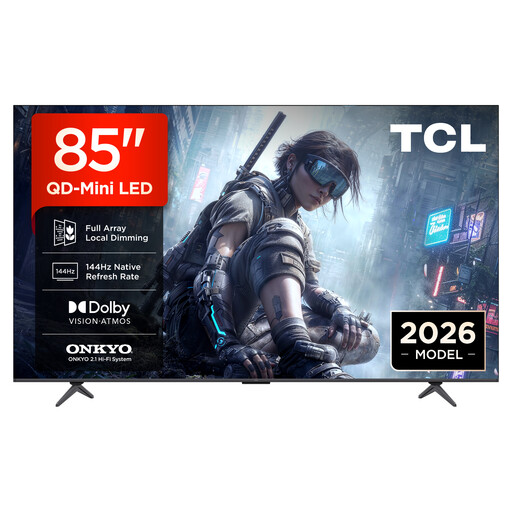 Image unavailable
TCL T8D 85-inch 4K QD-Mini LED Smart TV (2026)
An option to compare if you’re looking for a large 4K screen; first check that 85 inches suits your viewing distance and available space.
85 inches; 4K; QD-Mini LED; 144 Hz.
View at Joybuy
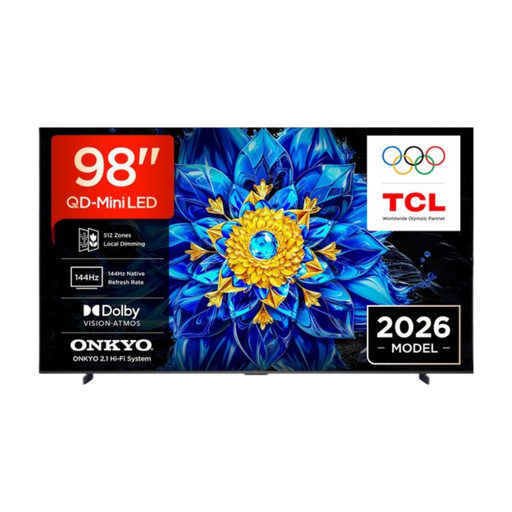 Image unavailable
TCL T8D 98-inch 4K QD-Mini LED Smart TV (2026)
This version may suit you if you’re specifically looking for an extra-large screen; measure your viewing distance and available space before choosing the size.
98 inches; 4K; QD-Mini LED.
View at Joybuy
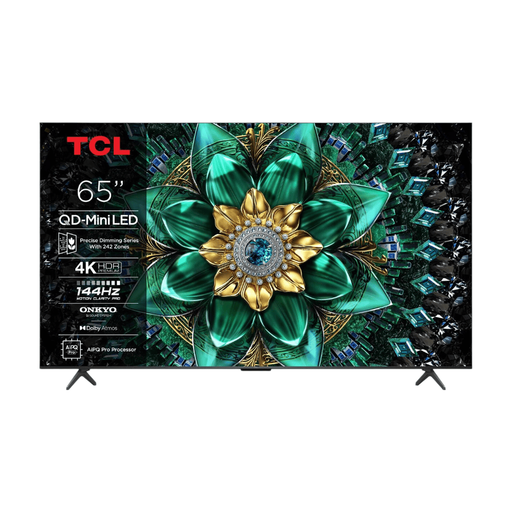 Image unavailable
TCL 65Q6C QD-Mini LED TV
A 65-inch version to compare if that size better suits your viewing distance; check reflections separately from the brightness specification.
65 inches; 4K; HDR Premium, 1000 nits; energy rating F.
View at Joybuy
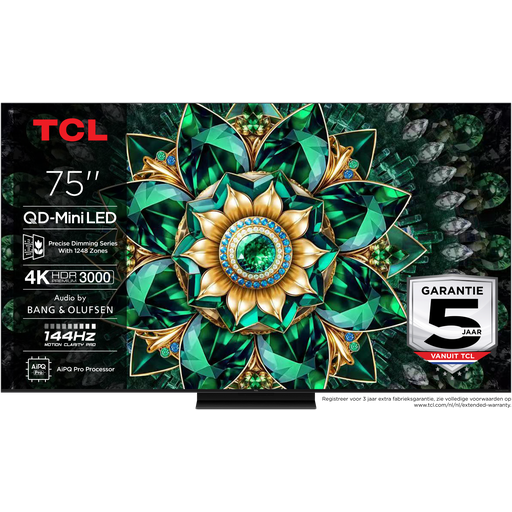 Image unavailable
TCL 75Q7C 75-inch 4K Mini-LED TV
A model to compare if you’re looking for a 75-inch TV; choose a screen size to suit the distance from your seats.
75 inches; 4K; QD-Mini LED; 144 Hz.
View at Joybuy
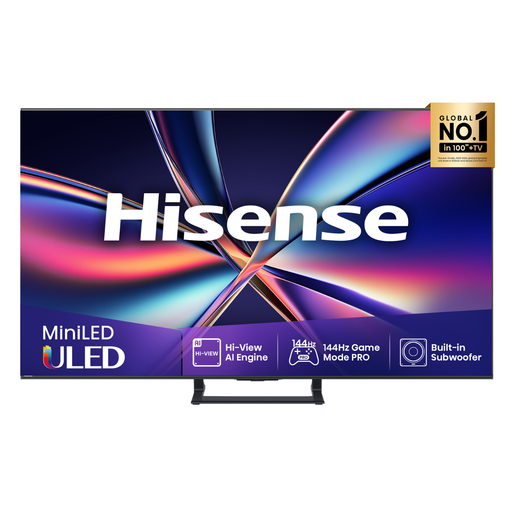 Image unavailable
Hisense 75E8Q 75-inch 4K Mini-LED TV
A 75-inch version to consider if that screen size suits your viewing distance; check visibility in the lighting conditions in your room.
75 inches; 4K; Mini-LED; 144 Hz; energy rating E.
View at Joybuy
Frequently asked questions
Does a higher HDR peak brightness always help with reflections from windows?
No. Assess direct reflections and brightness separately. An HDR peak value doesn’t directly tell you how bright a standard TV programme will look.
How should you choose where to put the TV and what size to get?
First, check from your seat whether the tall windows are reflected in the screen. Then measure your viewing distance and check readability from every seat; the Consumentenbond’s distance guideline is a starting point, not a strict rule.
Why can an OLED TV sometimes look darker than expected?
According to LG, the energy-saving mode and picture mode can affect brightness. Menu steps may vary by model, and a brighter setting may use more power.
How do you compare the energy consumption of TVs?
Compare the consumption per 1,000 hours for the exact versions on the EU energy label or in EPREL. Use your own viewing time and electricity tariff to work out the cost; screen size and brightness settings affect consumption.


