Start by choosing a TV that’s easy to read from your seat and makes spoken questions easy to hear. OLED may suit you if you watch with the lights dimmed and value contrast and viewing from different angles. If you often watch with the lights on, compare bright LCD, QLED and Mini LED models too. The Consumentenbond explains the general differences between these technologies, but the technology alone cannot tell you how clear the speech will sound on a particular model.
Who is this guide for?
Quiz fan watching from a distance
Want to read questions, answers and scores from your usual seat? Measure the distance between your eyes and the screen before choosing a screen size. The Consumentenbond considers viewing distance an important starting point when choosing a TV.
Viewer who wants to follow the speech
Want to hear the presenter and contestants clearly? Test the sound with spoken TV content at the volume you use at home. A film scene alone won’t tell you enough about how easy quiz questions are to understand.
Group with different seating positions
If you watch together from both straight-on and angled seats, check how the picture looks from the seats at either end. Compare viewing angles, reflections and visibility with the lighting you usually have on during quiz night.
What should you consider when choosing?
Start with the viewing distance and sound from your own seats. Then assess the lighting, and consider which extra features are genuinely useful for the way you watch.
| What to consider |
What should you look for? |
Who is this most relevant to? |
| Readability and screen size |
Measure the distance from your eyes to the screen, and check the TV’s width, including the stand. In advice dated 5 May 2026, the Consumentenbond suggests a comfortable viewing distance of around 2.4 times the screen diagonal. Use this as a starting point, not a hard-and-fast rule. |
If I want to read questions and scores from my usual seat, I’ll measure the viewing distance first. Around 33% of consumers put readability from a distance first. |
| Clarity of spoken questions |
Listen to spoken TV content at the volume you intend to use and compare the sound quality of the exact model. If you’re using external audio, check which connections you’ll need. |
If I want to follow spoken questions without straining, I’ll check the sound and connections for my setup. Around 27% of consumers put speech clarity first. |
| Visibility in the room |
Check for reflections with your usual lights on, and compare the picture from the seats at either end. The Consumentenbond explains that LCD TVs can often be bright, while OLED TVs generally have a wider viewing angle; results vary by model. |
If I watch with the lights on or sit at an angle to the TV, I want to know whether the quiz remains easy to see. Around 20% of consumers put lighting and viewing angle first. |
| Energy use and features |
Compare the EU energy labels of TVs with similar screen sizes, and check the information for standard picture and HDR separately. Choose extra features based on what you’ll actually use. |
If I mainly watch quizzes, I want to choose features that suit the way I watch and compare energy use too. Around 20% of consumers prioritise energy use and choosing a TV that suits their needs. |
Common pitfalls
-
Choosing based only on 4K or a high refresh rate
A 4K screen doesn’t automatically make the source content 4K, and a high refresh rate doesn’t prove that spoken questions will be easier to understand.
First check whether text is easy to read from your seat, then listen to spoken programmes from the distance and at the volume you use in your own setup.
-
Assuming OLED or QLED is always the winner
Viewing angle, black levels, brightness and reflections matter differently in dim light than they do in daylight. QLED is also a type of LCD, and specifications vary by model.
Compare the exact models with the lights you use at home switched on, and check the picture from the seats at either end too.
-
Assuming similar model names mean the same version
A Joybuy listing for TCL 55Q6C is not the same model as TCL 55C6K. A different model code may therefore refer to a different version.
Check the full model code and product specifications before choosing. Don’t assume a different code refers to an identical model without evidence.
Brands to consider
TCL
The TCL 55C6K is a QD-Mini LED model worth comparing if you also watch with ambient light in the room.
- TCL lists Mini LED dimming and an Onkyo 2.1 system for the 55C6K.
- These features don’t prove how clearly quiz speech will sound; assess the sound of this exact model separately.
LG
The OLED55G56LS is a 55-inch OLED model with picture and sound settings you can compare with other versions.
- LG lists pixel dimming and Clear Voice Pro for this model.
- These features can’t determine how clear the sound will be in your room. LG lists the OLED55G56LS as discontinued on its Dutch product page; check current availability separately.
Samsung
According to Samsung Netherlands, the QE55S90FAEXXN is the 55-inch S90F OLED TV from 2025.
- This exact model gives you an OLED option to compare with LCD and other OLED models.
- The model name alone won’t tell you whether quiz speech will sound clear in your room; compare the model code and sound information.
Philips
According to Philips, the Philips 55OLED810/12 combines an OLED screen with Ambilight.
- Ambilight is a distinctive feature of this model.
- Ambient lighting isn’t essential for reading quiz questions. Check whether the lighting effect suits your preferences, and compare the sound separately.
Sony
The Sony K-55XR80 BRAVIA 8 is an OLED model for which Sony also publishes information relevant to installation.
- Sony lists the dimensions and VESA mounting pattern for this model.
- This information is useful for placing the TV on a stand or mounting it on a wall, but it doesn’t tell you how clearly quiz speech will sound.
TVs at Joybuy
This selection includes OLED models and LCD-based QNED and QD-Mini LED TVs. Compare the screen size with your viewing distance, and assess the sound and reflections in your own setup.
 No image available
OLED77G68LW
An OLED model worth comparing if picture contrast matters to you during quiz nights too; assess the speech reproduction of this exact model separately.
View at Joybuy
 No image available
LG OLED65C68LA, 65-inch OLED evo AI C6 4K Smart TV
A 65-inch OLED model worth comparing if you’re looking for a larger screen and your viewing distance is suitable.
The product name specifies OLED evo AI C6 and 4K resolution; the product description lists a 40 W audio system and Clear Voice Pro.
View at Joybuy
No image available
LG OLED55C68LA, 55-inch OLED evo AI C6 4K Smart TV
A 55-inch OLED model worth comparing if you’re looking for a smaller screen than the 65-inch version.
The product name specifies OLED evo AI C6 and 4K resolution; the product description lists a 40 W audio system and Clear Voice Pro.
View at Joybuy
 No image available
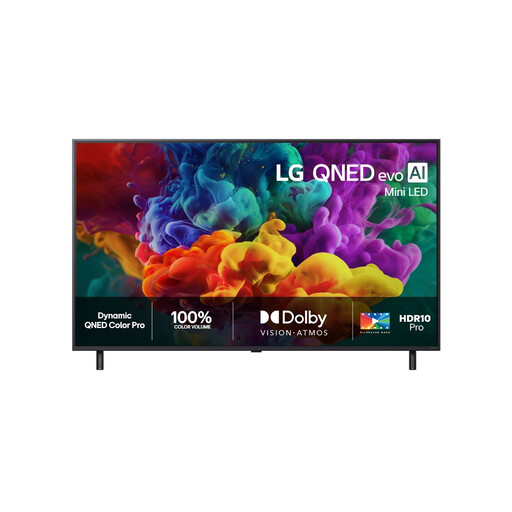
LG QNED85B6B QNED Evo Mini LED 4K Smart TV
An LCD-based QNED Mini LED model worth comparing if you’re considering a large screen; check that its dimensions suit your viewing distance and room.
The product description lists an 86-inch screen, 4K resolution and 2.040 dimming zones.
View at Joybuy
 No image available
TCL 50Q6C QD-Mini LED TV, 50-inch, 4K HDR
A 50-inch QD-Mini LED model to compare with OLED if you’re considering an LCD-based option.
The product name specifies 4K HDR; the product description lists an Onkyo 2.1 audio system.
View at Joybuy
Frequently asked questions
What screen size suits your viewing distance?
Measure the distance from your eyes to where the screen will be. In advice dated 5 May 2026, the Consumentenbond suggests a comfortable viewing distance of around 2.4 times the screen diagonal. Use this as a starting point and compare nearby screen sizes too.
Do you need 4K or 144 Hz for a regular TV quiz?
Not on the basis of those specifications alone. You need 4K source content to see 4K detail, and a 144 Hz specification doesn’t, by itself, prove that a quiz will be easier to read or understand. The Consumentenbond explains that, in practice, the difference between 4K and Full HD isn’t always clear.
What should you check before wall-mounting your TV?
Check the dimensions, weight, mounting pattern and instructions for the exact TV model and bracket you’ve chosen. Sony publishes model-specific mounting information, so a bracket for another BRAVIA won’t automatically be suitable.
Are you only entitled to a standard two-year TV warranty in the Netherlands?
No. ACM ConsuWijzer distinguishes between a manufacturer’s or seller’s guarantee and your statutory rights. With normal use, a TV should last as long as you can reasonably expect it to. If a product is faulty, the seller is responsible for providing an appropriate solution at no cost. There isn’t a standard two-year period that applies to every TV.
What do the energy label and old-TV take-back scheme mean for you?
The European Commission states that electronic displays, including televisions, have an energy label with ratings from A to G and separate HDR information. According to the Dutch government, when a private customer buys a similar new appliance, a shop must take back the old one free of charge. This also applies to online purchases.
Can you return a TV bought online in the Netherlands without giving a reason?
For an online purchase by a consumer, the ACM says you’ll usually have 14 days to change your mind. This is separate from your statutory rights; check the terms and any exceptions that apply to your order too.


