What should you consider when choosing?
First, measure the viewing distance and the space available. The Consumers’ Association suggests dividing the distance by 2.4 as a starting point for the screen size in centimetres, not as a fixed rule for every living room.
| What to consider |
What should you check? |
Who is this important for? |
| Size and positioning |
Measure the viewing distance and check that the TV and its stand will fit on your unit. The Consumers’ Association suggests dividing the distance by 2.4 as a starting point for the screen size. |
If I have limited space, I want a screen that’s easy to watch from my seat and fits on my unit; around 36% of consumers prioritise size and positioning. |
| Gaming features |
Check the Game Mode and, if you want to use 120Hz output, make sure the TV input, console and game support it. PlayStation limits 120Hz output to supported games; Nintendo states that the Switch 2 supports up to 60 fps at 4K. |
If I also play supported fast-paced games, I want to know whether all my equipment can handle the output I’m after; around 29% of consumers prioritise gaming features and compatibility. |
| Viewing from the side |
Check the picture from the outer seats and in your usual lighting conditions. The Consumers’ Association generally describes OLED as a screen technology with a wider viewing angle than LCD. |
If players are sitting in different places, I want everyone, including those at the side, to be able to follow the game; around 21% of consumers prioritise visibility for the whole group. |
| Power consumption and connections |
Compare the stated energy consumption per 1,000 hours on the energy label and check that the number of HDMI inputs suits your devices. |
If I want to avoid unnecessary features and energy use, I compare the label details and connections of the specific models; around 14% of consumers consider this their main priority. |
Joybuy products
These Joybuy options are 43-inch models listed as LED or QLED. Compare the size with your viewing distance and check which gaming features, inputs and console combinations you need for each model.
 No image available
METZ 43MQF7500Z 43-inch QLED 4K UHD TV
The 43-inch size is an option to compare with your viewing distance and the space available.
The product title lists 4K UHD, HDR10+, Dolby Vision, HDMI 2.1 and VRR. Check which features are supported by the input you use, your console and the game.
Joybuy
 No image available
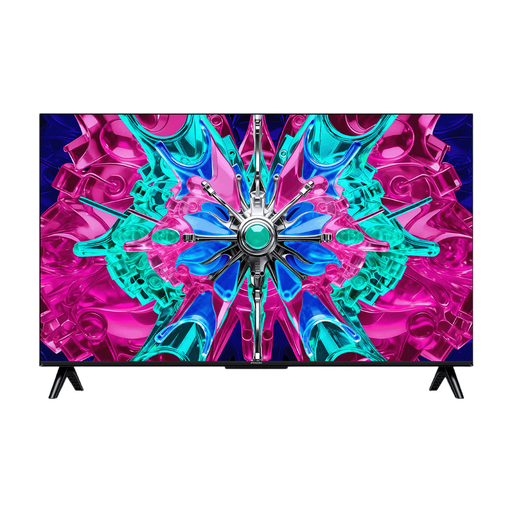
iFFALCON U65A 43-inch 4K LED TV
This 43-inch model can be compared with the space available and the distance to your seats.
The product title lists 4K LED and 50 Hz. The product description mentions a Game Master mode and HDMI connections for games consoles; check what the specific input and console support.
Joybuy
 No image available
TCL 43T6C 43-inch 4K QLED TV
The listed 43-inch size is worth considering if you’re looking for a TV for a small living room.
The product title lists 4K QLED and 120 Hz. Check which refresh rates are supported by the specific HDMI input, console and game.
Joybuy
 No image available
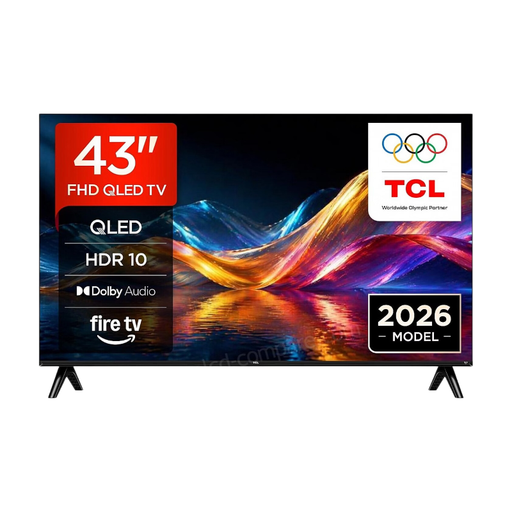
TCL 43V5D 43-inch FHD QLED TV
Weigh the 43-inch size against your viewing distance and the space on your unit.
The product description lists Full HD and the product title lists 120 Hz. Before choosing, check which input and game actually support that refresh rate.
Joybuy
 No image available
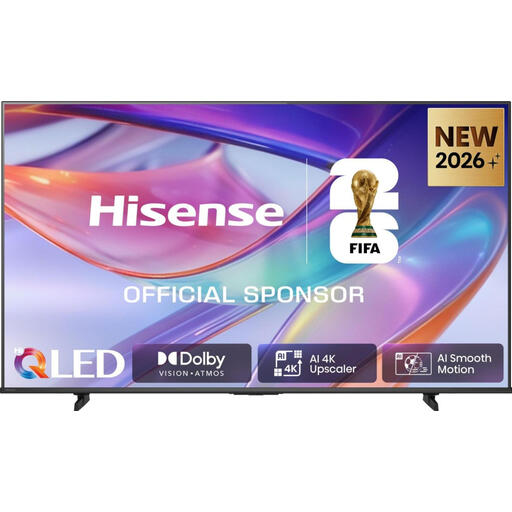
Hisense 43E7S 43-inch 4K QLED TV
This 43-inch model is an option to compare with your viewing distance and the seating in your room.
The product title lists 4K QLED and 120 Hz. The product description mentions HDMI 2.1, VRR, ALLM and Game Mode; check which combination is supported by each input and game.
Joybuy
Frequently asked questions
Do I always need a 120Hz TV for party mini-games?
No, not for every party mini-game. The benefits depend on the console, the TV and the specific game: PlayStation lists 120Hz output for games that support 120 Hz, while Nintendo states that the Switch 2 supports up to 60 fps at 4K.
How do I set up a TV properly for a console?
Connect the console to a suitable HDMI input and check the Game Mode. If the TV and console support ALLM, the TV can switch automatically to a low-latency mode. Also check the console’s video output settings.
How do I compare TVs’ energy consumption?
Compare the stated energy consumption per 1,000 hours on the energy label for the specific models. If you use HDR, compare the HDR figures on a like-for-like basis.
What are my rights when buying a TV online in the Netherlands?
When you buy at a distance, you’re usually entitled to a 14-day cooling-off period, although the applicable terms determine whether it applies in your situation. You’re also entitled to a product that meets legal requirements. If there’s a problem, the seller must provide a solution; a manufacturer’s warranty doesn’t replace this statutory right.


