
Viewer with limited space
You want to enjoy opera from your usual seat without the screen or stand taking up too much room. So measure both your viewing distance and the space available for the TV.


Start with your viewing distance and the space available: a small living room doesn’t automatically determine the right screen size. The Consumentenbond uses the measured distance in centimetres divided by 2.4 as a starting estimate for the diagonal. Then take account of light, seating, sound and how you watch opera recordings.
You want to enjoy opera from your usual seat without the screen or stand taking up too much room. So measure both your viewing distance and the space available for the TV.
Consider black levels, reflections and the picture from a seat off-centre. The Consumentenbond notes that OLED generally offers deeper blacks and wider viewing angles, though the light in your room still matters.
You want to enjoy the singing and orchestra, and check whether your existing or additional audio equipment can be connected to the TV. Sound varies between models, so assess the TV itself and check its connections.
A good fit if: the screen size suits your viewing distance and available space, or you often watch in bright daylight.
The trade-off: LCD TVs can be bright, but the screen type alone doesn’t guarantee that dark scenes will look good. Viewing angles, reflections and sound vary by model.
A good fit if: black levels and visibility from seats at an angle are priorities, and the screen size suits your living room.
The trade-off: OLED generally offers deeper blacks and wider viewing angles, while LCD/QLED TVs can often be brighter. Compare reflections and sound on the specific model.
| What to consider | What to look for when buying | Who this is for |
|---|---|---|
| Screen size and positioning | Measure the distance from your eyes to where the screen will go, and the space available for the TV and stand. The Consumentenbond uses the distance in centimetres divided by 2.4 as a starting estimate for the diagonal in centimetres. | If I want to follow stage details and subtitles clearly from my usual seat, the screen needs to suit both my viewing distance and my furniture. Around 28% of consumers prioritise screen size and positioning. |
| Stage picture and viewing angle | Compare OLED and LCD/QLED for the lighting in your room, and check for reflections and how the picture looks from seats off-centre. A 4K TV won’t add detail that wasn’t in a recording made at a lower resolution. | For dark scenes or seats off to the side, I want to know what the picture looks like from where I’ll be sitting. Around 22% of consumers give picture quality top priority. |
| Sound for singing and orchestra | Compare sound ratings for the exact TV model. If you have a soundbar or audio system, check that both devices have a suitable connection, such as HDMI-ARC/eARC. | If singing and orchestra matter to me, I want to know whether the built-in sound is good enough or if I can connect my audio system. Around 22% of consumers make sound their first consideration. |
| Recordings and subtitles | Check that the service or player you want is available on the specific TV platform, and that the recording and subtitle language are available. If necessary, leave a suitable HDMI port free. | I want to be able to play my opera recordings and use the subtitles I need. Around 17% of consumers prioritise playback and subtitles. |
| Running costs and support | Compare the energy label for the exact models and only include equipment or services you actually need. Also check the sales and warranty terms. | If I want to weigh up the cost of the TV and any extra equipment, I look at the whole set-up and its energy consumption. Around 11% of consumers prioritise running costs. |
Your viewing distance and the TV’s dimensions, including its stand, both affect how comfortably it will fit in your living room.
First measure the distance from your seat and the width of the space available. Use a size calculation as a starting point, and compare nearby screen sizes too.
Met Opera on Demand offers both HD video and older broadcasts in standard definition. A 4K TV won’t change the original resolution of a recording.
Check what you’ll actually be watching before placing extra value on the TV’s resolution label.
According to the Consumentenbond, sound quality varies considerably between TVs; even a small soundbar isn’t automatically a good choice.
Compare the sound on the exact TV model and check the connections before choosing extra audio equipment.
The apps available vary by TV and can change. The recordings you can watch also depend on the service you choose.
Check that the service, recording and subtitle language you want are available on the specific TV. If you use a separate player, it may need extra space and a suitable connection.
Depending on the service you choose, you may also need a subscription.
Philips includes the 43PUS9000/12, a 43-inch 4K QLED TV with Ambilight, and the 48OLED810/12, a 48-inch 4K OLED TV with Ambilight. These offer different screen sizes and technologies to compare with your viewing distance and room lighting.
TCL offers the P7K QLED range and lists the 43P7K as one of its models. It’s an option to consider if you’re looking at a compact QLED TV.
LG describes the OLED48G69LS as a 48-inch 4K OLED TV. Check whether that size suits your viewing distance and available space.
Sony describes the XR48A90KAEP as a 48-inch 4K OLED TV with Acoustic Surface Audio+.
These product choices cover different screen sizes and types of TV for opera recordings. Measure your viewing distance and check the space available before choosing a size.
 No image available
At the stated 65 inches, this is only a suitable option if it matches your measured viewing distance and available space.
The product name lists OLED Evo, 4K and Smart TV.
 No image available
This 48-inch OLED TV is worth considering if it fits your living room and you’re looking at OLED screen technology.
According to LG, this model is a 48-inch 4K OLED TV. Also check reflections, sound and connections for your set-up.
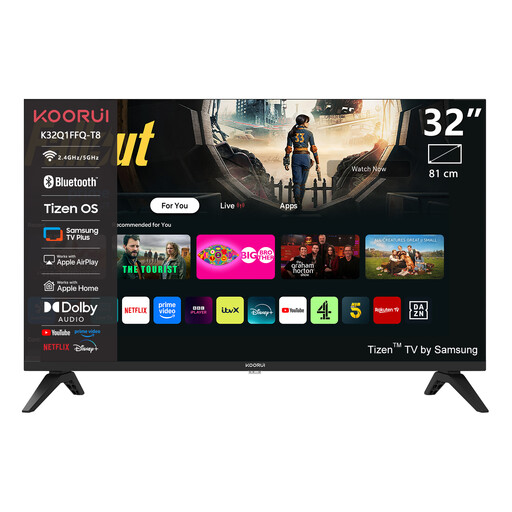 No image available
The stated 32-inch size could be a good option if a smaller screen suits your viewing distance and available space.
The product name lists Full HD, QLED, Tizen OS and Dolby Audio. Check that the streaming service you want is available on the TV.
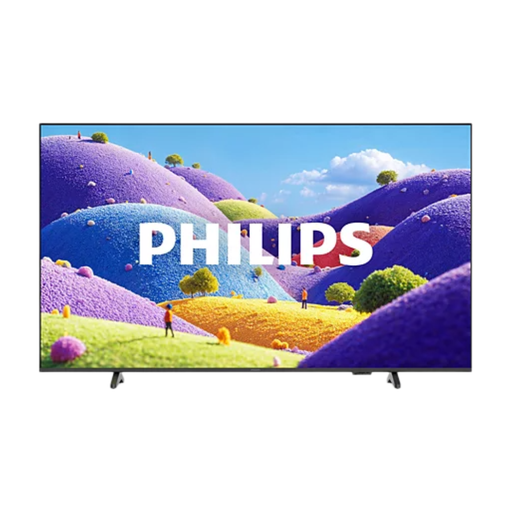 No image available
Check this model’s size and dimensions before deciding whether it will fit in your compact living room.
The product name lists 4K and LED.
 No image available
This 43-inch model is worth comparing if the size suits your viewing distance and available space.
The product name lists 4K, QLED and Smart TV. Check that the streaming service you want is available on the TV.
Measure the distance from your eyes to where the screen will go. The Consumentenbond uses the distance in centimetres divided by 2.4 as a starting estimate for the diagonal in centimetres. Compare nearby sizes too, and check that the TV, including its stand, will fit on your furniture.
No, it depends on the service, the recording and the TV platform. Check that the app you want is available on the specific TV and that the recording has subtitles in your preferred language. For discs or a separate player, also check which connection you’ll need.
A Blu-ray player is usually connected via HDMI. For a soundbar or other audio system, check that both the TV and audio system support HDMI-ARC/eARC. An optical connection may be an alternative if those ports aren’t available.
No. The Dutch government states that there is no fixed statutory warranty period in the Netherlands: you’re entitled to a product that works properly for as long as you can reasonably expect it to. If a product is faulty, contact the seller.
Yes. According to the Dutch government, TVs must have an energy label. Compare the labels on the exact models, and don’t judge energy consumption by screen technology alone.