
Watching from the worktop and table
You move between viewing spots during the quiz and want the questions to remain readable even when you’re looking at the screen from an angle.


First, measure the distance from the places where you watch and check whether the quiz text is easy to read from there. In a bright room, reflections on the specific model matter; if you move between the table and worktop, viewing angle matters too. Screen type or a 4K label alone won’t tell you whether a TV is comfortable to watch in your open-plan kitchen.
You move between viewing spots during the quiz and want the questions to remain readable even when you’re looking at the screen from an angle.
You watch in daylight or with the lights on and want to stop reflections from obscuring text and faces.
You want to be able to read the on-screen text and hear spoken answers clearly from your usual spot.
First, measure your viewing distances and the space available; then compare reflections, viewing angle and speech clarity across suitable models.
| What to consider | What to look for when buying | Who this is for |
|---|---|---|
| Readability from your viewing distance | Measure the distance from your eyes to the screen and check the overall dimensions, including the stand. The Dutch Consumers’ Association (Consumentenbond) suggests a viewing distance of around 2.4 times the screen diagonal as comfortable; use this as a guide, not a fixed rule. | If I want to read quiz questions from the dining table, I choose a screen size that works from the furthest viewing spot. Around 28% of consumers prioritise readability from their viewing distance. |
| Reflections in bright conditions | Check where windows and lights are positioned in relation to the screen, and compare reflection measurements for the exact model. Consider brightness alongside reflection handling, not as a substitute for it. | In daylight or under kitchen lighting, I want to be able to see text and faces clearly. Around 22% of consumers prioritise visibility in bright conditions. |
| Picture quality when viewed from an angle | Compare viewing-angle measurements for the specific model and check the picture from your usual spots at the table and by the worktop. | If I move between the worktop and table during the programme, I want to be able to follow quiz questions from the side too. Around 22% of consumers prioritise being able to watch from different positions. |
| Clarity of spoken questions | Listen from your usual spot at your normal viewing volume. Check whether the specific model and audio setup you use have a speech setting. | I want to be able to hear spoken questions and answers from the dining table. Around 17% of consumers prioritise speech clarity. |
| Energy use for your chosen screen size | Compare the energy label figures in kWh per 1000 hours. The Dutch Consumers’ Association notes that energy use is mainly linked to screen size; compare the figures for the exact model too. | If two screen sizes both fit, I want to take energy use into account when choosing. Around 11% of consumers prioritise energy use. |
QLED and OLED have general characteristics, but on their own they don’t tell you how a specific set performs from your usual sitting and standing spots, or when facing a window.
Compare viewing-angle and reflection measurements for the exact model, and check the screen from the places where you watch.
You may need a different screen size to read quiz questions from the furthest spot than from directly in front of the TV.
Measure all your usual viewing distances, then check that the set, including its stand, fits in the space available.
A larger screen generally needs more space and, according to the Dutch Consumers’ Association, usually uses more energy.
Samsung lists, among other models, a 43-inch QLED Q7F2 and a 43-inch mini-LED QN74H.
LG lists the OLED42C54LA as a 42-inch OLED TV.
According to Philips, the Philips 43PUS8000/12 is a 43-inch LED TV with Ambilight and Titan OS.
TCL lists a 43-inch QLED version with an HVA panel in its P7K range.
The Sony K-43S3 is listed as a 43-inch LCD TV with four HDMI inputs and Google TV support.
This selection includes TVs from 32 to 50 inches, including OLED and LCD/LED models. Compare the size and specifications with your viewing distance, available space and the amount of light in your open-plan kitchen.
 No image available
This 42-inch OLED model is worth considering if you watch from different spots; the Dutch Consumers’ Association generally describes OLED TVs as having a wider viewing angle.
The product description lists Dolby Atmos and webOS. Check the viewing angle and reflections for this exact model in the spot where you plan to put it.
 No image available
With a 43-inch screen, you can check whether quiz text remains readable from the furthest viewing spot and whether the set fits in the space available.
The product information lists LED, Titan OS, DVB tuners and Voice Amplification. Check that the apps and audio feature you want suit the way you use your TV.
 No image available
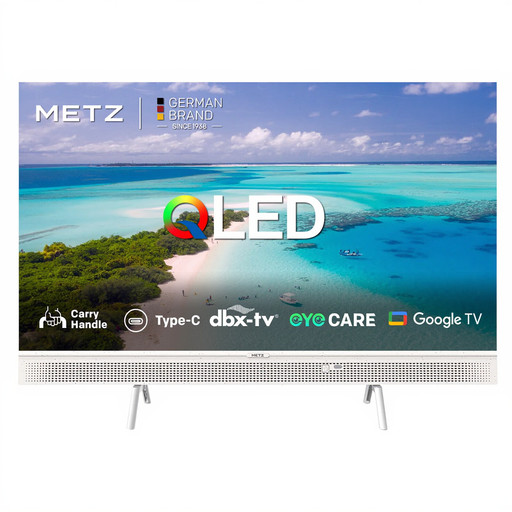
The 32-inch size and portable design are options to consider if you’re looking for a smaller TV; measure your viewing distance and available space first.
The product name lists HD, QLED+, Google TV and energy class E. The product description mentions USB-C power; check the power requirements for your setup.
 No image available
The 43-inch size is worth considering alongside your viewing distance and the space available.
The product information lists Google TV, HDR10+, Dolby Vision and a triple tuner for DVB-T/T2/C/S/S2. Compare reflections and the viewing angle for the exact model separately.
 No image available
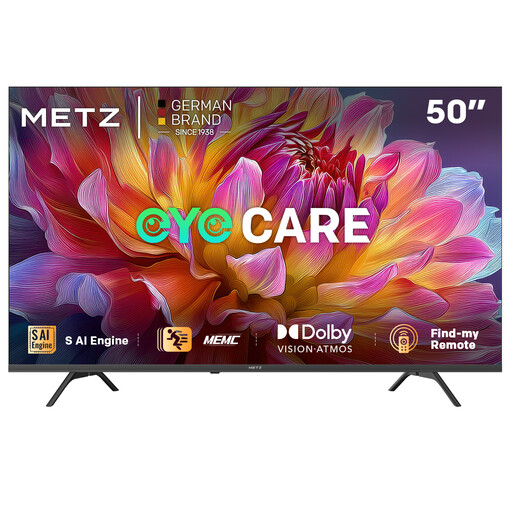
A 50-inch screen is worth considering if quiz text is difficult to read from your usual viewing distance; check that the set will fit in your open-plan kitchen.
The product information lists Google TV and DVB tuners. Compare the energy label and take the screen size into account when choosing.
Measure the distance from your eyes to the screen from both spots, and focus on the place where quiz text is hardest to read. The Dutch Consumers’ Association suggests a viewing distance of around 2.4 times the screen diagonal as comfortable; consider nearby screen sizes too and check the overall dimensions, including the stand.
No, not automatically: for genuine 4K detail, the programme must also be filmed and broadcast in 4K. According to the Dutch Consumers’ Association, regular programmes on NPO or RTL aren’t; viewing distance and screen size therefore remain important considerations.
Check where windows and lights are in relation to the screen, and measure whether the set, including its stand, will fit in the chosen spot. Read the installation and safety instructions for the exact model before mounting it; don’t assume there’s a universal safe distance from heat or moisture.
Compare the energy labels for the exact models in kWh per 1000 hours. The European Commission uses this unit for energy consumption on the label; to estimate your own costs, you’ll also need your viewing hours and electricity tariff.
For an online purchase from a business, you’ll often have a 14-day cooling-off period, subject to legal exceptions, according to the Dutch Government (Rijksoverheid). Separately, a product must meet the standard you could reasonably expect under normal use; the seller must put right any fault covered by this requirement. According to the Netherlands Authority for Consumers and Markets (Autoriteit Consument & Markt), there is no fixed statutory guarantee period of exactly two years in the Netherlands.