For watching cooking programmes from a seat off-centre, OLED is a sensible display technology to compare: the Dutch Consumers' Association and RTINGS generally describe OLED TVs as offering a wider viewing angle, although performance varies by model. With LCD TVs, an IPS panel can offer a wider viewing angle than VA, usually with lower contrast, according to RTINGS. In a bright kitchen-diner, also consider reflections and measure the distance from your seats before choosing a screen size.
Who should consider a TV with a wide viewing angle?
Viewers on a wide sofa
If you watch together from different seats, check how colours and contrast change at the ends of the sofa. RTINGS and the Dutch Consumers' Association describe viewing angle as an important consideration when seats are spread out.
Viewers in a bright kitchen-diner
If you watch during the day from an angled seat, consider both the viewing angle and incoming light and reflections. The Dutch Consumers' Association takes visibility in ambient light and screen reflections into account when assessing TVs.
Viewers sitting at a distance from the screen
If you want to follow recipes, ingredients or subtitles from your usual seat, weigh up the screen size against your actual viewing distance.
What should you look for in a TV for off-centre viewing?
OLED TV
Choose this when: several seats are often at an angle to the screen and a wide viewing angle is a priority.
Trade-off: if there’s a lot of daylight, also check reflections on the specific model; panel type alone won’t tell you how it handles them.
LCD TV with IPS panel
Choose this when: you’re looking for an LCD TV and the exact model is confirmed to have an IPS panel that suits the seats at the edges.
Trade-off: IPS generally offers a wider viewing angle than VA, but lower contrast, according to RTINGS.
LCD TV with VA panel
Choose this when: the main seat is almost directly in front of the TV, or contrast matters more than picture quality from the side.
Trade-off: check how the picture changes from the seats at the edges and whether the model has a viewing-angle enhancement feature.
| What to consider |
What should you check? |
Who is this important for? |
| Picture from the side |
View the exact model from a seat at the edge and look for changes in colour and contrast. |
If I’m sitting spread out with others on the sofa, I want to be able to follow the picture clearly from my seat. Around 36% of consumers prioritise viewing angle. |
| Daylight and reflections |
Assess reflections and visibility in lighting similar to that in your kitchen-diner. |
When I watch during the day, I want to see the screen from my angled seat without overlooking reflections from a window. Around 29% of consumers prioritise daylight and reflections. |
| Readability from a distance |
Measure the distance from your usual seat and assess the screen size from there. |
If I want to follow recipes and subtitles from the sofa or dining table, the text needs to be readable at that distance. Around 21% of consumers make readability from their seat their top priority. |
| Energy use and installation |
Compare the energy label for the exact variant and check installation costs if you need installation. |
If I want to factor in running costs and any installation, I want to check that information before making my choice. Around 14% of consumers prioritise these costs. |
Common mistakes when choosing a TV
-
Assuming QLED or mini-LED means a wide viewing angle
Those names alone don’t tell you how colours and contrast change when you look at the screen from an angle.
Check the viewing angle of the exact model from a seat at the edge. For LCD TVs, also check which panel type it uses.
-
Focusing only on brightness in a bright room
Reflections from a window can affect visibility from your seat, even if you’re paying attention to brightness.
Assess the screen in similar daylight and from the spot where you usually watch cooking programmes.
-
Confusing the manufacturer’s warranty with your statutory rights
A limited manufacturer’s warranty doesn’t automatically mean your statutory rights have come to an end. ACM ConsuWijzer distinguishes between statutory rights and additional warranties.
Keep your proof of purchase and contact the retailer if something goes wrong. Consider your statutory rights separately from any extra warranty packages.
Brands to compare
LG
The Dutch OLED evo C6 range is worth comparing if you’re looking for an OLED TV for off-centre viewing.
- For the OLED55C68LA, LG lists an OLED screen and Brightness Booster.
- These specifications aren’t an independent measurement of this model’s viewing angle or reflections.
Philips
The 55OLED850/12 with OLED and the 55PUS8001/12 with LCD LED offer two display technologies to compare side by side.
- Philips mentions viewing from an angle for the OLED850; both models listed feature Ambilight.
- The PUS8001 specification doesn’t confirm an IPS panel or a measured viewing angle. So don’t attribute these features to this model.
Samsung
The 55-inch OLED S90H is worth comparing if reflections in a bright room are also a consideration.
- Samsung advertises Glare Free for the QE55S90HAEXXN.
- This is a claim made by Samsung and doesn’t prove that reflections will disappear in every room.
Sony
The BRAVIA 8 II is a QD-OLED model to compare; the 55-inch model mentioned has the designation K55XR8M25BP.CEI.
- Sony lists QD-OLED and Google TV for this product range.
- These specifications don’t show a measured advantage for this model over the other OLED TVs mentioned.
TVs at Joybuy
These Joybuy TVs are options to consider if you watch cooking programmes from different seats; check the viewing angle and visibility in your room for each model.
 No image available
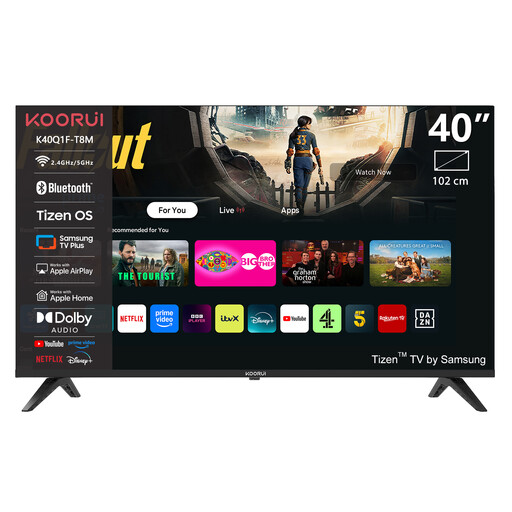
KOORUI K40Q1FQ-T8 40-inch Full HD QLED TV
Check the viewing angle of this specific model if you watch from a seat off-centre; QLED alone doesn’t tell you how the picture changes from the side.
40-inch, Full HD, QLED and Tizen OS.
Joybuy
 No image available
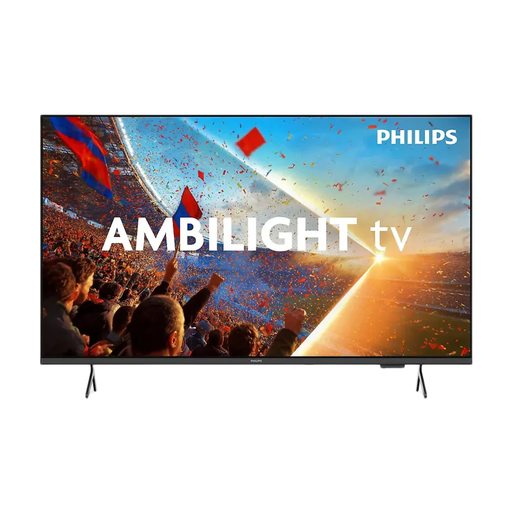
Philips 55PUS8001 55-inch 4K TV
View the picture from your usual angled seat; the available model specifications don’t state a viewing angle.
55-inch, 4K UHD LED, Ambilight and Titan OS.
Joybuy
 No image available
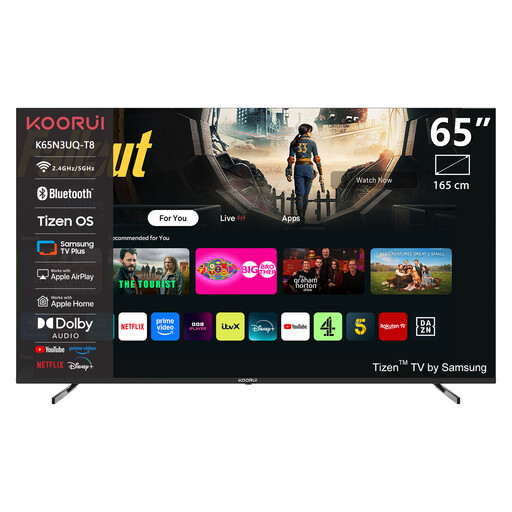
KOORUI K65N3UQ-T8 65-inch 4K UHD QLED TV
Measure the distance from your seats and assess the screen size from there; separately check how this model performs from the side.
65-inch, 4K UHD, QLED and Tizen OS.
Joybuy
 No image available
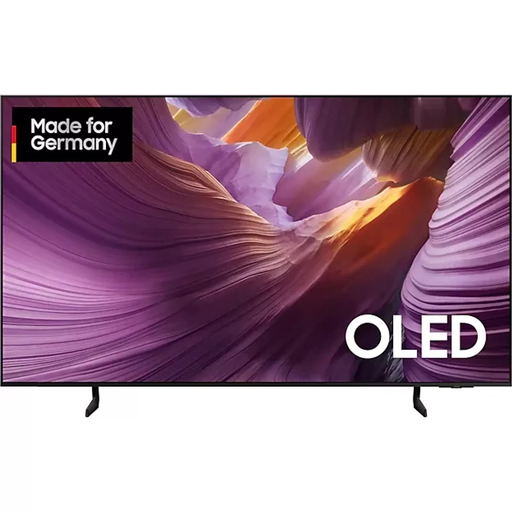
Samsung S85F Series GQ55S85FAU 55-inch OLED 4K
OLED is a relevant display technology to compare for off-centre viewing; check the viewing angle of this particular version separately.
55-inch, OLED and 4K.
Joybuy
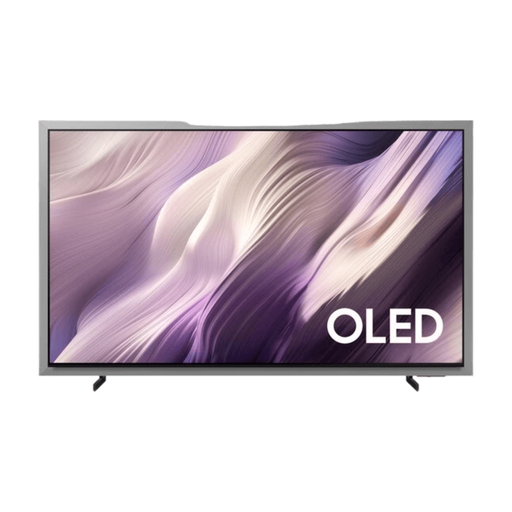 No image available
Samsung QE55S99HATXXN 55-inch QD OLED
Compare visibility from your angled seat and in daylight; the features listed don’t replace an assessment in your own room.
55-inch QD OLED, anti-reflection surface and native 100 Hz refresh rate.
Joybuy
Frequently asked questions
Can you rely on the word QLED to tell you a TV has a wide viewing angle?
No, QLED alone doesn’t tell you how a TV performs from the side. Check the viewing angle of the specific model and look for changes in colour and contrast from seats at the edges.
How should you assess picture quality and placement at home?
Measure the distance from your usual viewing spots and also view the screen from the most angled seat. Assess visibility in normal room lighting; according to the Dutch Consumers' Association, the bright shop setting isn’t a reliable guide to how it will look at home.
What does the energy label tell you, and is the statutory guarantee always two years?
Electronic displays in the European Union receive an energy label from A to G; compare the label for the exact TV. ACM ConsuWijzer explains statutory rights alongside any manufacturer’s warranty: how long you can make a claim depends on what you could reasonably expect from the product under normal use, not automatically on a fixed two-year period.
Can you return a TV bought online after trying it from your usual seat?
For a standard online consumer purchase, you generally have a statutory cooling-off period of up to 14 days after delivery. ACM ConsuWijzer gives a new TV bought online as an example; check the applicable terms and exceptions.


