Who is this choice relevant to?

Viewers sitting close to the screen

If you want to see animals and landscapes clearly without the screen dominating your living room, measure both your viewing distance and the space available. The Consumers’ Association identifies viewing distance as an important starting point when choosing a screen size.

Fans of dark nature scenes

If you mainly watch evening or underwater scenes, consider contrast and visibility of dark details alongside the purchase price. The Consumers’ Association explains the differences between LCD and OLED, but picture quality also depends on the image processing in each individual model.

Viewers watching in daylight or with others

If you often watch with the lights on or sit off-centre, compare brightness, reflections and viewing angle separately. The Consumers’ Association identifies these as relevant differences between TVs.

What should you look for?

What to consider What to look for Who is this important to?
Screen size and placement Measure the distance from your eyes to the screen and the space available for the TV, including its stand. The Consumers’ Association suggests around 2.4 times the screen diagonal as a starting point, not a hard-and-fast rule; for a viewing distance of 200 cm, it gives a range of 32–43 inches. I want the screen to be comfortable to watch from my usual seat and to fit on my unit. Around 29% of consumers prioritise screen size and placement.
Contrast and dark details Compare model-specific assessments of contrast and image processing. Also check that the TV and nature documentary support the same HDR format; 4K, HDR or QLED alone doesn’t guarantee good picture quality. For night-time or underwater scenes, I want to make out dark details without relying on a logo alone. Around 23% of consumers prioritise contrast.
Daylight and viewing angle Check brightness and reflections from your usual viewing position. Compare the viewing angle separately if several people sit off-centre. If daylight falls on the screen or we watch as a group, I want to assess the picture from where we sit. Around 18% of consumers prioritise daylight performance.
Streaming and sound Check whether the streaming service you want is available on the TV’s platform and see which HDMI connections you need for any external devices. Also check that spoken commentary is easy to hear. I want to start watching without any fuss and follow the spoken commentary clearly. Around 18% of consumers prioritise access to the programme and sound.
Overall cost Compare the exact model variant and its energy label. Consider whether you’ll need extra equipment to use a particular app or sound solution; assess paid extended warranties separately from your statutory rights. If affordability and running costs are my main concerns, I want to know what I’ll need for this specific variant and how I plan to use it. Around 12% of consumers prioritise overall cost.

Common pitfalls

  • Automatically choosing the smallest TV for a small living room

    The most comfortable screen size depends in part on the distance between your eyes and the screen. The TV’s width and stand also need to fit the space you have in mind.

    Measure your viewing distance and the available width on your furniture or wall, then compare screen sizes that are a good match.

  • Assuming an HDR or QLED logo guarantees great nature documentaries

    HDR requires suitable content and a supported format. QLED is a type of LCD; picture quality varies between models and also depends on image processing.

    Check the HDR format supported by both the TV and the documentary, and compare model-specific information on contrast, brightness and reflections.

  • Confusing paid extended cover with your statutory guarantee

    You don’t need a paid warranty contract to have statutory rights. ACM ConsuWijzer says that the seller is responsible for providing an appropriate free solution if a product doesn’t meet what you could reasonably expect during normal use.

    Before signing up, check which additional situations a commercial warranty contract actually covers.

Brands to consider

Philips

The Philips 43PUS8001/12 product page for the Netherlands lists a 43-inch LED TV with Ambilight and Titan OS.

  • This model combines a compact size with the lighting and smart TV platform listed.
  • Check that your preferred apps are available and compare the black levels of the specific model; Ambilight alone doesn’t guarantee better picture quality for nature documentaries.

LG

The LG OLED42C5ELB product page for the Netherlands describes a 42-inch OLED TV for viewers who value a compact size and contrast.

  • The Consumers’ Association describes OLED in general as a technology that can offer deep blacks and a wider viewing angle.
  • Check the brightness and reflections in your room for the variant you’re considering, and weigh these against the price. Image retention during prolonged display of static images remains something to bear in mind.

Samsung

The Samsung QE43Q7F2AUXXN product page for the Netherlands lists a 43-inch QLED 4K TV.

  • This model is a compact QLED option; QLED is an LCD technology and shouldn’t be confused with OLED.
  • Compare the brightness, reflections and viewing angle of the individual TV. The QLED label doesn’t prove that its picture quality is better than another model’s.

TVs for a small living room

These Joybuy models are 42- and 43-inch TVs for anyone considering a compact size. Remember to measure your viewing distance and the width of the space where you plan to put the TV.
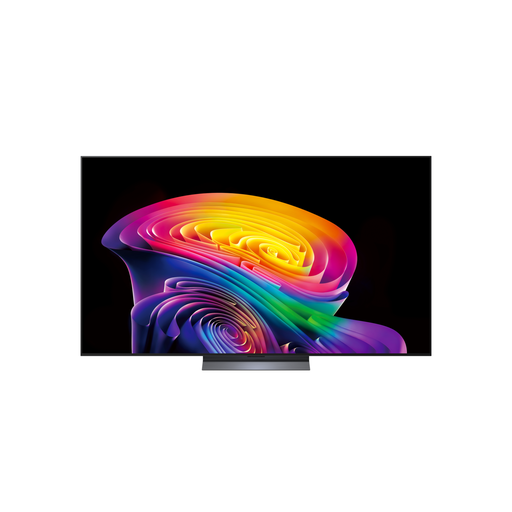
LG OLED42C68LA 42-inch 4K Ultra HD OLED Smart TV

LG OLED42C68LA 42-inch 4K OLED Smart TV

A 42-inch OLED model for viewers who value a compact size and dark nature scenes.

4K resolution, Dolby Vision, HDR10, Dolby Atmos, HDMI 2.1, AMD FreeSync, webOS and Wi-Fi.

View at Joybuy
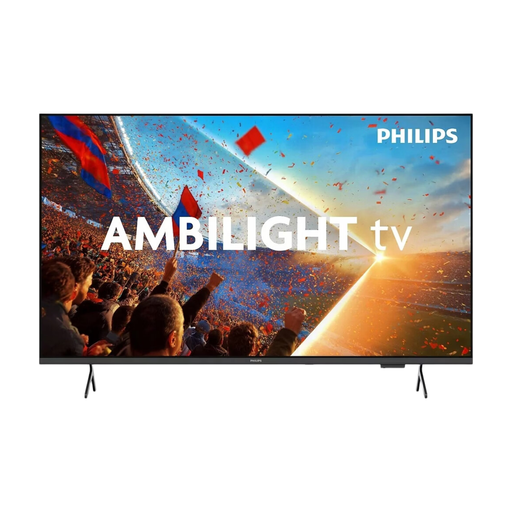
Philips 43PUS8001/12 43-inch 4K TV

Philips 43PUS8001/12 43-inch 4K TV

A 43-inch LED LCD model to consider if you’re looking for a compact screen with built-in smart features.

Titan OS, Ambilight, HDR10+ and HLG.

View at Joybuy
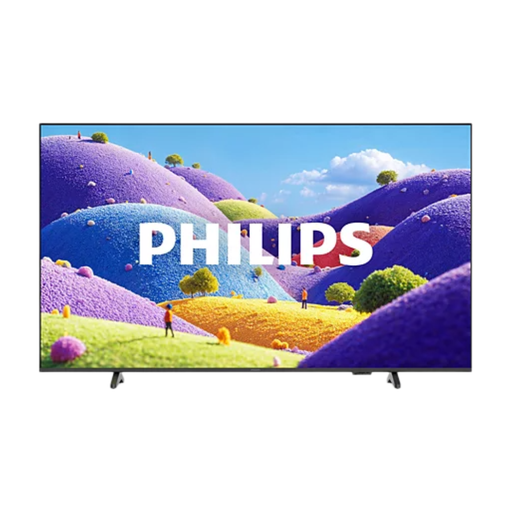
Philips 43PUS7061/12 43-inch 4K LED TV

Philips 43PUS7061/12 43-inch 4K LED TV

A 43-inch LED TV to include in your comparison if you’re looking for a compact screen.

Titan OS, Dolby Atmos, HDR10+ and HLG.

View at Joybuy
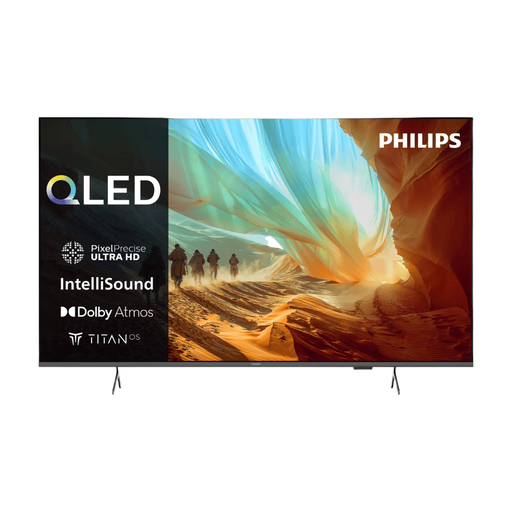
Philips 43PQS7801 43-inch 4K QLED Smart TV

Philips 43PQS7801 43-inch 4K QLED Smart TV

A 43-inch QLED model to compare if you’re considering a compact LCD TV with smart features.

Titan OS, Dolby Atmos, HDR10+ and HLG.

View at Joybuy
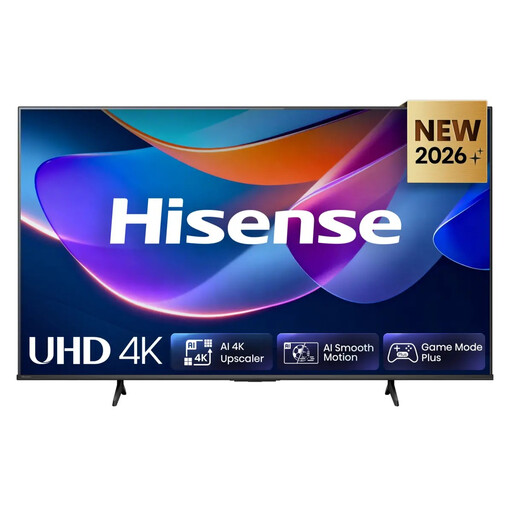
Hisense 43A6S 43-inch 4K UHD Smart TV

Hisense 43A6S 43-inch 4K UHD Smart TV

A 43-inch smart TV to include in your comparison if you’re looking for a compact screen.

60 Hz, Dolby Vision, HDR10+ and VIDAA Smart OS.

View at Joybuy

Frequently asked questions

Is 43 inches too big if the sofa is close to the TV?

Not necessarily; your viewing distance and the space available help determine whether the size will feel right. The Consumers’ Association uses around 2.4 times the screen diagonal as a starting point and gives a range of 32–43 inches for a viewing distance of 200 cm. Also measure the TV’s width, including its stand.

How do I set up a new TV for watching nature documentaries?

At home, start with the Home mode rather than the often brighter Shop mode. The Consumers’ Association advises assessing the picture in your usual room lighting. Try a familiar scene with both light and dark areas, then adjust the brightness, contrast and colour to suit your preferences.

Should I buy an extended warranty when ordering a TV online?

No, you don’t need a paid contract to have a statutory guarantee. According to ACM ConsuWijzer, the seller is responsible for providing an appropriate free solution if a product doesn’t meet what you could reasonably expect during normal use; commercial warranties have their own terms and conditions.

Is there a cooling-off period for a TV bought online in the Netherlands?

ACM ConsuWijzer says that a 14-day cooling-off period generally applies from the delivery of a TV ordered online. Check the terms and conditions for your specific order and return.

What energy label must be available for a TV?

TVs must have an energy label. The Dutch government describes the scale from A to G; compare the label and product information for the exact model variant. This is an information requirement, not a general rule that you must buy a TV with a particular label rating.
