First, measure the shelf’s available width, height and depth, then compare these with the TV’s dimensions, including its stand. Next, choose a screen size that suits your viewing distance. For a film about the coast, you’ll also need to consider light, reflections and viewing angle: according to the Consumentenbond, OLED TVs generally offer a wider viewing angle and deeper blacks, while LCD TVs can often be brighter. Finally, check that you can play your film using your chosen source and connection.
Who is this buying guide for?
Viewers with a narrow shelf
You want to know whether the TV, including its stand, will fit on your unit and whether the screen size suits your viewing distance. The Consumentenbond stresses that the TV’s width and height also matter when placing it in a piece of furniture.
Film fans watching in changing light
You want to see coastal scenes, dark moments and movement clearly, so you’ll need to consider light, reflections and viewing angle. The Consumentenbond highlights these factors when comparing televisions.
Viewers with their own film file
You want to check in advance whether the TV or a connected player can play your film. As the Consumentenbond explains, a 4K screen only displays a film at its original 4K resolution if the film and playback source support it too.
What should you look for?
Start by checking that the TV will physically fit, then consider your viewing conditions and playback options. That way, you won’t end up with a screen size that seems right but doesn’t work for your set-up.
32-inch LCD TV
A good fit if: a larger TV would take up too much shelf space or you sit relatively close to the screen.
Consider: the smaller picture may feel less immersive from further away; a Full HD screen won’t display a 4K film at its original 4K resolution.
42- or 43-inch OLED TV
A good fit if: this size fits on your shelf and you value deep blacks or watch from different angles.
Consider: check for reflections and how well the picture is visible in your room’s lighting. If you leave a static logo or menu on screen for long periods, also bear image retention in mind.
43-inch LCD, QLED or mini-LED TV
A good fit if: a 43-inch TV works in your set-up and you often use it in a bright room.
Consider: screen technology alone won’t tell you how the TV will look in your room. Compare reflections, viewing angle and the dimensions of the stand too.
| What to consider |
What to look for |
Who this matters to |
| Shelf and viewing distance |
Measure the available width, height and depth; check the TV’s dimensions including its stand, and compare the screen size with your viewing distance. |
If I’m putting a TV on a narrow shelf, I want to be sure the stand will fit too; around 36% of consumers give placement top priority. |
| Picture visibility |
Consider incoming light, reflections and where you sit. Compare models by their picture characteristics rather than just by their screen technology. |
If I watch films in daylight or from different seats, I want to know how clearly I’ll be able to see the picture; around 29% of consumers prioritise picture visibility. |
| Playing your film |
Check the resolution and playback method for your file or service, and make sure the exact TV model supports the connection or playback method you need. |
If I want to play my own film, I want to know in advance whether it’ll work with my chosen source; around 21% of consumers give playback top priority. |
| Use and aftercare |
Compare the energy labels of the exact models and check for any delivery or installation costs. Consider any extended warranty alongside your statutory rights. |
If I use my TV regularly, I also want to consider energy use and aftercare; around 14% of consumers prioritise running and aftercare costs. |
Common buying pitfalls
-
Comparing only the screen size with the shelf
The diagonal measurement won’t tell you whether the whole TV or its stand will fit on your unit.
Measure the shelf’s width, height and depth, then check the dimensions of the exact model, including its stand.
-
Assuming QLED screens produce their own light
QLED is a type of LCD. The differences between OLED and LCD in brightness, black levels and viewing angle still matter in the room where you watch.
Compare how clearly the picture shows up in your lighting and look at reviews of the exact model. Don’t judge picture quality by the technology name alone.
-
Assuming a 4K logo guarantees 4K playback
The TV’s specifications don’t tell you whether your film file or playback source supports 4K.
Check the resolution of the film, the source and the connection before making 4K a deciding factor.
-
Confusing an extended warranty with your statutory rights
In the Netherlands, statutory rights apply alongside commercial or manufacturer warranties. ACM ConsuWijzer states that there is no general fixed two-year period for this.
Compare what an extended warranty adds, and keep your proof of purchase and the seller’s details.
Brands to compare
Philips
The Philips models featured range from the 32-inch Full HD 32PFS6900/12 to the 43-inch 4K 43PUS8000/12 with Ambilight.
- The models come in different screen sizes and resolutions, giving you options to compare with your available shelf space.
- For Ambilight, check that you have enough space and a suitable background; the 32-inch model doesn’t have a 4K screen resolution.
LG
The OLED42C5ELB is a specific 42-inch OLED and 4K option if that size works in your set-up.
- LG lists deep black levels as a feature of this model.
- The model name won’t tell you how it handles reflections or how visible the picture is in a bright room; assess these conditions separately.
Samsung
The QE43QN90FATXXN is a 43-inch Neo QLED Mini LED model with 4K resolution.
- The product specifications give you a specific 43-inch LCD option to compare with an OLED model.
- Screen technology alone won’t tell you how the model performs in your room; check the stand’s dimensions, reflections and viewing angle.
TVs at Joybuy
This selection includes 32-, 42- and 43-inch TVs, from compact models to larger OLED, LCD and QLED options. For each model, check that its dimensions, including the stand, and its playback method suit your set-up.
 No image available
LG OLED42C68LA 42-inch 4K Ultra HD OLED Smart TV
A 42-inch OLED option to consider if this size fits on your shelf and suits your viewing distance.
Specifications: 4K Ultra HD, Dolby Vision and HDR10. Check the dimensions including the stand, and make sure you can play your film using your chosen source.
View at Joybuy
 No image available
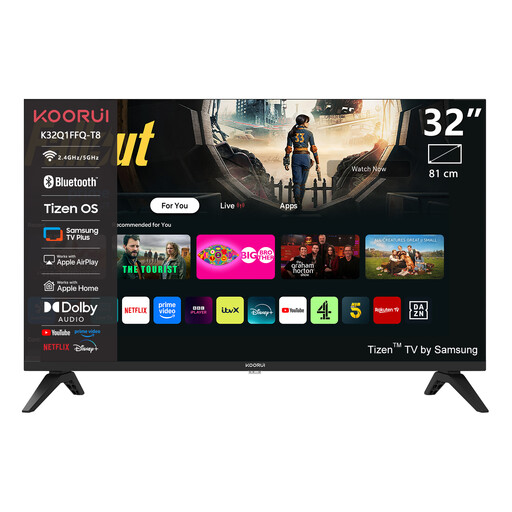
KOORUI K32Q1FFQ-T8 32-inch Full HD QLED Smart TV
A compact 32-inch option if this size suits your shelf and viewing distance; check the full dimensions of the TV and stand.
Specifications: Full HD, QLED, Tizen OS and Dolby Audio. A Full HD screen won’t display a 4K film at its original 4K resolution.
View at Joybuy
 No image available
Hisense 43A6S 43-inch 4K UHD Smart TV
A 43-inch option if this size fits on your shelf and suits your viewing distance; remember to measure the space taken up by the stand too.
Specifications: 4K UHD, 60 Hz, Dolby Vision and VIDAA. Check that the TV and your playback source support the film file.
View at Joybuy
 No image available
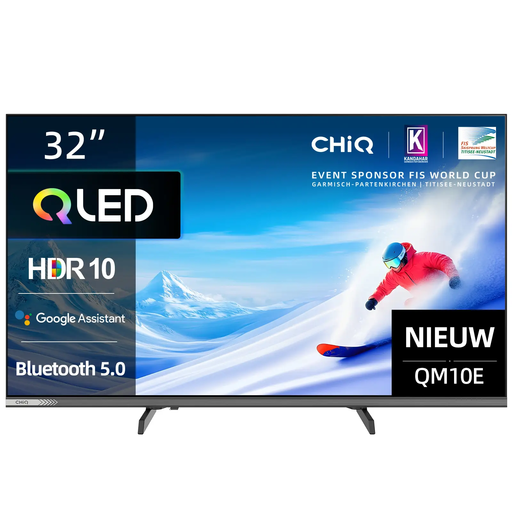
CHiQ L32QM10E 32-inch QLED Smart TV
A 32-inch option to consider if a compact screen suits your shelf and viewing distance.
Specifications: Google TV, HDR10 and Dolby Audio. Before buying, check the exact dimensions including the stand, as well as how you’ll play your film.
View at Joybuy
 No image available
Hisense 43E7S 43-inch 4K UHD QLED Smart TV
A 43-inch QLED option if the size fits; compare the stand’s dimensions and your viewing conditions before choosing a model.
Specifications: 4K UHD (3840 × 2160), HDR10+, Vidaa, 3× HDMI 2.1, wifi and energy class E. Check that the connections suit your playback source.
View at Joybuy
Frequently asked questions
Is a 43-inch TV automatically too big for a narrow shelf?
No, it depends on the shelf and the full dimensions of the model. Measure the available space and check the TV dimensions including the stand; also compare the screen size with your viewing distance. The Consumentenbond recommends using viewing distance as a guide, not a hard-and-fast rule.
Is a 4K TV worthwhile if my film about the coast isn’t in 4K?
A 4K screen won’t turn source material that isn’t available in 4K into an original 4K recording. Check your film’s resolution and how you’ll play it before making 4K a deciding factor.
What should I look out for if I watch the film repeatedly?
First, check the TV’s dimensions including the stand and make sure it has the right connection for your playback source. With OLED, image retention can be a consideration if a static logo or menu stays on screen for a long time; older tests don’t provide a risk percentage for a current model.
Do I need to buy an extended warranty for a TV in the Netherlands?
No, you don’t need to buy an extended warranty to have statutory rights. ACM ConsuWijzer explains that if a product becomes faulty sooner than you could reasonably expect, the seller must offer a solution; there is no general fixed two-year period for this in the Netherlands. Compare any extra cover to see what it offers beyond your statutory rights.
How do I compare TVs’ energy use?
Compare the energy labels or EPREL information for the exact models. According to the European Commission, televisions use the EU energy label scale for electronic displays, from A to G. Also check the HDR information if you often watch HDR content.


