First, measure the distance from your eyes to where you plan to put the screen, then check that the TV’s overall dimensions will fit. A larger screen isn’t automatically more comfortable in a narrow living room. Next, choose based on the light in the room and your preference for picture contrast: OLED may suit you if contrast is a priority, while a bright LCD model could be a good choice if there’s lots of daylight. You’ll only get the full benefit of 4K detail if the programme is available in 4K too.
Who is this choice relevant to?
Watching from close to the screen
There’s only a short distance between your sofa and the TV, and you want to follow images of architecture clearly without the screen dominating the room. The Dutch Consumers’ Association recommends using your measured viewing distance as the starting point when choosing a screen size.
A fan of picture contrast
When watching buildings and interiors, you pay particular attention to contrast, colour and how the picture looks from your usual seats. Check the exact model rather than relying on the screen type alone.
Watching in daylight
You often watch during the day and want to take account of the light coming into the room or reflections where the TV will go. The Dutch Consumers’ Association points out that LCD TVs can often be bright, but performance can vary by model and room.
What should you consider when choosing?
Start by measuring: the distance to the screen and the space available for the TV will determine whether a particular size is practical.
| What to consider |
What should you check? |
Who is this most relevant to? |
| Screen size and viewing distance |
Measure the distance from your eyes to where the screen will go, then compare it with the screen’s diagonal measurement. The Dutch Consumers’ Association suggests dividing the distance in centimetres by 2.4 to get a starting estimate for the diagonal in centimetres. Also check the model’s overall width. |
If I sit close to the TV, I want a size that’s comfortable to watch and fits the available space. Viewing distance is the top priority for around 36% of consumers in this decision context. |
| Contrast and picture detail |
Compare the picture quality of the exact model and check whether your programmes are available in 4K. A 4K screen doesn’t turn content with a lower source resolution into native 4K. |
When I watch architecture programmes, I pay attention to how light and dark areas of buildings and interiors look. Picture contrast is the top priority for around 29% of consumers in this decision context. |
| Daylight and reflections |
Consider where windows and lamps are in relation to the screen, and compare the brightness and reflections for the exact model. The screen type alone won’t tell you how reflective it will be in your room. |
When I watch during the day, I want to check in advance how much light will fall on the screen and how clearly I’ll be able to see the picture. Daylight is the top priority for around 21% of consumers in this decision context. |
| Space and mounting |
Check the dimensions with and without the stand, the stand’s width and — if you’re wall-mounting the TV — its weight and VESA size. Also make sure your wall and bracket are suitable. |
When space is tight, I want to know that the TV will physically fit in the chosen position before deciding on a size. Placement is the top priority for around 14% of consumers in this decision context. |
Pitfalls to avoid when choosing a TV
-
Choosing a screen size based only on the width of the room
The available wall space and the distance between your eyes and the screen are two separate things to check. A screen that physically fits isn’t automatically comfortable to watch from your seat.
Measure both before choosing a size. Use the Dutch Consumers’ Association’s calculation as a starting point, and look at nearby screen sizes too.
-
Expecting every programme to show more detail on a 4K TV
The amount of detail you can see also depends on the resolution in which the broadcast or stream is available.
Check the picture quality of the programmes and services you actually use, as well as the model’s contrast and picture processing.
-
Assuming a screen technology guarantees fewer reflections
A label such as OLED, QLED or mini-LED doesn’t, by itself, tell you how a particular model will perform by the window in your room.
Consider how much light will fall on the planned screen position and compare model-specific information about brightness and reflections.
-
Confusing an extended warranty with your statutory rights
ACM ConsuWijzer explains that statutory cover for a television may sometimes last longer than two years. What you could reasonably expect from the product is one of the factors taken into account.
First, check what rights you have with the seller. Then compare the terms and exclusions of any additional cover.
Relevant brands to consider
LG
The OLED48C54LA is an example of a 48-inch OLED TV for anyone who values contrast.
- LG lists OLED and 4K among this model’s specifications.
- Check the width and how reflective the screen will be in your chosen position. The manufacturer’s claims about colour and detail aren’t independent test results.
Samsung
The QE43QN90FATXXN is a 43-inch Mini LED model to consider if you’re weighing up a smaller size and daytime viewing.
- Samsung lists Mini LED and a 43-inch diagonal for this model.
- The Dutch product page says ‘not for sale’, so check availability separately. The screen type doesn’t prove that the model will be less reflective in every bright room.
Philips
According to Philips, the 48OLED810/12 combines a 48-inch OLED screen with Ambilight.
- Ambilight may be worth considering if you want to leave space around the TV for the lighting effect.
- Check that the screen size and your planned wall or furniture placement will fit. The product description isn’t an independent comparison with other TVs.
Sony
The K-43S3 is a 43-inch 4K LCD TV for which Sony publishes placement dimensions.
- Sony lists this model’s width as approximately 96,4 cm and its VESA size as 20,0 × 20,0 cm.
- These measurements help you check the available space, but they don’t in themselves say anything about superior picture quality or reflection handling.
TVs for a compact viewing setup
These Joybuy products include several 43-inch models and a 48-inch OLED model. Compare the diagonal measurement with your viewing distance and check the space available.
 No image available
LG OLED48G69LS 48-inch OLED evo AI G6 4K Smart TV
A 48-inch OLED model to consider if that screen size suits your viewing distance and the space available.
48 inch, OLED and 4K.
View at Joybuy
 No image available
Hisense 43A6S 43-inch 4K UHD Smart TV
A 43-inch model to compare with your measured viewing distance and the available furniture or wall space.
43 inch, 4K UHD and 60 Hz.
View at Joybuy
 No image available
METZ 43MQF7500Z 43-inch QLED 4K UHD Google TV
A 43-inch option to compare if this size suits your viewing distance and the space available.
43 inch (109 cm), QLED, 4K UHD and Google TV.
The title also mentions HDR10+ and Dolby Vision.
View at Joybuy
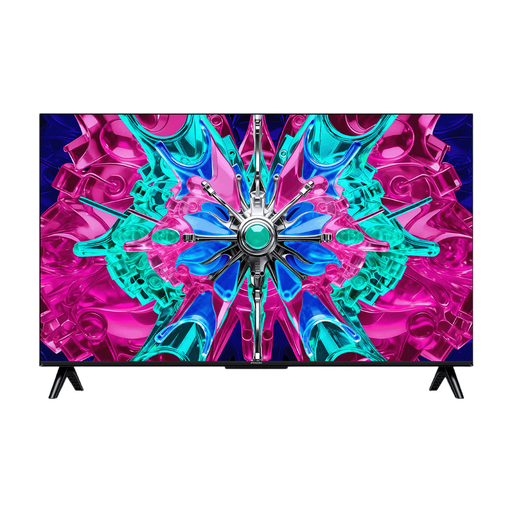 No image available
iFFALCON U65A 43-inch 4K LED Smart TV
A 43-inch model to compare with your viewing distance and the space available first.
43 inch, 4K LED and 50 Hz.
View at Joybuy
 No image available
Hisense 43E7S 43-inch 4K QLED Smart TV
A 43-inch QLED model to compare with your viewing distance and where you plan to put the TV.
43 inch, 4K QLED and 120 Hz.
The product description lists a brightness of 300 cd/m².
View at Joybuy
Frequently asked questions
How do I choose a screen size without looking only at the diagonal measurement?
Measure from your usual viewing position to where you plan to put the screen, and check the overall width too. The Dutch Consumers’ Association suggests dividing the viewing distance in centimetres by 2.4 to get a starting estimate for the diagonal in centimetres. Compare nearby screen sizes as well.
Does an architecture programme need to be available in 4K to make the most of a 4K TV?
To get the full resolution benefit, the content you watch also needs to be available in 4K. A 4K panel doesn’t turn a programme with a lower source resolution into native 4K picture quality.
What should I check before wall-mounting the TV?
Compare the exact model’s VESA size, weight and dimensions with your bracket and the space available. For example, Sony lists a VESA size of 20,0 × 20,0 cm for the K-43S3. Also check that your wall and bracket are suitable.
What should I look out for with an OLED TV?
Check the manufacturer’s guidance for your model on long periods of static images and screen maintenance. LG describes a screen protection feature for its OLED TVs. For guidance on using a specific set, consult its manual.
In the Netherlands, does my statutory cover automatically end after two years?
No. ACM ConsuWijzer explains that statutory cover for a television may last longer than a two-year commercial warranty. What you could reasonably expect from the product and normal use are among the factors taken into account. If a product is faulty, the seller is your point of contact for an appropriate solution.


