What should you look for when buying?
Start by measuring your viewing distance and the space available. Then assess the picture and sound using content similar to what you watch at home, and take your seating positions and light levels into account.
| What to consider |
What should you look for? |
Who is this important for? |
| Screen size and placement |
Measure your viewing distance and the available width and height. The Consumers’ Association suggests dividing the viewing distance by 2.4 as a starting point for the screen diagonal in centimetres; also measure the set including its stand. |
If I have limited space, I want to make sure the TV fits and is comfortable to watch from my seat. Around 28% of consumers prioritise screen size and placement. |
| Dialogue clarity |
Listen to a dialogue clip at a normal volume. Also check that any external audio equipment will fit in the space and can be connected. |
When I’m watching comedies, I want to follow conversations without constantly adjusting the volume. Around 22% of consumers give dialogue clarity top priority. |
| Older footage and aspect ratio |
Try the actual playback source and check the picture-format settings on both the TV and the player. Black bars may be needed to preserve the original proportions; a 4K panel won’t automatically make an older recording 4K. |
When I watch classic recordings, I want to avoid faces looking stretched or parts of the picture disappearing. Around 22% of consumers prioritise preserving the original picture. |
| Viewing angle and reflections |
View the screen from your usual seats and in lighting similar to what you have at home. Notice how the picture and reflections change when you sit to one side of the TV. |
When we watch as a group, I want the picture to remain clear from the side, too. Around 17% of consumers prioritise visibility from multiple seats. |
| Power consumption |
Compare the consumption in kWh per 1000 hours on the energy label. Milieu Centraal also points out that any set-top box will use electricity separately. |
If the TV is on often, I want to include the power consumption of the set and any set-top box in my decision. Around 11% of consumers give running costs top priority. |
Joybuy products
This selection includes LED/LCD and QLED TVs with 32- and 43-inch screens. Compare each set’s size with your viewing distance and the space available.
 Image unavailable
Philips 43PUS8001/12 43-inch 4K TV
A 43-inch model to compare with your measured viewing distance and the space available.
The product information lists a 4K UHD LED-LCD screen, 3-sided Ambilight and a 20 W audio system.
View at Joybuy
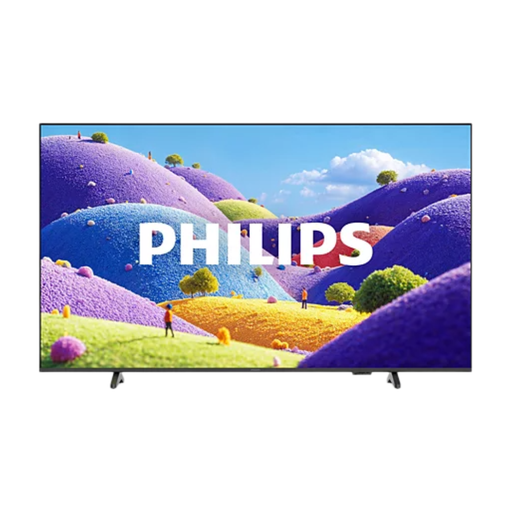 Image unavailable
Philips 43PUS7061/12 43-inch 4K LED TV
The 43-inch screen makes this model an option to compare with your available space and viewing distance.
The product information lists a 4K UHD screen, a 20 W audio system, IntelliSound, Voice Amplification and Night Mode.
View at Joybuy
 Image unavailable
Philips 43PQS7801 43-inch 4K QLED TV
A 43-inch QLED model to compare if you’re considering an LCD TV; also assess the viewing angle and reflections from your own seats.
The product information lists a 4K screen, Vocal Boost, Dolby Atmos and DTS:X.
View at Joybuy
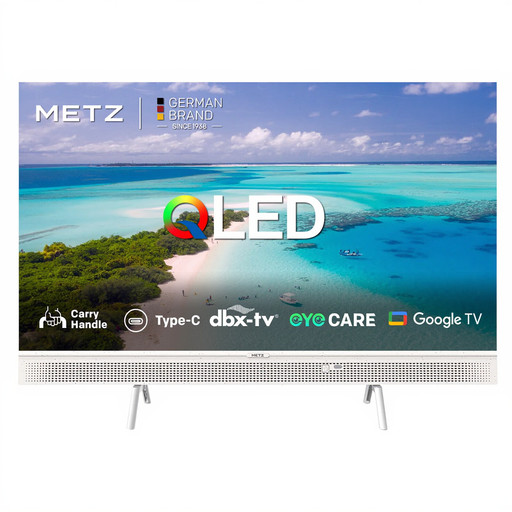 Image unavailable
METZ 32MQE7100Z 32-inch portable QLED TV
The 32-inch size is an option to compare with the distance from your seat and the space available.
The product name lists HD Smart TV and QLED. The product information mentions front-facing speakers, USB Type-C power and compatibility with a 60 W power bank.
View at Joybuy
 Image unavailable
METZ 43MQF7500Z 43-inch 4K QLED TV
A 43-inch model to compare with your viewing distance and the dimensions of your TV stand.
The product name lists a 4K UHD screen, Google TV, HDR10+, Dolby Vision, Dolby Atmos, HDMI 2.1, VRR and MEMC.
View at Joybuy
Frequently asked questions
What screen size is right for a narrow living room?
Measure the distance from your eyes to where the screen will go, then divide the result by 2.4 as a starting point for the screen diagonal in centimetres. The Consumers’ Association gives a range of 32–43 inches for a viewing distance of 200 cm; also check that the set fits, including its stand.
Are black bars on old comedies a fault?
Not necessarily: a recording with a different aspect ratio may not fill a widescreen display. Check the settings on the TV and playback source before stretching or cropping the picture.
How can I reduce the risk of image retention on an OLED TV?
Sony warns that repeatedly displaying fixed images for long periods, including bars and channel logos, can affect OLED screens. Vary what you watch and check the selected model’s screen protection settings; this manufacturer advice doesn’t predict that a particular screen will suffer image retention.
In the Netherlands, am I automatically entitled to exactly two years’ legal guarantee on a TV?
No. According to the Dutch government, there is no fixed legal guarantee period in the Netherlands: you’re entitled to a product that meets what you can reasonably expect. If something goes wrong, contact the retailer; a manufacturer’s guarantee or additional cover is on top of this.
Can I hand in my old TV when I buy a new one?
Yes. According to the Dutch government, when you buy a new, similar appliance, you can use the free take-back scheme, including for online purchases. If the old appliance can’t be collected at the time of delivery, the Dutch government explains the alternatives available through the online retailer.


