First, measure your viewing distance and the space available for the TV. Your viewing distance can help you choose a screen size, but it doesn’t prescribe a fixed size. Then choose between OLED and LCD variants based on dark film scenes, daylight and viewing angle, and check the specific model’s screen reflections, connections and sound.
Who is this guide for?
Viewer with a short viewing distance
You want the screen and stand to fit in your narrow living room. Measure from where you sit, then compare the TV’s dimensions with the available space on your furniture or wall. The Consumentenbond recommends measuring your viewing distance at home.
Viewer who watches short films in the evening
You’re mainly concerned with dark scenes, picture settings and clear sound. Compare screen types based on how you’ll use the TV, and check how the picture and sound on the specific model perform in your situation.
Viewer in daylight or from the side
You often watch with daylight coming in or from a chair beside the sofa. Pay attention to reflections and the viewing angle of the specific model, not just the screen technology.
What should you consider when choosing?
Compact OLED TV
Ideal for: mainly watching films in dim lighting, when deep blacks or a wide viewing angle matter.
Keep in mind: OLED isn’t automatically the best choice for every room; compare reflections and performance for each model.
Compact LCD or QLED TV
Ideal for: watching in daylight or comparing an LCD model with OLED within the space available.
Keep in mind: QLED is an LCD variant; check the specific model’s black levels, reflections and viewing angle.
The Consumentenbond notes that OLED generally offers a wider viewing angle and deeper blacks, while LCD technology can often deliver a bright picture. These are general characteristics, so check how the specific TV performs in your room.
| What to consider |
What should you check? |
Who should pay particular attention? |
| Screen size and placement |
Measure the viewing distance and the available width and height. Compare these with the TV’s dimensions, including the stand. |
If I have limited space, I want to know in advance whether the TV will fit on my furniture or wall. Around 36% of consumers focus mainly on screen size and placement. |
| Dark film scenes |
Compare specific models using a familiar film scene, and check that your source and TV support the same HDR format. |
When dark scenes and picture quality matter more to me than extra screen space, I compare the picture on each model. Around 29% of consumers prioritise film contrast above all else. |
| Reflections and viewing angle |
Check the screen for reflections and see how the picture looks from the seats you actually use. |
If light falls on my screen or I often sit beside the sofa, I want to know how the picture looks from that spot. Around 21% of consumers focus mainly on daylight and viewing angle. |
| Sound, connections and energy use |
Count the HDMI connections you need, check for HDMI-ARC/eARC if you’re using a soundbar, and compare the energy information. |
If I want to hear speech clearly and connect devices, I also check the sound and the connections I need. Around 14% of consumers are most concerned about sound, connections and running costs. |
For an initial screen-size estimate, the Consumentenbond uses the viewing distance in centimetres divided by 2.4 as a starting point for the diagonal in centimetres. Treat this as a guide, not a hard limit, and always check the dimensions of the exact model.
Common pitfalls
-
Looking only at the screen size in inches
The diagonal doesn’t tell you how wide or tall the TV is, or whether its stand will fit on your furniture.
Measure your viewing distance and the space available, then compare these with the dimensions of the exact model, including the stand.
You may need a different stand or wall-mounting solution if the TV doesn’t fit in the intended spot.
-
Confusing QLED with OLED
QLED is an LCD variant. Brightness, black levels and viewing angle are separate considerations, and can vary between models.
Compare the screen technology, as well as the specific TV’s reflections and viewing angle in your lighting conditions.
-
Assuming HDR makes every film look better
HDR performance also depends on the film source; support on the TV alone doesn’t determine how every film will look.
Check which HDR format the TV supports and whether your films are available with that HDR information.
-
Confusing the manufacturer’s warranty with your statutory rights
ACM ConsuWijzer explains that statutory guarantees in the Netherlands don’t have a fixed two-year term. A commercial warranty is separate from your statutory rights.
Read the terms of any additional cover separately and compare them with your existing statutory rights.
Brands to compare
LG
LG lists the OLED42C68LA as a 42-inch OLED TV with 4K and webOS.
- The model information makes this a compact OLED option to compare with your viewing distance.
- Check the dimensions of the specific version and how reflections affect it in your room; LG’s claims about picture quality are not independent test results.
Philips
Philips lists the 42OLED810/12 as a 42-inch OLED TV with Ambilight.
- The product information also lists Dolby Vision.
- Check that the placement and your viewing preferences work with the Ambilight lighting; claims about an immersive experience come from the brand.
Samsung
Samsung lists the QE43Q7F2AUXXN as a 43-inch QLED TV.
- This is an LCD option to compare with compact OLED models.
- Don’t assume the term QLED alone tells you the measured brightness, black levels or how well the TV handles reflections; check the specific model.
TVs for a compact living room
These Joybuy products are compact TV options to compare for watching films in a narrow living room. Measure your viewing distance and the space available, and check the TV’s dimensions before choosing a model.
 No image available
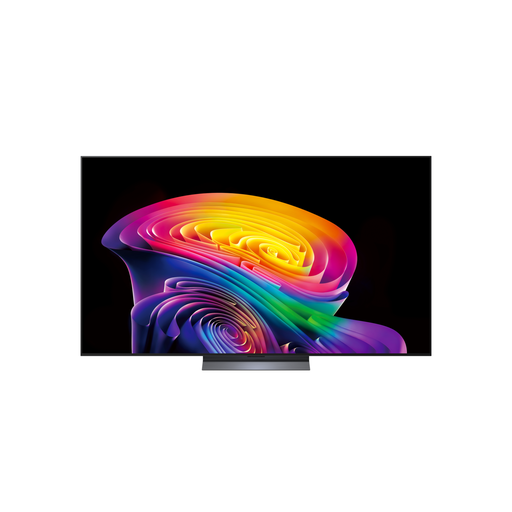
LG OLED42C68LA 42-inch 4K OLED Smart TV
A 42-inch OLED option to compare if you’re looking for a compact size for films.
4K Ultra HD, Dolby Vision, HDR10, Dolby Atmos, HDMI 2.1, AMD FreeSync, webOS and Wi-Fi.
View at Joybuy
 No image available
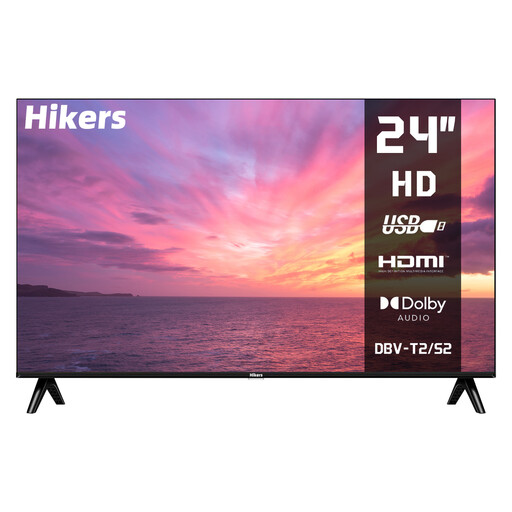
Hikers HD 24-inch LED TV
A small TV to compare if you have limited space available.
24 inches (60 cm), HD, non-smart TV, HDMI, USB, DVB-S2/T2/C, Dolby Audio and HDR.
View at Joybuy
 No image available
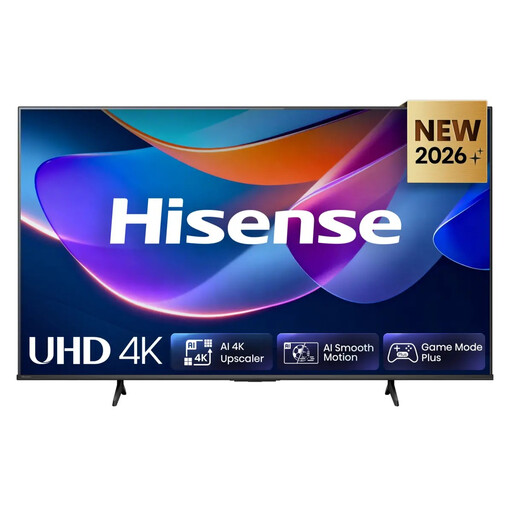
Hisense 43A6S 43-inch 4K UHD Smart TV
A 43-inch option to compare with smaller models and the space you have available.
4K UHD, 60 Hz, Dolby Vision, VIDAA and Game Mode Plus.
View at Joybuy
 No image available
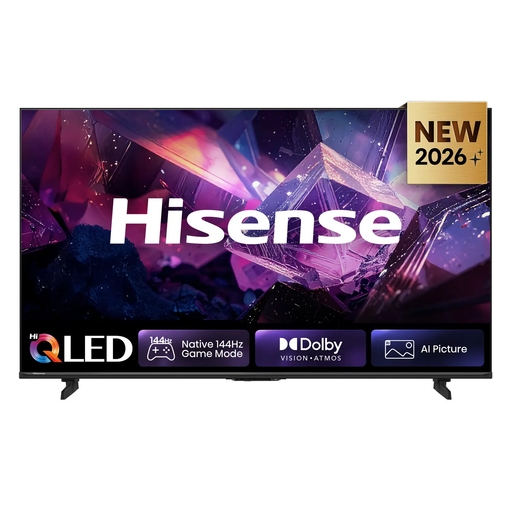
Hisense E7 PRO Series QLED Gaming TV 43E7S PRO
A QLED model to compare with OLED options if you’re looking for a compact TV for films.
The product information lists Dolby Vision, Dolby Atmos, Filmmaker Mode and HDR10+ Gaming.
View at Joybuy
 No image available
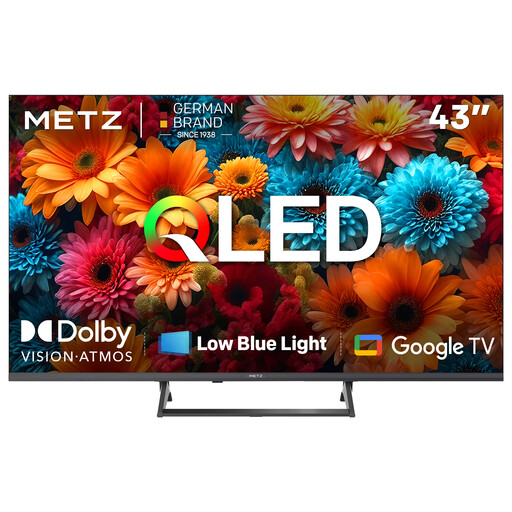
METZ 43MQF7500Z 43-inch QLED 4K UHD Google TV
A 43-inch QLED option to compare with your viewing distance and the available width.
109 cm, HDR10+, Dolby Vision, Dolby Atmos, HDMI 2.1, VRR, MEMC and Triple Tuner DVB-T/T2/C/S/S2.
View at Joybuy
Frequently asked questions
How do I choose a size for a narrow living room?
Measure from your eyes when seated to the spot where the TV will go. The Consumentenbond uses the viewing distance in centimetres divided by 2.4 as a starting point for the diagonal in centimetres. Then check the TV’s actual width and height, including the stand.
Do I definitely need a 4K TV for short films?
Not necessarily: a 4K TV can only show 4K detail if the source material contains it. So don’t choose based on the 4K logo alone; also consider your viewing distance and the films you watch.
What should I adjust first after setting up the TV?
Watch a scene you know well that includes both light and dark areas, then adjust the picture settings to suit your room. The Consumentenbond recommends using a familiar scene when assessing picture settings. Also check in advance that the connections will work with an external player or soundbar.
Do my rights end after the two-year manufacturer’s warranty?
No. ACM ConsuWijzer explains that statutory guarantees in the Netherlands don’t have a fixed term; they depend on what you can reasonably expect from the product under normal use. A commercial warranty is separate.
What should I know about the energy label and my old TV?
Televisions are covered by EU energy labelling rules. The Dutch Government says you can hand in an old appliance at the shop or online service where you buy a new, similar appliance. Ask how collection is arranged when your new TV is delivered.


