What should you look for when choosing?
First, measure the viewing distance and the space available. Then decide whether contrast and viewing angle, daylight, access to your streaming service or running costs matter most to you.
| What to consider |
What should you look for? |
Who is this most important for? |
| Size and positioning |
Measure the viewing distance and the available width and height, including the stand. The Consumentenbond suggests dividing the viewing distance by 2.4 as a starting estimate for the diagonal in centimetres. |
If space is limited, I want to know whether both the screen and stand will fit in the planned position. Around 31% of consumers give size and positioning top priority. |
| Contrast and viewing angle |
Compare specific models from your usual viewing positions and check whether your provider offers the series in 4K or HDR. |
If I mainly watch dark nature scenes or sit at an angle to the TV, picture quality from my seat matters a lot. Around 25% of consumers prioritise contrast, colours and viewing angle. |
| Daylight and reflections |
Check the position of windows and lamps, and compare the brightness and reflections of the exact model. |
If I usually watch during the day, I want to judge whether reflections make it harder to see details on screen. Around 19% of consumers put daylight viewing first. |
| Access to the series |
Check whether the app you want is available on the smart TV platform and what picture quality your provider offers for the series. |
If I watch my series through a particular streaming service, I want to be able to use it directly on the TV. Around 13% of consumers give access to the series they want top priority. |
| Running costs and peace of mind |
Compare the EU energy labels for the exact models, including the HDR information, and check the warranty terms. |
If I’m considering energy use and peace of mind after purchase as well as picture quality, I want to compare both in advance. Around 12% of consumers prioritise running costs and peace of mind after purchase. |
Joybuy TVs to compare
These Joybuy models are 43-inch LED and QLED TVs to compare with your available space and viewing distance. For each model, also check the apps, picture support and connections you need.
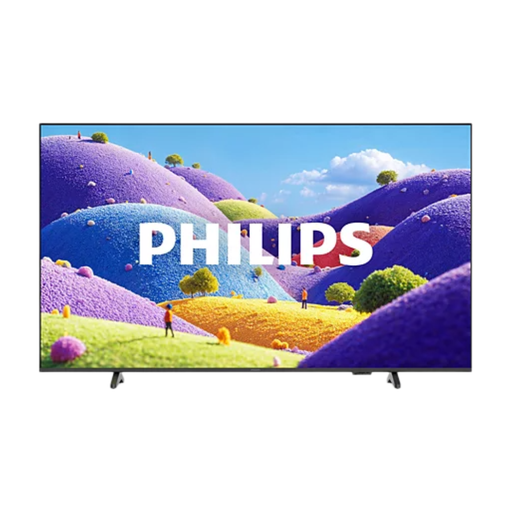 No image available
LED 4K TV 43PUS7061/12
Compare this 43-inch size with the available width and viewing distance.
LED LCD screen, 4K, 60 Hz, HDR10+/HLG and Titan OS. Check whether the apps you want are available on the platform.
View at Joybuy
 No image available
Philips 43PQS7801 4K QLED Smart TV (2026)
Compare this 43-inch model with the space where you plan to put the TV.
QLED, 4K, HDR10+/HLG and Titan OS. Check whether the apps you want are available on the exact platform.
View at Joybuy
 No image available
Hisense 43A6S 4K UHD Smart TV
This 43-inch size gives you a point of comparison for your available space and viewing distance.
4K UHD, 60 Hz, Dolby Vision, HDR10+ and VIDAA Smart OS. Check whether the streaming service you want is available on the platform.
View at Joybuy
 No image available
Hisense 43E7S PRO QLED TV
Compare this 43-inch QLED TV with your available space and viewing distance.
The model information lists 144 Hz native, Dolby Vision, AI Smooth Motion and VIDAA Smart OS. Check whether the apps you want are available.
View at Joybuy
 No image available
METZ 43MQF7500Z 4K QLED TV
At 43 inches (109 cm), this screen size is worth comparing with your viewing distance and available space.
QLED, 4K, Google TV, HDR10+ and Dolby Vision. Check whether the apps you want are available on the platform.
View at Joybuy
Frequently asked questions
Is 43 inches always the right size for a narrow living room?
No, 43 inches isn’t right for every narrow living room. Measure the distance from your eyes to the planned screen position and check the TV’s width and height, including the stand. The Consumentenbond suggests dividing the viewing distance by 2.4 as a starting estimate for the diagonal in centimetres; compare nearby screen sizes too.
Where should I put a TV if I mainly watch nature documentaries?
Choose a position after checking from the sofa where windows and lamps might reflect on the screen. Follow the instructions for the exact model when using a stand or wall bracket. If you watch images with fixed logos or other static elements for long periods, bear in mind the risk of image retention with OLED. The Consumentenbond describes this risk, but it doesn’t mean an individual TV will suffer screen burn-in.
What running costs and warranty rights should I consider?
Compare the EU energy labels for the exact models; they also show information about energy use when viewing HDR content. In the Netherlands, statutory rights are separate from any manufacturer’s or seller’s warranty. If a fault occurs after normal use, the seller is responsible for providing an appropriate solution that reflects what you could reasonably expect from the product; there isn’t a fixed two-year statutory period that automatically applies to every TV. ACM ConsuWijzer explains these rights.
Do I have a cooling-off period when buying online in the Netherlands?
For a standard online order of a new television, you generally have a 14-day cooling-off period, which starts after delivery, according to ACM ConsuWijzer. This is separate from your rights if the product is faulty.


