First, measure the viewing distance and check that everyone has a good view from their own seat. Then decide whether private listening or shared film sound matters more. Consumentenbond describes OLED as an option for deep blacks and generally wider viewing angles, while LCD TVs can often be bright. Compare reflections, audio connections and energy consumption for each model, in the lighting you usually use.
Who is this guide for?
Quiet evening viewer
You watch TV while others at home are working or sleeping, and want to be able to switch between TV sound and headphones. Check the audio outputs on the exact version you’re considering; Consumentenbond describes Bluetooth TVs as an option for private listening.
Film night with housemates
You sit in different parts of the room and want everyone to enjoy a good view and listen together. Assess the picture from seats at the sides; Consumentenbond highlights viewing angle as something to consider when choosing a TV.
Viewer with a small or bright living room
You want to match the screen size to the viewing distance and take the room’s daylight into account. Consumentenbond highlights viewing distance and brightness as factors to consider; measure the space and assess the picture in the lighting you usually use.
What should you look for?
Consumentenbond highlights factors such as viewing distance, viewing angle and brightness. Use the table to decide which trade-off matters most for your film nights.
| What to consider |
What to look for when buying |
Who should pay extra attention? |
| Listening without disturbing others |
Check for Bluetooth audio or a headphone socket, and whether you can use your preferred set-up with the TV speakers. |
If my housemates need peace and quiet, I want to listen privately without others hearing the film. Around 31% of consumers put discreet listening first. |
| A good view from several seats |
Check the picture from the seats furthest to the sides, and look out for reflections from windows and lamps. |
For a film night with seats to the sides, I want everyone to be able to see the screen clearly. Around 25% of consumers put a good view for the whole group first. |
| Picture quality in your room |
Compare black levels, brightness and reflections in your usual lighting. Also check whether your film source offers the HDR format you want. |
If how dark and bright scenes look is my main concern, I want to assess the picture in my own viewing conditions. Around 25% of consumers prioritise film picture quality. |
| Size and energy consumption |
Measure the viewing distance and available space, including the stand. Compare energy use per 1000 hours on the energy label, and check the HDR information if relevant. |
If the TV needs to fit into a limited space, I also want to consider its energy use. Around 19% of consumers put size and energy consumption first. |
Common mistakes
-
Focusing only on built-in speakers or a Dolby logo
Sound that works for a group won’t automatically meet your need to avoid disturbing your housemates.
Check which audio outputs the exact model has, and whether you can switch between headphones and the TV speakers.
-
Assuming a bright screen will look good from every seat
Brightness when viewed straight on and visibility from the side are two different considerations.
Compare the picture and any reflections from the seats furthest to the sides, using the lighting you normally have on.
-
Comparing only the SDR energy label or only the screen technology
The energy label gives separate information for HDR. Energy use during your own viewing may differ from what you’d expect based on a single feature.
Compare the stated energy use per 1000 hours on a like-for-like basis, and check HDR separately if you often watch HDR films. The European Commission explains the HDR information on energy labels; Milieu Centraal recommends comparing energy use per 1000 hours.
Brands to compare
LG
The Dutch OLED C5 range, including the OLED55C55LA, offers an OLED option for assessing film contrast and how well the set-up works from different seats.
- LG specifies a 55-inch OLED screen for the OLED55C55LA.
- Don’t treat claims about picture quality as independent test results for your room. Check the audio outputs, dimensions and energy label for each version.
TCL
The Dutch 55C6K range offers a Mini LED option for comparing picture quality in daylight and shared film sound.
- TCL specifies QD-Mini LED and an ONKYO 2.1 system for the 55C6K.
- These specifications don’t prove that the sound will be sufficient in every shared home or that the picture will look the same from every viewing angle.
Sony
The Dutch K-55XR5 is a 55-inch Mini LED option with documented connections for different listening set-ups.
- Sony specifies eARC, a digital audio output and Bluetooth A2DP.
- Sony doesn’t list a physical headphone socket for this model. Check whether the combination of headphones and TV speakers you want will work with your set-up.
Philips
The Dutch 55OLED810/12 combines OLED with Ambilight for a different way to set the scene for a film night.
- Philips highlights Ambilight and describes this model as offering cinema-style sound.
- These are Philips’ descriptions, not independently measured benefits for music films. Consider whether the lighting effects are right for your shared room.
Samsung
The Dutch QE55QN83FAUXXN from the QN83F range is a 55-inch Neo QLED Mini LED option to compare with OLED.
- Samsung describes this model as Mini LED.
- Don’t assume that other Samsung models have the same viewing angle, headphone function or sound quality based on the product range. Check the specific version you’re considering.
Joybuy products
This selection includes OLED models for film nights and a Mini LED model to compare based on your room, available space and viewing distance.
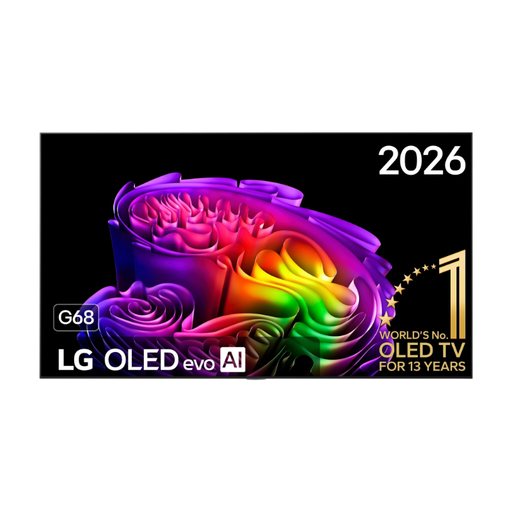 Image unavailable
OLED77G68LW
With a stated screen size of 77 inches, this OLED model needs plenty of viewing distance and space. Measure your room before choosing this size.
For private listening, check the audio outputs on this version and whether it supports the combination with TV speakers you want.
View at Joybuy
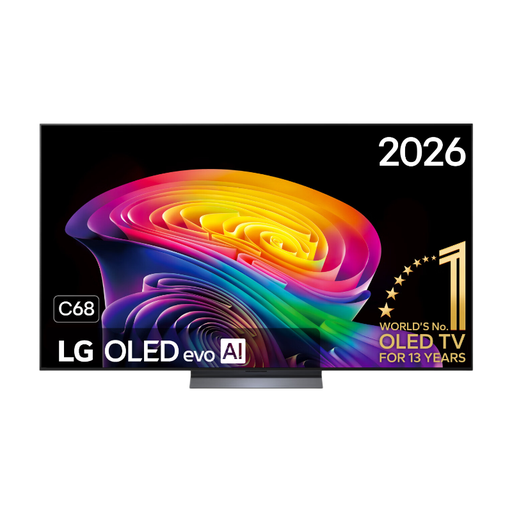 Image unavailable
LG OLED65C68LA
This 65-inch 4K OLED model is worth comparing for dark film scenes. Measure your viewing distance and check that the screen size will fit in your shared room.
If you want to switch between shared sound and private listening, check the audio output and settings on this exact version.
View at Joybuy
Image unavailable
LG OLED55C68LA
This 55-inch 4K OLED model is one option to compare against your viewing distance and available space before choosing a screen size.
If you want to use headphones, check which audio outputs this version supports and whether you can use them alongside the TV speakers.
View at Joybuy
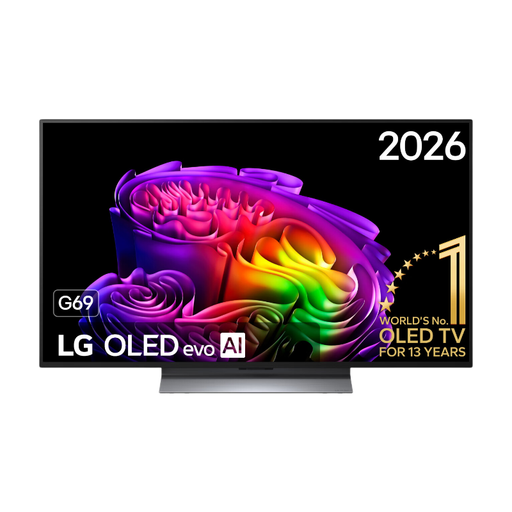 Image unavailable
LG OLED48G69LS
With a 48-inch screen, this 4K OLED model is worth comparing if your available space or viewing distance calls for a smaller size.
Check the audio output on this exact version if you want to listen both together and privately.
View at Joybuy
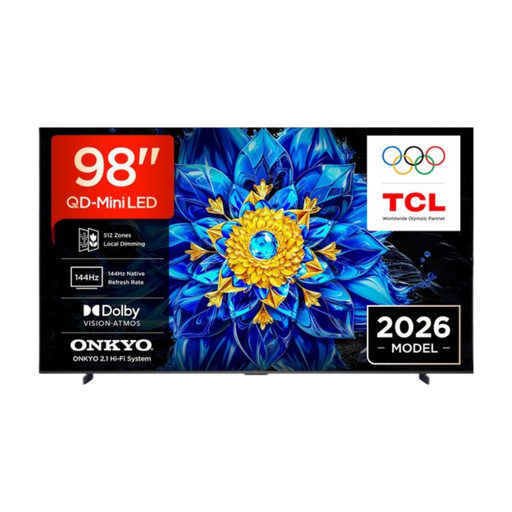 Image unavailable
TCL T8D 98-inch 4K QD-Mini LED Smart TV
The stated screen size is 98 inches. Carefully measure your viewing distance and available space before comparing this model with smaller options.
Assess visibility and reflections in your usual lighting, and check the audio output if you want to use headphones.
View at Joybuy
Frequently asked questions
How do you choose a suitable screen size for a shared home?
Measure the distance from your eyes to where the screen will go, and check that the stand will fit. Consumentenbond uses viewing distance divided by 2.4 as a guide to the screen diagonal in centimetres. It’s a rule of thumb for comparing sizes, not a requirement.
Can you use headphones while others listen through the TV?
It depends on the model. Sony documents simultaneous output to the TV speaker and a Bluetooth A2DP device for the K-55XR5. For other models, check the function and relevant setting separately.
How should you set up your TV for a music film night?
Watch a familiar scene with the lighting you usually use, then choose a picture mode that looks comfortable. Consumentenbond lists Film mode as one option and recommends checking detail in both bright and dark areas.
How do you compare the energy consumption of two TVs?
Compare the stated energy use per 1000 hours on the EU energy label on a like-for-like basis. Also check the separate HDR information if you often watch HDR films; energy use in your home will also depend on viewing hours and settings.
Does the legal guarantee on a TV in the Netherlands end after two years?
No. ACM ConsuWijzer explains that there is no fixed period for the legal guarantee in the Netherlands: a product must last as long as you could reasonably expect under normal use. If it develops a fault earlier through no fault of your own, contact the retailer to arrange an appropriate free solution.


