
Viewer with a sofa far from the TV
Wants to choose a screen size based on the distance between their seat and the TV, rather than inches alone.


First, measure the distance from your seat to where you plan to put the TV. As a starting point, use the Dutch Consumers’ Association’s guideline of dividing the viewing distance in centimetres by 2.4 to estimate the screen diagonal. A long viewing distance doesn’t automatically mean the biggest TV will be right for you. In a dimly lit room, OLED models may be worth considering for their typically deeper blacks and wider viewing angles. In a bright room, also take brightness and reflections into account. Finally, check dialogue clarity, space for installation and the energy label for the exact model.
Wants to choose a screen size based on the distance between their seat and the TV, rather than inches alone.
When watching short films, looks at black levels, contrast and how the picture appears from different seats.
Weighs brightness and reflections against the picture quality they want for films.
The Dutch Consumers’ Association uses the viewing distance in centimetres divided by 2.4 as a starting estimate for the screen diagonal in centimetres. The table groups consumers by their main buying priority; you may have several of these needs at once.
| What to consider | What to look for when buying | Who might find this especially important? |
|---|---|---|
| Screen size for your viewing distance | Measure the viewing distance and compare suitable screen diagonals; also check the TV’s width and the space available. | If I watch from a sofa that’s far from the TV, I want to know which size will suit me and whether the TV will fit in the planned spot. Around 31% of consumers give screen size the highest priority. |
| Contrast and black levels | Compare the picture in the lighting conditions you usually watch in, and consider where you sit. | When watching films in a dark room, I want to follow dark scenes clearly, even if I’m not sitting directly in front of the screen. Around 25% of consumers prioritise contrast and black levels. |
| Brightness and reflections | Look out for windows and lamps opposite the TV, and compare models in similar ambient lighting. | If I watch during the day, I want to see the picture without overlooking the effects of incoming light and reflections. Picture quality in daylight matters most to around 19% of consumers. |
| Clear dialogue | Assess how clearly speech comes through, and check the audio connections if you’re considering external audio equipment. | When watching short films with lots of dialogue, I want to follow the voices from my usual seat. Around 13% of consumers give dialogue clarity the highest priority. |
| Energy use and installation | Compare energy labels, including for HDR, and decide in advance whether you’ll need a stand, wall mounting or extra audio equipment. | If I also want to consider energy use and how the TV will fit into my room, I look at the label and what the installation requires. Running and installation costs are the main consideration for around 12% of consumers. |
Your viewing distance and the TV’s actual width determine whether its size will suit your room and seating position.
Measure the distance from your seat and the space available. Use the calculated diagonal as a starting point, then compare nearby screen sizes too.
QLED and mini-LED are types of LCD TV. According to the Dutch Consumers’ Association, QLED TVs can often be brighter, while OLED usually offers deeper blacks and a wider viewing angle. These are general differences, not a guarantee for every model.
Compare specific TVs in the lighting conditions and from the seating positions you use at home.
The LG OLED83C56LA and OLED83C67LA have different full model codes; they have not been confirmed as identical.
Before comparing models, check the full code and the specifications for that particular version.
ACM ConsuWijzer distinguishes between additional warranty cover and your rights when dealing with the retailer.
Check which legal rights apply and exactly what any additional cover includes.
The OLED83C56LA is an 83-inch OLED model to compare if both a large screen and film contrast matter to you.
The QE85QN90FATXXN is an 85-inch Neo QLED 4K Mini LED model to compare if you’re looking for a very large LCD screen.
The 75C7K and 75C6K are 75-inch QD Mini LED ranges to compare by size and specification.
According to Philips, the 77OLED810/12 combines a 77-inch OLED screen with Ambilight and Dolby Vision.
The K-75XR70 BRAVIA 7 is a 75-inch 4K mini-LED model to compare if you’re looking for a large screen.
This Joybuy selection includes large OLED and LCD TVs to compare by size and picture technology if you sit a long way from the screen.
 Image unavailable
An 83-inch screen to compare with your measured viewing distance if you’re considering an OLED model.
The product description mentions OLED pixels and deep blacks. The title lists 4K, 120 Hz, VRR up to 165 Hz and Dolby Vision.
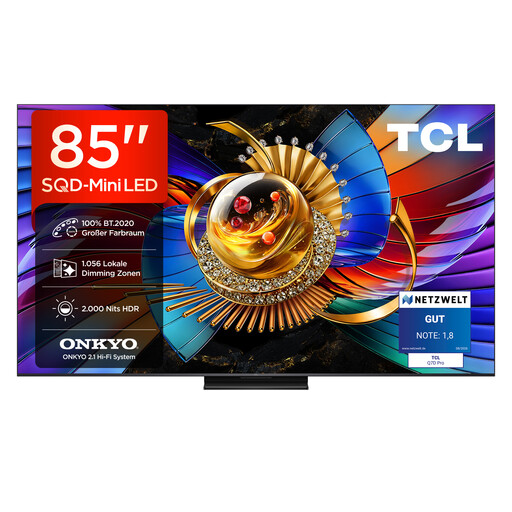 Image unavailable
An 85-inch LCD option to compare by screen size and picture features, for example if you have a bright room.
The title lists 4K, 144 Hz, Dolby Vision IQ and Dolby Atmos. The product description says to place it on a stable surface or mount it securely on the wall, with enough room for ventilation.
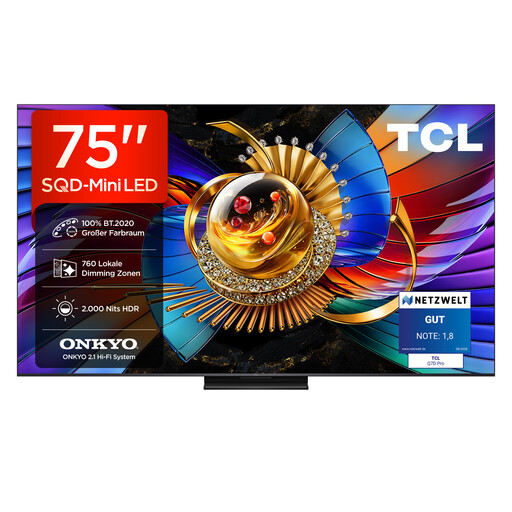 Image unavailable
A 75-inch option to compare with your viewing distance if you’re looking for an LCD alternative.
The product description mentions Dolby Vision IQ and an Onkyo 2.1 audio system with Dolby Atmos. The instructions call for stable placement or secure wall mounting, with enough room for ventilation.
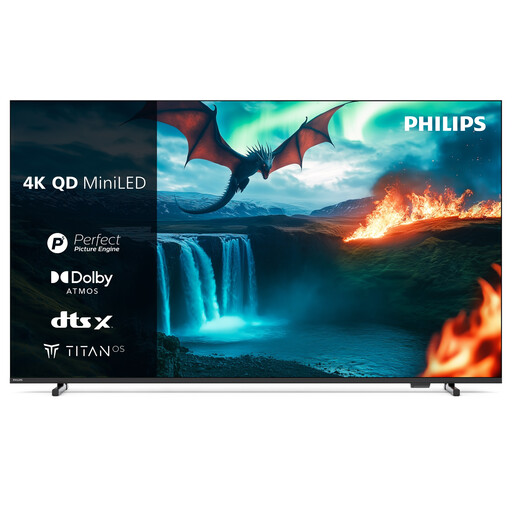 Image unavailable
A 75-inch LCD option to compare with your viewing distance if you also want to consider Ambilight.
The title lists QD Mini LED and 4K; the product description mentions three-sided Ambilight. The instructions call for stable placement or secure wall mounting, with enough room for ventilation.
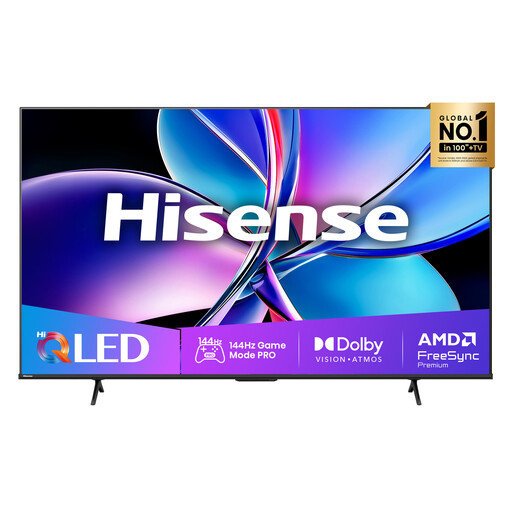 Image unavailable
An 85-inch LCD option to compare with the distance from your seat if you’re considering a large screen.
The title lists 4K and 144 Hz; the product description mentions Dolby Vision and HDR10+. The instructions recommend installation by at least two people and a wall bracket suitable for the weight.
Measure from where your eyes usually are to the planned position of the TV. The Dutch Consumers’ Association uses the viewing distance in centimetres divided by 2.4 as a starting estimate for the screen diagonal. Also compare nearby sizes and check the available width.
For the exact model, check its dimensions, weight and VESA pattern, and make sure the wall and fixing are suitable. Sony lists the K-75XR70 as weighing approximately 38,3 kg without the stand, with a VESA pattern of 30,0 × 30,0 cm; don’t use these figures for another model.
Compare the energy labels and consumption per 1.000 hours on the same basis; also check the information about HDR viewing on the EU label. Milieu Centraal recommends using the energy label to compare screens.
For an online product purchase, ACM ConsuWijzer says you’ll generally have a legal 14-day cooling-off period after delivery, subject to exceptions that you should check in advance. Your statutory rights are separate from the manufacturer’s warranty; if the TV is faulty, the retailer must offer a solution in line with the applicable terms.
According to the Dutch Government, when you buy a new appliance of a similar type, the shop must take back your old one. This also applies to the online return options described. You can also take an old TV to your local council’s recycling centre.