Start with your viewing positions and the daylight in the room. Measure the distance from both the kitchen and dining area, then assess the specific TV for reflections and viewing angle. According to the Consumers’ Association, QLED can often offer greater brightness, while OLED generally has a wider viewing angle and deeper blacks. Also check that spoken commentary is easy to hear and that your preferred streaming service is available.
Who should consider this choice?
Watching in a bright kitchen-diner
If you often watch during the day, you’ll want to follow architectural details without incoming light getting in the way. Compare reflections and brightness where you plan to put the TV. The Consumers’ Association highlights these features as things to consider when choosing.
Watching from two different places
If you move between the kitchen and dining table, view the picture from both positions. The Consumers’ Association points out that viewing angles can vary between TVs. Remember to measure the distance from both places, too.
Following spoken commentary
If you want to hear spoken commentary while cooking or eating, compare the sound quality of the individual models. Picture specifications alone won’t tell you how easy spoken content is to understand.
What should you look for when choosing?
LCD and QLED
When to compare: if daylight and brightness are your main priorities where you plan to watch.
The trade-off: according to the Consumers’ Association, QLED can often offer greater brightness. But the label alone won’t tell you how a particular model handles reflections or looks from an angle.
OLED
When to compare: if you often watch from an angle and value contrast and deep blacks.
The trade-off: the Consumers’ Association generally describes OLED TVs as having a wider viewing angle and deeper blacks. You should still assess reflections and visibility in the available daylight for each model.
| What to consider |
What should you check? |
Who is it relevant to? |
| Visibility in daylight |
Compare brightness and reflections in the intended location under similar lighting conditions. Greater brightness alone doesn’t guarantee a reflection-free picture. |
If I want to keep seeing architectural details during the day, I’ll consider both incoming light and reflections. Around 28% of consumers prioritise visibility in daylight. |
| Viewing angle from two places |
View the specific TV from both the kitchen and dining area; don’t rely on the panel label alone. |
If you watch alternately from the kitchen and dining area, you’ll want to follow the picture from both directions. Around 22% of consumers give viewing angle their highest priority. |
| Screen size and positioning |
Measure the viewing distance from your main position, then check the TV’s external dimensions. The Consumers’ Association suggests around 2.4 times the screen diagonal as a comfortable viewing distance. Use this as a guide, not a hard-and-fast rule. |
If I want to see subtitles and details from the dining table and make sure the TV fits, I’ll measure both distances and the available space. Around 22% of consumers prioritise screen size and positioning. |
| Speech clarity |
Compare the sound of individual models with spoken programmes; don’t assume speech will be clear based on picture specifications. |
If you want to follow a programme’s commentary while cooking or eating, it’s worth listening to the TV separately. Around 17% of consumers say speech clarity is their main concern. |
| Programmes and energy use |
Check that the exact model supports your preferred streaming service or reception method, and compare the information on the EU energy label, including for HDR. |
If I want to watch programmes through a particular service and watch regularly, I’ll check both access and energy use. Around 11% of consumers prioritise access to programmes and running costs equally. |
Common buying pitfalls
-
Choosing based only on ‘QLED’ or ‘OLED’
The panel label won’t tell you how a specific TV performs from both viewing positions or in the available light.
Compare the picture from both the kitchen and dining area, and assess reflections separately.
-
Choosing a screen size without measuring
Viewing distance is a guide, but the TV’s actual width and height determine whether it will fit in the space you have planned.
Measure the viewing distances, the TV’s external dimensions and the available space before choosing a model.
You may need a different mount or position if the measurements don’t work together.
-
Assuming every programme is available in 4K
A 4K TV doesn’t mean every architecture programme is available in 4K.
Check the resolution and access options for the programmes you actually want to watch.
-
Assuming your statutory guarantee always ends after two years
According to ACM ConsuWijzer, your statutory guarantee depends on what you could reasonably expect from the product; there isn’t always a fixed two-year period.
Compare any additional warranty service with your statutory rights, and check what extra cover and exclusions it includes.
Brands to consider
LG
The LG OLED42C55LA is a 42-inch OLED option to consider when comparing TVs around 43 inches.
- LG lists this model as 4K and OLED.
- Check reflections and picture quality where you plan to put the TV. These features aren’t an independent assessment of how it performs in a kitchen-diner.
Philips
Philips describes the Philips 43PUS8500/12 as a 43-inch QLED TV with Ambilight and Titan OS.
- Ambilight and Titan OS are listed features of this model.
- Check separately that the apps you need are available, and see how the picture handles reflections and off-angle viewing.
TCL
According to the manufacturer, TCL’s P7K range includes a 43-inch QLED version.
- TCL lists features including Dolby Vision and an HVA panel for the range.
- Check which features apply to the exact 43-inch version. Claims about colour and brightness aren’t independent measurements of that model.
Sony
The Sony K-43S3 is a 43-inch BRAVIA 3 to consider when assessing screen size and positioning.
- The listed dimensions and VESA size can help you assess where to position it.
- These details don’t automatically make the model suitable for daylight or off-angle viewing. Check picture and sound quality in your intended setup.
Samsung
Samsung lists the QE43Q7F4AUXXN as a 43-inch Q7F4 QLED TV.
- The model name and screen size give you a specific option to compare.
- Assess reflections, viewing angle and speech clarity separately for the model you choose.
Joybuy product picks
These TV picks include OLED and LCD/QLED models for a kitchen-diner where you watch from different places.
 No image available
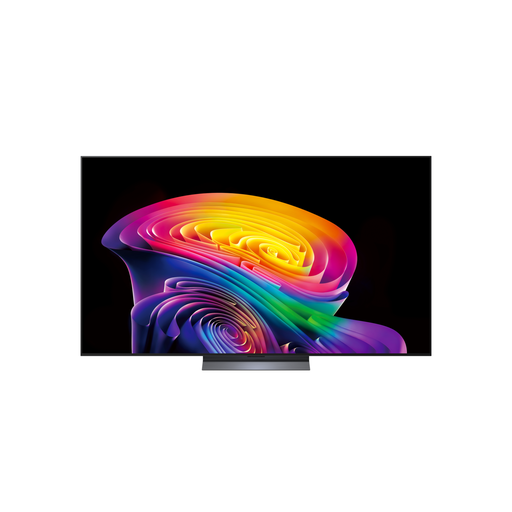
LG OLED42C68LA 42-inch 4K OLED Smart TV
A 42-inch OLED option to compare if you often watch from different angles.
The product description lists Dolby Vision, 20 W audio and Clear Voice Pro.
The listed energy rating is G for SDR and HDR.
View at Joybuy
 No image available
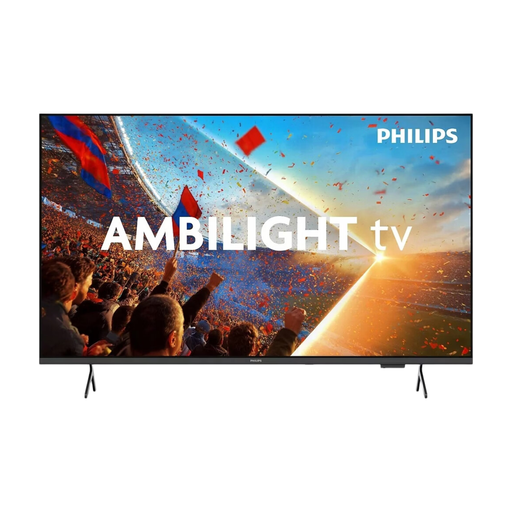
Philips 43PUS8001/12 43-inch 4K TV
A 43-inch LCD TV to compare if you’re looking for a TV to watch from several places.
The product description lists Ambilight, Titan OS, Voice Amplification and an IntelliSound Engine.
The listed energy rating is F.
View at Joybuy
 No image available
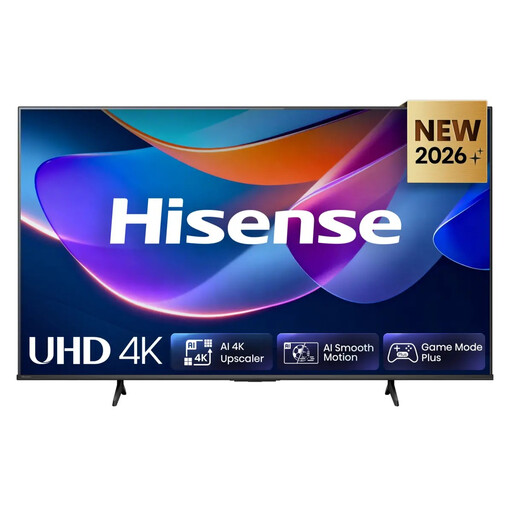
Hisense 43A6S 43-inch 4K UHD Smart TV
A 43-inch option to consider if you want to watch from both the kitchen and dining area.
The product description lists a 178° viewing angle, Dolby Vision, VIDAA Smart OS and AirPlay 2.
The TV is also listed as 60 Hz.
View at Joybuy
 No image available
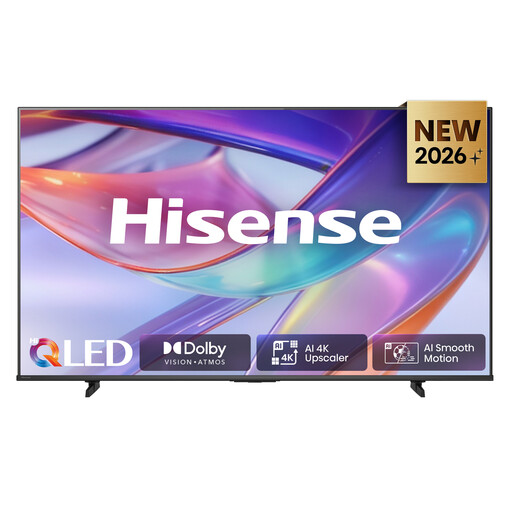
Hisense 43E7S 43-inch QLED 4K UHD Smart TV
A 43-inch QLED option to compare for a setup with more than one viewing position.
The product description lists a 178° viewing angle, 300 cd/m², 20 W audio and VIDAA.
The title lists HDR10+, 3 HDMI 2.1 ports and energy rating E.
View at Joybuy
 No image available
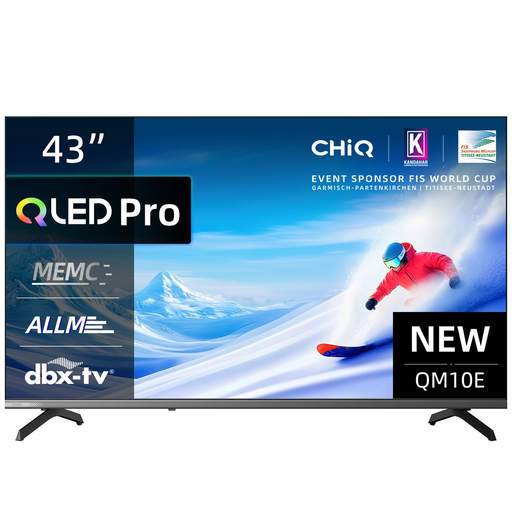
CHiQ U43QM10E 43-inch 4K UHD QLED Smart TV
A 43-inch QLED option to consider if you watch from different angles.
The product description lists a 178° viewing angle, Google TV, Dolby Audio and dual-band Wi-Fi.
The title lists HDR10 and VRR.
View at Joybuy
Frequently asked questions
How do you choose a screen size when watching from both the dining area and kitchen?
Measure the distance from both viewing positions to the screen. Use your main viewing position to get an initial idea of size: the Consumers’ Association suggests around 2.4 times the screen diagonal as a comfortable viewing distance. Then check visibility from the other position and the TV’s external dimensions.
Can you rely on ‘QLED’ or ‘OLED’ if the dining area isn’t directly in front of the TV?
No. Check the specific model from both viewing positions, too. According to the Consumers’ Association, OLED generally has a wider viewing angle, but viewing angles vary between TVs. Also check reflections in the light conditions of your kitchen-diner.
What should you consider when installing and maintaining a TV near the kitchen?
For the exact model, check the installation instructions, the load-bearing capacity of the mount and the space needed for ventilation. The Netherlands Fire Service advises allowing electrical appliances to release heat and keeping them free of dust. Don’t use this general advice to infer a specific distance from a hob or tap.
How do you compare TVs’ energy use?
Compare the energy information on the EU labels for the models you’re considering. According to the European Commission, the label also includes information about energy efficiency during HDR playback. Actual energy use also depends on what you watch and for how long.
Do you need an extra warranty in the Netherlands to retain your rights after two years?
No. Your statutory rights may still apply after two years if the TV doesn’t meet what you could reasonably expect from it. According to ACM ConsuWijzer, the seller is responsible and the statutory guarantee doesn’t have a standard fixed term of exactly two years; the circumstances of the purchase determine what applies.


