
Daytime viewer in a bright dining area
You want to watch cookery programmes when daylight falls on or around the screen. Reflections and visibility are therefore important factors to compare.


When choosing a TV for watching cookery programmes in a kitchen-diner, prioritise visibility from both the worktop and the table rather than focusing on resolution alone. First, measure your viewing distances and check for reflections and the viewing angle at the planned position. In a room with lots of daylight, LCD/QLED or mini-LED models are sensible options to compare. If you often watch from an angle, compare OLED models too, but assess each one individually for reflections, screen size and sound.
You want to watch cookery programmes when daylight falls on or around the screen. Reflections and visibility are therefore important factors to compare.
You don't always watch directly in front of the TV and want to follow what's happening from an angle too. The Consumers' Association generally describes OLED as offering a wider viewing angle than LCD.
You watch TV from both the kitchen and the dining table. The screen size therefore needs to suit more than one viewing position, so measure the distances before choosing a size.
| What to consider | What should you check? | Who should prioritise this? |
|---|---|---|
| Visibility in daylight | Check reflections and visibility where you plan to put the TV. Compare specific models in natural light. LCD and mini-LED models may be worth considering for a bright room, but results vary by model. | If I watch from the worktop while cooking, I want to be able to follow the picture during the day too. Around 26% of consumers prioritise daylight visibility and reflections. |
| Viewing from an angle | Check the picture from both the worktop and the table. The Consumers' Association generally describes OLED as offering a wider viewing angle; assess the specific screen too. | When I'm not sitting directly in front of the TV, I want to be able to make out what's happening. Around 21% of consumers prioritise picture quality from different viewing angles. |
| Screen size for different distances | Measure from your eyes to the planned position from both viewing spots. The Consumers' Association suggests dividing the viewing distance in centimetres by 2.4 to get a starting estimate for the screen's diagonal in centimetres. Also check the TV's overall dimensions. | If I switch between watching from the dining table and the worktop, I want a size that suits both distances. Around 21% of consumers prioritise screen size for different viewing distances. |
| Sound and access to programmes | Check that your preferred streaming service or connection works with the exact model. Assess the sound from where you usually watch. | When I want to start a cookery programme and hear it clearly, I want to know whether my viewing source is available and the sound is good enough from where I sit. Around 16% of consumers prioritise access to programmes and clear sound. |
| Placement and energy consumption | Check the manual for mounting and ventilation instructions, and compare the stated consumption in kWh per 1,000 hours on the energy label. | If I use the TV for long periods in a fixed position, I want to know whether it will fit there and how much energy it is stated to use. Around 16% of consumers prioritise placement and energy consumption. |
The name of a technology alone doesn't tell you how clearly you'll see the TV in your room. Light, reflections and your viewing position all play a part.
Compare the specific model from both the worktop and the table, paying attention to visibility and viewing angle.
The Consumers' Association points out that regular broadcasts aren't automatically available in 4K. Your viewing source and viewing conditions matter too.
Check your viewing source, and consider screen size, visibility and viewing angle alongside resolution.
The TV's width, stand and mounting instructions may affect where you can put it. It also needs adequate ventilation.
Measure the space and read the installation instructions for the exact model before mounting the TV.
You may need a different bracket or a revised setup.
The OLED42C55LA is a 42-inch OLED model worth comparing if you're looking for a compact screen with an OLED panel.
The QE43QN90FATXXN is a 43-inch Neo QLED mini-LED model worth comparing if your room gets bright during the day.
According to Philips, the 43PUS9000/12 combines a 43-inch QLED screen with Ambilight.
The 43E7Q is a 43-inch QLED model that you can compare with other screen technologies as an LCD alternative.
This selection includes LCD-related QLED and mini-LED models. Measure your viewing distances and check visibility in the planned position before choosing a screen size or technology.
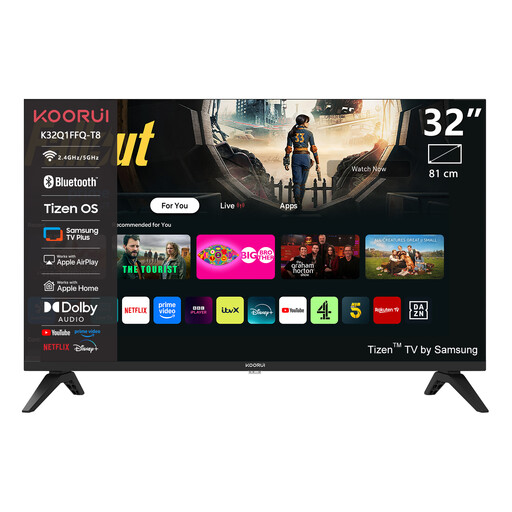 Image unavailable
The 32-inch size may be worth considering for a more compact setup. Measure the distance from both the kitchen and the dining table.
Specifications: 32 inches, Full HD, QLED and Tizen OS.
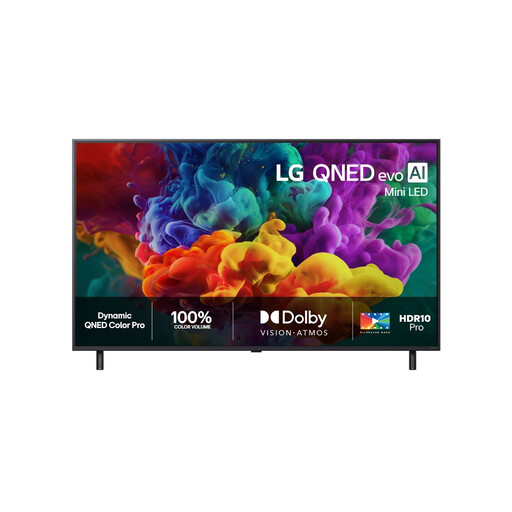 Image unavailable
Compare this model if you're looking for a QNED mini-LED TV with 4K. Check its dimensions and visibility in your planned position.
Specifications: QNED mini-LED, 4K and Smart TV.
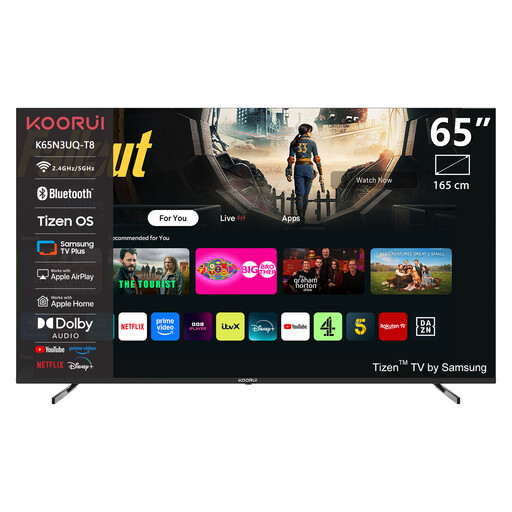 Image unavailable
This 65-inch model is worth comparing if you're considering a large screen. First, measure the available space and both viewing distances.
Specifications: 65 inches, 4K UHD, QLED and Tizen OS.
 Image unavailable
Compare this model if you want to consider QD mini-LED and 4K as part of your choice. Check the screen size and visibility from both viewing positions.
Specifications: QD mini-LED, 4K and Smart TV powered by Google.
 Image unavailable
With an 86-inch screen, this model is mainly worth comparing if your room and viewing distance are suited to such a large screen.
Specifications: 86 inches, 4K, QLED, Google TV, 144 Hz and a 2.1.2 sound system with integrated subwoofer.
Measure both distances from your eyes. The Consumers' Association suggests dividing the distance in centimetres by 2.4 as a starting point for the screen diagonal in centimetres. Then compare nearby sizes and check that the TV will physically fit.
Don't assume you can without checking the instructions for your chosen model. Sony recommends allowing adequate ventilation, while LG warns that an incorrectly fitted stand can tip over. Before installation, check the fitting and safety instructions, and consider heat and splashes at the chosen location.
Compare the stated consumption in kWh per 1,000 viewing hours on the energy label; HDR consumption is listed separately. You'll also need to know how many hours you watch if you want to calculate your own energy use.
According to ACM ConsuWijzer, when you buy a TV online you generally have a statutory cooling-off period of up to 14 days after delivery. You also have the right to a product that, under normal use, meets what you could reasonably expect. The manufacturer's warranty does not automatically set the limits of your statutory rights.
Yes. The Dutch government lists televisions among the appliances that must have an energy label. Use the label and stated energy consumption to compare models on a like-for-like basis.