Who is this buying guide for?

Viewers who want to read slides

If you want to read dates and small text from a regular seat, start by considering your viewing distance and screen size. The Consumers’ Association gives around 2.4 times the screen diagonal as a guide to comfortable viewing, not a fixed rule.

Viewers who want to hear the speaker clearly

If you mainly follow the explanations, it’s worth assessing speech clarity separately. The Consumers’ Association lists speech clarity as something to consider when choosing a television.

Viewers using different seats

If you watch from more than one seat, check the picture from the seat furthest to the side, and look out for viewing angles and reflections. The Consumers’ Association notes that OLED TVs generally offer a wider viewing angle.

What should you consider when choosing?

Compact 32-inch Full HD TV

Choose this option if: space is the deciding factor and you can read your lecture slides from your seat.

Bear in mind: small text may be harder to read from further away; a compact screen doesn’t tell you how clearly speech will come across.

LCD TV around 43 inches

Choose this option if: 32 inches seems too small for your slides and there’s room for a larger TV in your living room.

Bear in mind: check the TV’s width, stand, viewing angle and reflections; extra pixels won’t automatically help with a lower-resolution source.

Compact OLED TV around 42 inches

Choose this option if: you also sit at an angle and want to compare the picture from different seats.

Bear in mind: a wider viewing angle doesn’t guarantee better performance in every respect; check for reflections and assess speech clarity too.

What to consider What to look for Who it matters to
Screen size and available space Measure your viewing distance and available width, then try real lecture slides from your seat. The Consumers’ Association gives around 2.4 times the screen diagonal as a guide to comfortable viewing. I want to be able to read slides from my usual seat, but I don’t have much room for a TV. Around 28% of consumers therefore prioritise readability and a suitable size.
Subtitles and text Test the lecture source and the language you want to use; check on your chosen device whether you can adjust the subtitle size. If I need to read small text or subtitles during lectures, I want to be able to see them from my seat. Around 22% of consumers make on-screen text their top priority.
Speech clarity Listen to a speech clip at a normal volume and compare independent sound tests for the exact model. I mainly follow the explanations and want to hear the lecturer clearly. Around 22% of consumers therefore prioritise spoken explanations.
Viewing angle and reflections Check the exact model from the seat furthest to the side, in the lighting conditions you have at home. When I watch from a seat at an angle, I want to assess the picture from there. Around 17% of consumers prioritise visibility from different seating positions.
Lecture source and usage Check which app or connection you need, and look at the energy information for the exact model. I want to play my lecture source and compare energy information. Around 11% of consumers make access and running costs their top priority.

Common buying mistakes

  • Choosing based on the number of 4K pixels alone

    The quality of the source and the TV’s picture and sound still determine how easy a lecture is to follow. According to the Consumers’ Association, a Full HD TV can have better picture quality than a 4K TV.

    Try a lecture clip of your own and compare picture and sound tests for the exact models.

  • Buying a small TV without checking speech clarity

    Screen size and resolution don’t tell you whether explanations will be easy to hear. The Consumers’ Association assesses speech clarity separately when testing televisions.

    Listen to a speech clip at a normal volume. If the built-in sound isn’t good enough, check which audio output and equipment are compatible.

  • Assuming every TV app offers the subtitles you want

    Available subtitles and display options can vary by title, language, service and device.

    Check the lecture source and the subtitles you want on the device you plan to use.

Brands to compare

Philips

The Philips 32PFS6000/12 is a specific 32-inch Full HD model to compare if saving space is a priority.

  • The Dutch model page lists a 32-inch screen and Full HD resolution.
  • These specifications don’t prove that small slides will be readable from every seat, or that speech will sound clearer than on other TVs.

TCL

According to TCL, the S5K series has Dutch variants in 32, 40 and 43 inches with Full HD, while the P7K series also includes a 43-inch model.

  • The available sizes give you different screen dimensions to compare with the space you have.
  • Check the exact features and connections for each version; manufacturer information isn’t an independent performance assessment.

Samsung

According to the Dutch product page, the UE43U8090FUXXN is a 43-inch 4K LCD TV.

  • This model offers a 43-inch 4K option to compare if a larger screen fits in your living room.
  • 4K isn’t an independent assessment of slide display or speech clarity. The Consumers’ Association notes that higher resolution doesn’t automatically mean better picture quality.

LG

The Dutch product page describes the OLED42C5ELB as a 42-inch OLED TV with 4K resolution.

  • The Consumers’ Association notes that OLED TVs generally offer a wider viewing angle.
  • That isn’t a measurement of this specific TV or seating arrangement; check for reflections and assess speech clarity too.

TVs at Joybuy

This selection includes compact 32-inch TVs and larger 42–43-inch models, with HD, Full HD and 4K options. Compare the screen size with your viewing distance and check the connections and features of the exact version.

LG OLED42C68LA 42-inch 4K Ultra HD OLED Smart TV

LG OLED42C68LA 42-inch 4K Ultra HD OLED Smart TV

A 42-inch OLED model to compare if you’re looking for a screen around this size. The Consumers’ Association notes that OLED TVs generally offer a wider viewing angle, but this isn’t a measurement of this specific model.

Specifications in the product name: 42 inches, 4K Ultra HD, OLED and Dolby Atmos.

View at Joybuy
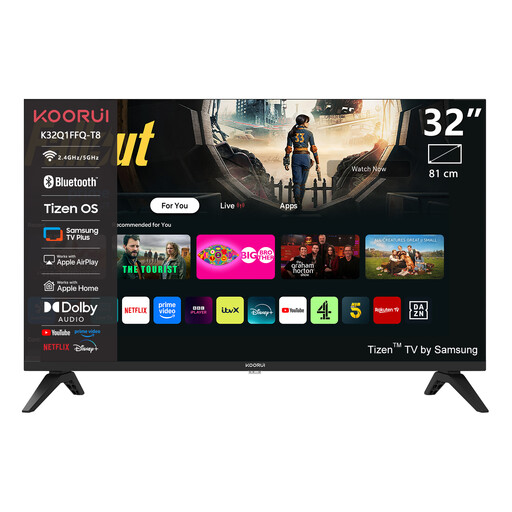
KOORUI K32Q1FFQ-T8 32-inch Full HD QLED Smart TV

KOORUI K32Q1FFQ-T8 32-inch Full HD QLED Smart TV

A compact 32-inch model to compare if space is a key consideration; check for yourself whether you can read your slides from your seat.

Specifications: 32 inches, Full HD, QLED and Tizen OS.

View at Joybuy

Philips 43PUS8001/12 43-inch 4K TV

Philips 43PUS8001/12 43-inch 4K TV

A 43-inch option to compare if a larger screen will fit and you want to see how much space it gives your slides from your seat.

Specifications: 43 inches, 4K and Titan OS.

View at Joybuy

Hisense 43A6S 43-inch 4K UHD Smart TV

Hisense 43A6S 43-inch 4K UHD Smart TV

A 43-inch model to compare if you’re considering a larger screen; check that your lecture source works with the features you want to use.

Specifications: 43 inches, 4K UHD, VIDAA, AirPlay 2 and screen sharing.

View at Joybuy
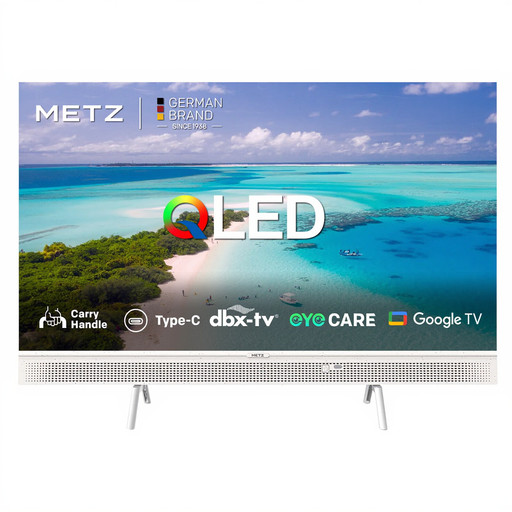
METZ Lifestyle Portable TV 32MQE7100Z 32-inch HD Smart TV

METZ Lifestyle Portable TV 32MQE7100Z 32-inch HD Smart TV

A portable 32-inch model to compare if you want a compact viewing setup; check whether HD is suitable for the text you want to read.

Specifications: 32 inches, HD, Google TV, Chromecast and USB-C power.

View at Joybuy

Frequently asked questions

How do I choose a starting screen size without overestimating the space in my living room?

Measure from your eyes, while sitting in your usual seat, to where the screen will go. The Consumers’ Association gives around 2.4 times the screen diagonal as a guide to comfortable viewing, and suggests a range of 32 to 43 inches for a viewing distance of 200 cm. Also check the dimensions including the stand, and try your own slides.

Does 4K make text in every history lecture sharper?

No, not automatically: you also need a suitable source to see the extra detail in 4K. According to the Consumers’ Association, a Full HD TV can have better picture quality than some 4K TVs. So compare the lecture video you actually use on the exact TV you’re considering.

Can I always make subtitles larger?

Not necessarily; the options depend on the service, language and device. Netflix describes subtitle adjustments for certain TV devices, but not all display options are available everywhere. Check the lecture source you plan to use.

What should I check when setting up the TV and using it for the first time?

Measure the available width and height, including the stand, then assess slides and a speech clip from the seats you use. Before buying, check that you can play your lecture through the app or connection you need.

What warranty and energy information should I check in the Netherlands?

According to the Dutch government, you’re entitled to a product that works properly, and you can contact the seller if it’s faulty. The Netherlands has no fixed statutory warranty period that applies to all products. The European Commission states that energy labelling rules apply to electronic displays. Compare the energy information for the exact TV model.
