What to look for in a TV for lectures
Start with viewing distance and how easy lecture slides are to read, then decide how you’ll handle audio and playback. Consumentenbond recommends considering viewing distance, picture quality and viewing angle when comparing televisions.
| What to consider |
What to look for when buying |
Who should prioritise this? |
| Listening comfortably |
Check the audio connection for your headphones, and whether the TV speakers can play at the same time if someone is watching with you. |
If I want to follow lectures without turning up the volume for my housemates, I need to know whether my headphones will connect. Around 25% of consumers prioritise listening comfortably. |
| Reading slides and maps |
Measure the distance to the furthest seat and watch a lecture clip with small text. |
If I want to read dates and place names on maps from my seat, I’ll consider the screen size in relation to the viewing distance. For around 25% of consumers, slide readability comes first. |
| Watching together |
Check the viewing angle and reflections from the seats where your housemates will be sitting. |
If my housemates will be watching from the side, I want to see what the picture looks like from those seats. This is the most important consideration for around 20% of consumers. |
| Playing lectures |
Check that the service you want, the connection you need and subtitles all work with your intended source. |
If I use a specific lecture app or laptop, I want to know in advance that my playback setup will work. Around 15% of consumers prioritise this. |
| Keeping costs down |
Compare the features you need and check the energy label. Also see whether you’ll need an external playback device. |
If I only want to pay for features I’ll use for lectures, I’ll compare the connections and apps I need. For around 15% of consumers, the purchase price and running costs matter most. |
TVs at Joybuy
These Joybuy products have a range of screen sizes and smart TV features. Compare the size with your viewing distance and check that your lecture source works on the model you choose.
 Image unavailable
LG 43NU800B6LC Nano UHD AI Smart TV, 43-inch 4K
The 43-inch size is an option to compare with the viewing distance in your room.
The product name lists 43 inches, 4K and Nano UHD AI.
View at Joybuy
 Image unavailable
METZ 86MQE8000Z QLED Google TV, 86-inch 4K, 144 Hz
The 86-inch size calls for careful consideration of your available space and viewing distance.
The product name lists QLED, Google TV, 4K, 144 Hz, HDR10+, Dolby Vision and Dolby Atmos.
View at Joybuy
 Image unavailable
Hisense 43A6S 43-inch 4K UHD Smart TV, 60 Hz
The 43-inch size gives you a specific measurement to compare with the viewing distance in your shared room.
The product name lists 4K UHD, 60 Hz, Dolby Vision and VIDAA.
View at Joybuy
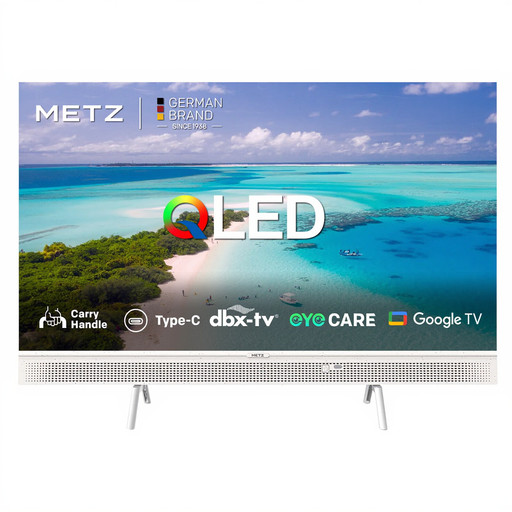 Image unavailable
METZ Lifestyle 32MQE7100Z Portable 32-inch HD QLED+ Smart TV
This portable model is worth comparing if you want to use your TV in different places.
The product name lists HD, QLED+, Power-C compatibility with a power bank and energy class E.
View at Joybuy
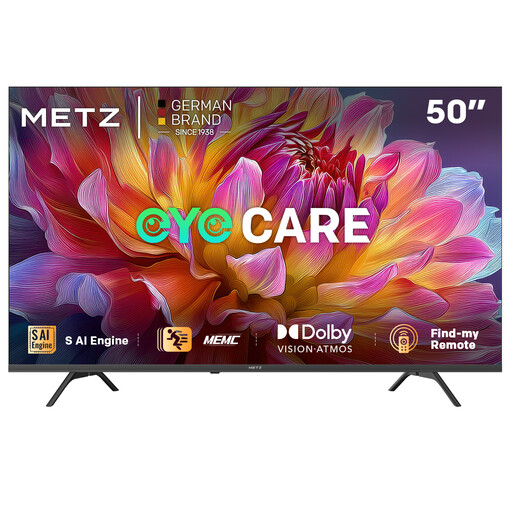 Image unavailable
METZ 50MUF7000Z 50-inch 4K UHD Smart TV
Before choosing, compare the 50-inch size with your available space and the distance from your seats.
The product name lists Google TV, Bluetooth, HDR10, Dolby Vision, Dolby Atmos and three HDMI 2.1 connections.
View at Joybuy
Frequently asked questions
Do I need 4K to read text on lecture slides?
No, the resolution label alone doesn’t determine that. Check text from your own video source at your usual viewing distance. Consumentenbond notes that more pixels don’t automatically mean better picture quality.
Where do I turn on subtitles when using a laptop via HDMI?
First check the subtitles in the player or lecture source you’re using. Samsung warns that the TV’s subtitle feature doesn’t work in the same way with an external device connected via HDMI; settings vary between devices.
What should I check when positioning the TV?
Measure the distance between the seats and the screen, and check the viewing angle and reflections from those spots. Also check the dimensions of the TV you’ve chosen and what you’ll need to mount it.
Am I entitled to a legal guarantee in the Netherlands if the TV breaks?
Yes. When you buy as a consumer, you’re entitled to a product that works properly. The Dutch government states that the seller must provide a solution if there’s a problem; a manufacturer’s guarantee doesn’t replace your statutory rights.
Can I return a TV bought online in the Netherlands?
Online purchases generally come with a statutory cooling-off period that ends 14 days after delivery. Check which exceptions and return conditions apply to your purchase. The cooling-off period is separate from your right to a solution if the product is faulty.
