
Viewers sitting off to the side
If you often sit away from the centre or watch with other people, it’s important to consider how the picture looks from your seat. RTINGS highlights the importance of a wide viewing angle when seats are spread out.


For watching a history lecture from a seat off to the side, an OLED TV or an LCD TV with a demonstrably wide viewing angle for the exact model is a sensible place to start. Test your own slides or small text from your usual viewing distance, and check for reflections in your room’s lighting. Image retention is another consideration if slides stay on screen for a long time: LG warns that pixel cleaning does not rule out this risk on OLED TVs.
If you often sit away from the centre or watch with other people, it’s important to consider how the picture looks from your seat. RTINGS highlights the importance of a wide viewing angle when seats are spread out.
You’ll want to read dates, maps and subtitles from the sofa. So test real lecture material from your usual viewing distance and check your playback app’s settings. YouTube Help explains how to adjust subtitle settings on supported TVs and media players.
In daylight or with the lights on, you’ll need to assess reflections as well as the viewing angle. The Consumers’ Association (Consumentenbond) highlights both viewing angle and reflections as factors to consider when buying a TV.
A good fit if: several seats are at an angle to the screen and you want to assess the picture from those positions.
What to bear in mind: reflections, small slides and missing subtitles are separate considerations. LG warns that pixel cleaning does not rule out permanent image retention.
A good fit if: you’re looking for an LCD option for different seating positions; check the viewing angle of the exact model.
What to bear in mind: RTINGS generally describes IPS LCDs as having a wider viewing angle than VA LCDs, while IPS typically offers lower contrast.
A good fit if: most viewers sit almost directly in front of the TV and contrast matters more than having a wide seating arrangement.
What to bear in mind: RTINGS generally describes VA LCDs as having a narrower viewing angle than IPS LCDs, so check the view from the furthest seat too.
| Factor to consider | What should you check? | Who is it important for? |
|---|---|---|
| Picture from seats off to the side | View the exact model from the furthest seat; check the viewing angle and, for LCD, the panel type. | If I’m not sitting directly in front of the TV, I want to be able to follow the lecture from my seat too. Around 36% of consumers rank a good view from the side as their top buying priority. |
| Slides and subtitles | Test a real slide and subtitle from your usual viewing distance; check the settings in your playback app. | If I need to read small dates or maps, I want to know whether they’ll remain visible from my sofa. Around 29% of consumers prioritise readable lecture text. |
| Reflections | Assess the screen from the seat off to the side, with the daylight or lamps you usually have on. | If light falls on the screen, I want to keep seeing the slides without reflections obscuring text or maps. Around 21% of consumers say visibility in room lighting is their top buying priority. |
| Extended use | Compare the energy information for the exact models and, for OLED, consider slides or menus that remain on screen for a long time. | If lectures run for a long time or often show still images, I want to factor in running costs and panel care. Around 14% of consumers prioritise extended use and the related considerations. |
An LCD screen can look different from a seat off to the side than it does from the centre. So a demonstration from just one position won’t tell you enough about your seating arrangement.
Compare the picture using one of your own slides, from the seat furthest from the centre.
Those labels alone don’t confirm how the exact model looks from the side. IPS and VA generally differ in viewing angle and contrast, as RTINGS describes.
Check the panel type or a model-specific viewing-angle assessment, and view the picture yourself from an angle.
Readability also depends on the slide, subtitles and your viewing distance. A bigger screen won’t restore details missing from the source material.
Try a representative lecture in the playback app you plan to use, and read small text from your own seat.
The Dutch government distinguishes statutory rights from manufacturers’ warranties, sellers’ warranties and extended warranties.
Before choosing an extra service, compare what it adds to the rights you already have.
An extended warranty may cost extra; compare its cover with your statutory rights.
LG offers an OLED option with its OLED C6 range and a separate Mini-LED option with the QNED85A6C. Assess the viewing angle for each model.
The 55OLED760/12 is an OLED option with Ambilight, while the 55PUS7800/12 is a separate QLED range.
The BRAVIA 8 II is a QD-OLED option. You can also compare the connections and playback features of the exact model.
Samsung’s OLED range offers another option for comparing exact models and viewing positions.
This selection mainly features OLED TVs, plus a Mini-LED TV for you to assess with your own slides and from your usual seats.
 No image available
This OLED model is an option to assess using slides from your own seats off to the side.
55 inches, 4K and webOS 26.
 No image available
This OLED model is an option to assess using slides from your own seats off to the side.
55 inches and 4K. The product information lists integrated wall mounting; a tabletop stand is not included.
 No image available
This OLED TV is an option for assessing how readable slides are from your own seats.
55 inches and 4K.
 No image available
This QD OLED model is an option to assess with your own slides from a seat off to the side.
55 inches; the product name specifies 2026.
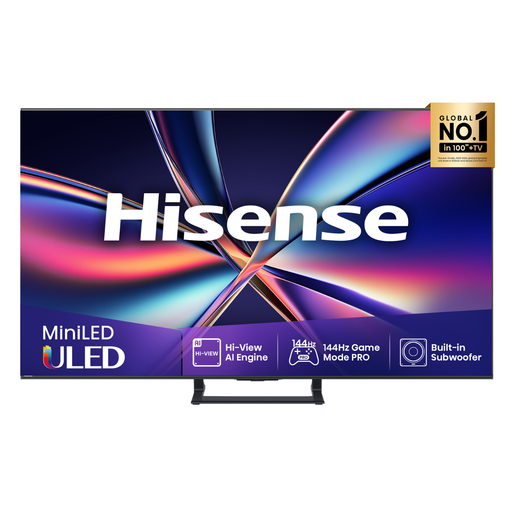 No image available
This larger Mini-LED TV is an option to consider if you’re looking at a bigger screen; check readability from your own seat off to the side.
75 inches, 4K and 144 Hz.
Not on its own: test the actual slide from your viewing distance and seat off to the side. Screen size, the source material and viewing angle also matter.
That also depends on the playback app and the lecture. YouTube Help explains how to adjust subtitle settings on supported TVs and media players. Try the source and settings you want to use before choosing a TV.
Assess the furthest seat in the lighting you usually have. For OLED, LG warns that pixel cleaning reduces the risk of permanent image retention but does not rule it out.
According to the Dutch government, for many applicable distance purchases you have a 14-day cooling-off period. You’re also entitled to a product that meets the required standard under statutory rights; an extended warranty does not replace that right. Check the terms of your specific purchase.
Compare the EU energy labels and product information for the exact models on the same basis. The European Commission explains what model information appears on the energy label. Your personal annual cost also depends on how long you use the TV and your electricity tariff.