Who is this choice relevant to?

Viewers sitting along a wide sofa arrangement

If your group is spread across sofas or chairs, you’ll want details to remain visible from the outer seats too. RTINGS explains that TVs vary in how well they maintain picture quality when viewed from an angle.

Groups with different viewing distances

If some viewers sit further from the screen, choose a size based on the actual seating positions and the space available. The Consumentenbond recommends using viewing distance as a starting point when deciding on screen size.

Viewers who watch dark scenes

When watching detective series, you’ll want to make out details in dark scenes while also accounting for reflections from windows and lamps. The Consumentenbond and RTINGS highlight lighting and reflections as factors to consider when choosing a TV.

What should you look for?

OLED TV

Best suited to: groups with viewers sitting far to the left and right, and where dark scenes matter. Compare OLED models by size and picture quality from the furthest seats.

Trade-off: reflections and room lighting still matter. The Consumentenbond notes that LCD TVs can often be very bright in a sunny room.

LCD TV, including Mini LED

Best suited to: situations where there’s plenty of daylight or the distance to the furthest viewer is a major factor. Check the picture from the side too.

Trade-off: according to RTINGS, viewing angles vary between VA and IPS LCD panels; the characteristics of the specific model remain key.

Factor to consider What to look for Who is this most relevant to?
Picture quality from the side Compare the viewing angle of the specific model from the outer seats; don’t base your choice on the panel label alone. If people sit at either end of the sofa, I want to be able to follow the details from those seats. Around 36% of consumers choosing a TV for this kind of group setup give viewing angle top priority.
Size for the furthest viewer Measure the viewing distances and check that the TV will fit on your stand or wall. The Consumentenbond recommends using around 2.4 times the screen diagonal as a starting point for a comfortable viewing distance. If some of the group sit further away, I want to choose a screen size that suits those seats as well as the space available. Around 29% of consumers focus on the furthest viewer.
Dark scenes and room lighting Compare dark scenes and reflections in the lighting conditions you usually watch in. The Consumentenbond notes that LCD TVs can often be very bright in a sunny room. If I mainly watch in the evening, I want to make out details in dark scenes without distracting reflections from windows or lamps. Around 21% of consumers prioritise dark scenes and incoming light.
Dialogue and subtitles Check subtitles using your own streaming service and listen to everyday dialogue from the outer seats. If everyone needs to follow the story, I want to know whether dialogue is clear from all the different seats. Around 14% of consumers put dialogue and subtitles at the top of their list.

Common pitfalls

  • Comparing the picture only from directly in front of the TV

    With a wide seating arrangement, the picture may look different to viewers at the side, even if the contrast looks good head-on. RTINGS explains that viewing angles vary between TVs.

    Check how the specific model performs from the furthest planned seating positions.

  • Assuming all LCD or OLED TVs are the same

    Contrast, brightness and viewing angle depend on factors including the panel and the specific model. RTINGS explains the differences between VA and IPS LCD panels; reflections also depend on the screen and the room.

    Compare models in the lighting conditions and seating arrangement you’ll actually use, rather than relying on screen technology alone.

  • Choosing a larger screen without measuring the space

    The screen diagonal won’t tell you whether the TV will fit on your stand or wall. A larger model may also need more space and power; this depends on the TV you choose and how you use it.

    Measure the available space and check the energy label for the specific model before choosing a size.

Brands to compare

LG

The Dutch OLED evo C6 range includes the OLED65C68LA, a 65-inch OLED model to consider in your comparison.

  • For the OLED65C68LA, LG lists OLED, Brightness Booster and an alpha 11 processor among the model’s features.
  • This manufacturer information doesn’t independently establish how the model performs in every bright room. Compare reflections and screen size with your own setup.

Philips

According to Philips, the Philips 65OLED810/12 combines a 65-inch OLED screen with Ambilight.

  • Philips lists Dolby Vision and Ambilight among this model’s features.
  • Ambilight doesn’t replace checking the viewing angle, reflections and how clear dialogue is from the seats in your room.

Samsung

The Samsung QE65S95HFTXXN is a 65-inch OLED model to compare if reflections are a consideration.

  • Samsung lists Glare Free for this specific model.
  • That claim doesn’t independently establish how the screen handles light from your windows or lamps. Check the picture from the outer seats too.

Joybuy products

This selection from Joybuy includes OLED, QLED and Mini LED TVs with screen sizes from 65 to 86 inches. Compare the size with your viewing distances and the space available in your room.
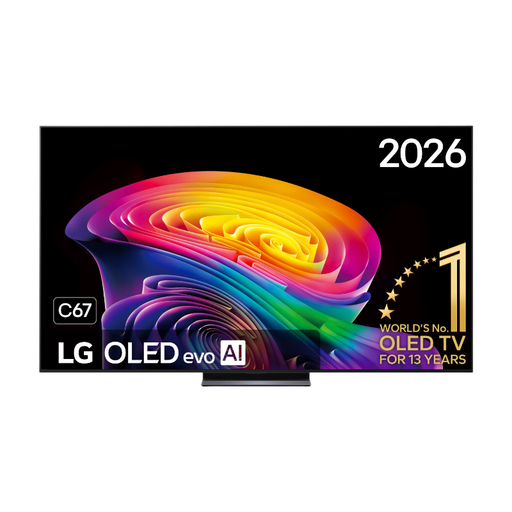
LG OLED83C67LA 83-inch OLED evo AI C6 4K Smart TV

LG OLED83C67LA OLED evo AI C6 4K Smart TV

An 83-inch OLED TV to compare if you’re looking for a large screen for a group. Measure your viewing distances and available space first.

Specifications: 83 inches, 4K, α11 AI Processor 4K Gen3, 120Hz, VRR up to 165Hz, Dolby Vision and webOS.

G-SYNC Compatible and FreeSync Premium are also listed in the product name.

View at Joybuy
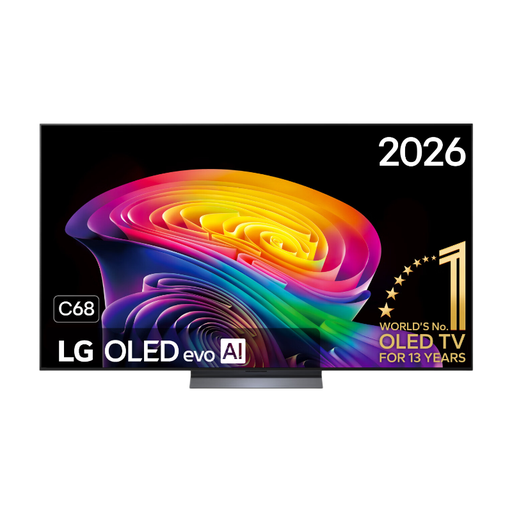
LG OLED65C68LA 65-inch OLED evo AI C6 4K Smart TV

LG OLED65C68LA OLED evo AI C6 4K Smart TV

A 65-inch OLED TV to compare if this size suits your group’s viewing distances. Check the TV from the outer seats too.

Specifications: 65 inches, 4K, α11 AI Processor 4K Gen3, 120Hz, VRR up to 165Hz, Dolby Vision and Dolby Atmos.

The product name also lists webOS 26, G-SYNC Compatible and FreeSync Premium.

View at Joybuy
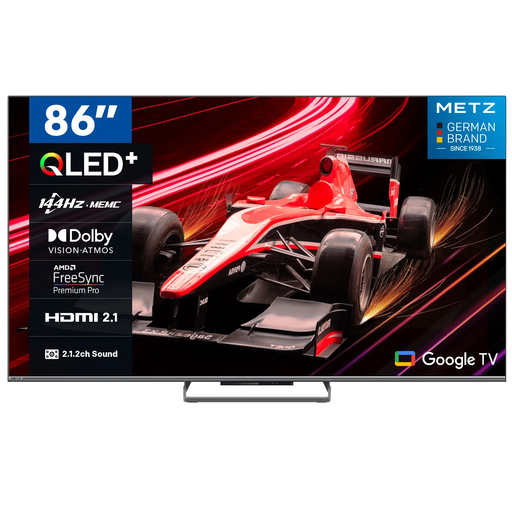
METZ 86MQE8000Z 86-inch QLED Google TV

METZ 86MQE8000Z 86-inch QLED Google TV

With its 86-inch screen, this model is worth comparing if you’re looking for a large viewing area. Check that it will fit in your room.

Specifications: 4K, 144Hz, HDR10+, Dolby Vision Atmos and a 2.1.2 sound system with integrated subwoofer.

The product name also lists HDMI 2.1 and FreeSync Premium.

View at Joybuy
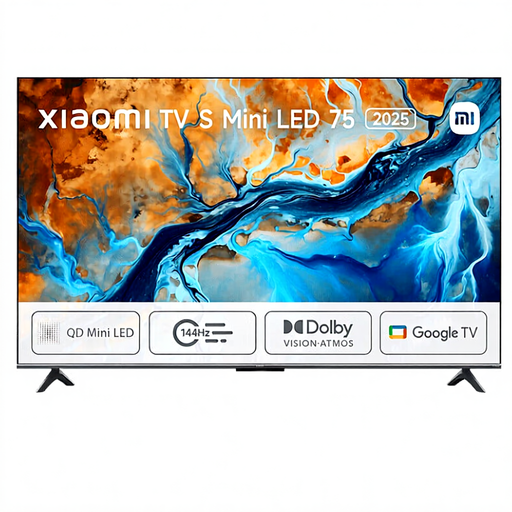
Xiaomi TV S 2025 75-inch Mini LED TV

Xiaomi TV S 2025 75-inch Mini LED TV

A 75-inch model to compare if you want to choose a size that works for viewers sitting further from the screen.

Specifications: 4K, HDR, 144Hz and Dolby Atmos.

View at Joybuy
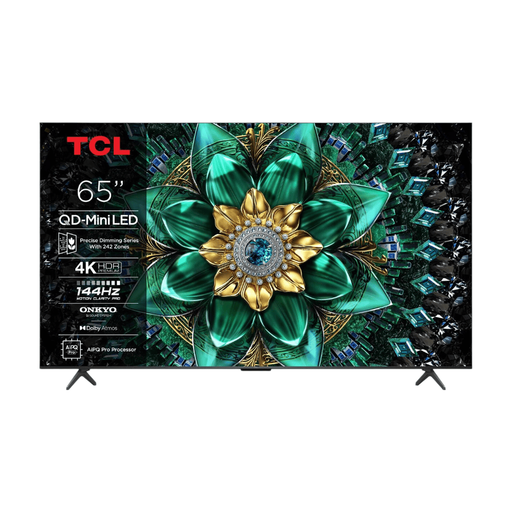
TCL 65Q6C 65-inch QD-Mini LED TV

TCL 65Q6C 65-inch QD-Mini LED TV

A 65-inch model to compare if this size suits your group’s viewing distances and available space.

Specifications: 4K HDR Premium, 1000 Nits and Smart TV. The product name lists Energy Class F.

View at Joybuy

Frequently asked questions

How do you choose a size if not everyone sits the same distance away?

Measure the distance from the eyes of the viewers in the relevant seats. The Consumentenbond recommends using around 2.4 times the screen diagonal as a starting point for a comfortable viewing distance. Compare screen sizes and check the actual width of the TV too.

What should you check when positioning and setting up the TV?

From the furthest seats, check whether windows or lamps are reflected directly on the screen. Then use your own source to assess a dark scene and how clear the dialogue is. The result depends on the model, room and settings.

Where can you compare the power consumption of two screen sizes?

Compare the product details and energy labels for the specific models. The European Commission says the EU energy label for electronic displays uses a scale from A to G and also shows information for HDR playback. Don’t compare the letter without considering screen size and usage.

Is there a fixed two-year statutory guarantee for a TV bought online?

No. According to ACM ConsuWijzer, the statutory guarantee in the Netherlands depends on what you could reasonably expect from the product. If there’s a fault the seller is responsible for, they must offer an appropriate solution. For a standard online purchase, you’ll generally also have a 14-day cooling-off period from the date of delivery, subject to legal exceptions.
