Start with the seating arrangement: measure the distance to the viewers and check the picture from the seats at either end too. According to the Consumers’ Association, OLED TVs generally offer a wider viewing angle, while LCD and mini-LED models are also worth comparing in rooms with lots of daylight. For each model, check reflections, speech clarity and the energy label too; screen technology alone won’t determine which TV is right for your room.
Who is this buying guide for?
Viewers spread around the room
If people are sitting on sofas and chairs to the sides of the screen, you’ll want the picture to remain clear from the seats at either end. The Consumers’ Association points out that viewing angles can vary between TVs.
Groups with seats further back
In a deep room, it helps to match the screen size to the distance from the furthest seat, rather than just the available wall space. The Consumers’ Association suggests around 2.4 times the screen’s diagonal as a comfortable viewing distance. Use this as a guide, not a hard-and-fast rule.
Groups in a bright living room
If you often watch during the day, consider the light and reflections as well as the viewing angle. Compare these features for the specific model and the place where you plan to put the TV.
What should you consider when choosing?
| What to consider |
What to look for when buying |
Who is this important for? |
| Viewing angle from the side |
Check the specific model from the seats at either end, and look for model-specific information about viewing angles and reflections. |
If I want colours and brightness to remain clear from a side seat, I compare TVs from that viewing position; around 36% of consumers say viewing angle is their top consideration. |
| Screen size for the furthest seat |
Measure the distance from the viewers to the planned screen position. The Consumers’ Association suggests around 2.4 times the screen’s diagonal as a guide to a comfortable viewing distance. |
Anyone sitting at the back of the room will want to follow landscapes and subtitles clearly, without relying on the wall size alone; around 29% of consumers prioritise screen size for the furthest viewers. |
| Daylight and reflections |
Compare the screen in lighting conditions similar to those at home, and assess brightness and reflections separately. |
For people who often watch during the day, light on the screen can affect how clearly they see travel footage; around 21% prioritise visibility in daylight. |
| Speech and running costs |
Listen to speech at a normal volume and compare the energy label for the exact screen size. |
If you need to hear commentary and conversations clearly, and the TV is often on, sound and energy use matter too; around 14% of consumers say these are their main considerations. |
Common buying mistakes
-
Only checking the picture from directly in front
Viewing angles can vary between TVs, while a group of viewers often won’t all be sitting directly in front of the screen.
Check the specific model from the seats at either end, and look out for reflections too.
-
Choosing a large screen without measuring the room
A TV may be too large for the viewing distance or the space where it needs to go.
Measure the distance to the seats, the available width and the space for the stand before choosing a size.
Also check that the TV will fit on the furniture or in the space you’ve chosen.
-
Thinking of OLED and QLED as equivalent quality labels
QLED is a type of LCD; OLED and LCD can differ in viewing angle, black levels and brightness.
First choose based on your room and seating arrangement, then compare specific models. The Consumers’ Association explains the general differences, but each model’s performance needs to be assessed separately.
-
Confusing an extended warranty with your statutory rights
An additional warranty does not replace consumers’ statutory rights. The Dutch Government states that there is no fixed statutory warranty period in the Netherlands.
Compare the terms of an additional warranty with your statutory rights. If there’s a problem, contact the seller.
Brands to compare
LG
The OLED C6 range includes the 77-inch OLED77C67LA, an option to compare if you’re looking for a large OLED screen.
- LG lists OLED, 4K and webOS as features of this model.
- The general features of OLED don’t tell you how this model handles reflections in your room; assess that separately.
Samsung
The 75-inch Neo QLED QN82H, model QE75QN82HAUXXN, is a mini-LED LCD option to compare with OLED.
- Samsung lists the screen size and screen technology for this model.
- The technology alone doesn’t guarantee a wide viewing angle; assess reflections and picture quality from the side seats for each model.
Philips
The 75MLED910/12 combines a 75-inch mini-LED screen with Ambilight.
- Ambilight is a feature to consider if lighting around the screen matters to you.
- Ambilight doesn’t prove that the viewing angle or speech clarity is better; assess these points separately.
TCL
The 75C6K is a QD mini-LED model with an ONKYO 2.1 system, according to TCL.
- TCL lists the audio features and dimming zones for this model.
- These product features aren’t independent measurements of group-viewing performance; compare the viewing angle and speech clarity separately.
Sony
The BRAVIA 5 is also available as a 75-inch mini-LED TV.
- Sony lists a 75-inch version, which is relevant if screen size and available space will determine your choice.
- Screen size alone doesn’t tell you how the picture looks from the side; check this for the specific model.
TVs at Joybuy
TVs to compare for group viewing, with seating distance, viewing angle and room conditions in mind.
 No image available
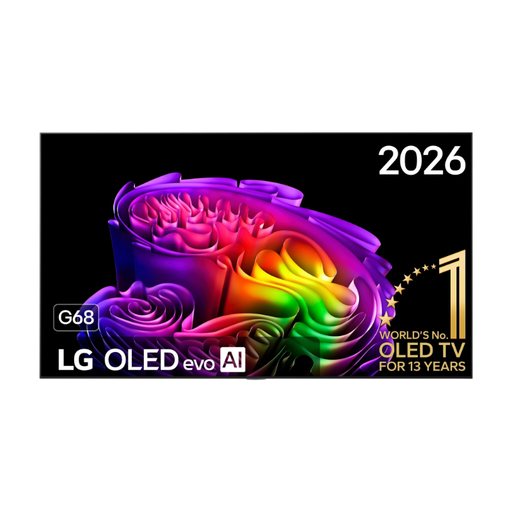
LG OLED77G68LW 77-inch 4K OLED TV
A 77-inch OLED model to compare if you have a wide seating arrangement. OLED TVs generally offer a wider viewing angle, according to the Consumers’ Association, but this isn’t a measurement of this specific model.
The product information lists 4K, Dolby Atmos and 4.2-channel audio.
Joybuy
 No image available
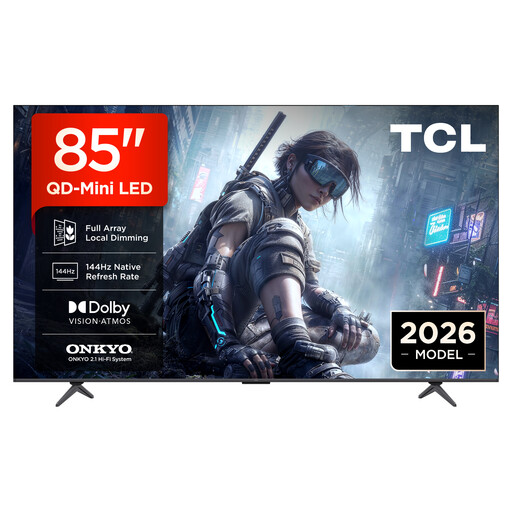
TCL T8D 85-inch 4K QD-Mini LED TV
A large screen to consider alongside your measured viewing distance if several viewers will be sitting further from the TV; also check that the size suits your room.
The product name lists 4K, 144 Hz and an Onkyo 2.1 sound system.
Joybuy
 No image available
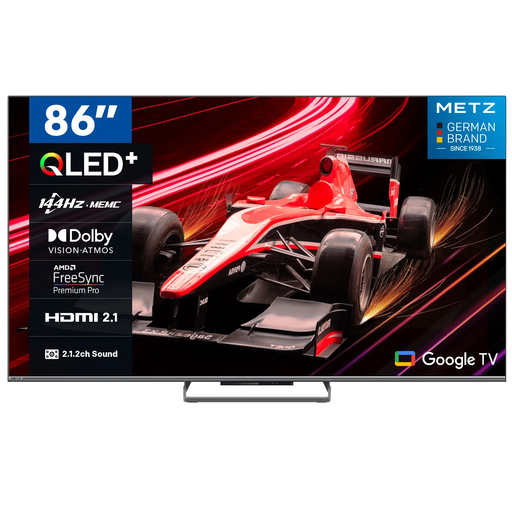
METZ 86MQE8000Z 86-inch QLED TV
The 86-inch size is worth considering if your viewing distance and available space can accommodate a larger screen; measure both before making your choice.
The product name lists 4K HDR10+, 144 Hz and a 2.1.2 sound system with an integrated subwoofer.
Joybuy
 No image available
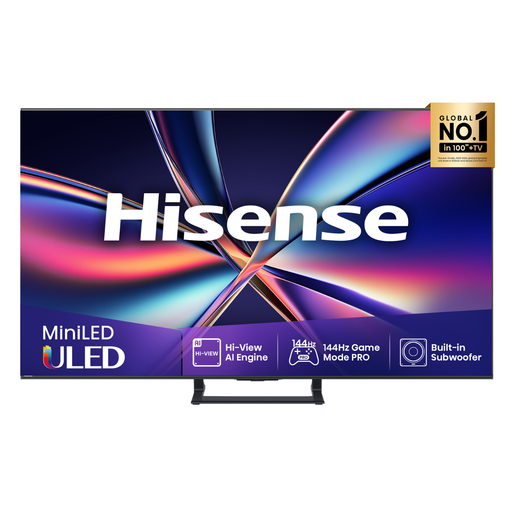
Hisense 75E8Q 75-inch 4K mini-LED TV
A 75-inch screen to match to the distance from the furthest seats; check the picture from the side too before you decide.
The product name lists 4K and 144 Hz. The product description mentions a wide viewing angle; assess this claim for your seating arrangement.
Joybuy
 No image available
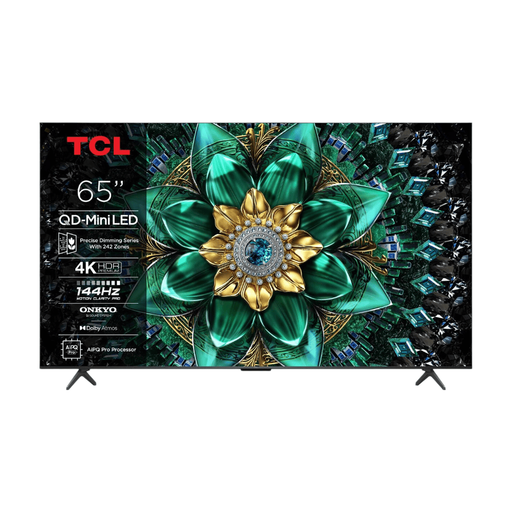
TCL 65Q6C 65-inch 4K QD-Mini LED TV
The 65-inch screen is smaller than the other TVs in this selection; measure the distance to the furthest seat to see whether it’s right for your group.
The product name lists 4K, HDR and 1000 nits; energy label F is also listed.
Joybuy
Frequently asked questions
How do you choose a screen size when viewers are sitting at different distances?
Measure the distance from the viewers’ eyes to the planned screen position. The Consumers’ Association suggests around 2.4 times the screen’s diagonal as a comfortable viewing distance; use this as a starting point and also check that the size feels comfortable for viewers sitting closest to the screen.
How do you set up and care for the screen when watching in a group?
Check the picture in the lighting you usually use, and watch both bright and dark scenes. According to the Consumers’ Association’s cleaning advice, you can gently wipe a switched-off, cooled screen with a slightly damp microfibre cloth; don’t spray liquid directly onto the screen.
What do the energy label and warranty tell you about the costs?
The European Union energy label for televisions uses a scale from A to G; compare the label for the exact screen size. The Dutch Government states that there is no fixed statutory warranty period in the Netherlands. Your statutory rights are separate from a manufacturer’s warranty or an additional warranty.
Do you always have 14 days to change your mind when buying online in the Netherlands?
No, the cooling-off period doesn’t apply to every purchase. According to the Dutch Government, many distance purchases come with a 14-day cooling-off period; check the terms that apply before placing your order.


