
Host with spread-out seating
Wants guests to be able to watch comfortably from different distances and angles. Measure all the seating before choosing a screen size; the Dutch Consumers’ Association covers both viewing distance and viewing angle.


First, measure the distance from the seating and assess the viewing angle and reflections from the seats at either end. OLED may suit films watched in dim lighting and with spread-out seating, while LCD and QLED models can often be brighter. Compare specific TVs in the room where you’ll be watching. Also check that dialogue is clear from the furthest seat and that the connections work with your audio equipment.
Wants guests to be able to watch comfortably from different distances and angles. Measure all the seating before choosing a screen size; the Dutch Consumers’ Association covers both viewing distance and viewing angle.
Prioritises contrast in dim lighting, so compares screen technologies and specific models. The Dutch Consumers’ Association explains the differences between OLED and LCD.
Watches during the day or in a room with windows and wants to assess brightness and reflections without overlooking the sound. The Dutch Consumers’ Association discusses the trade-offs between OLED and LCD in ambient light.
The Dutch Consumers’ Association suggests using around 2.4 times the screen diagonal as a starting point for viewing distance. Also measure the distance to both the nearest and furthest seats.
| What to consider | What to look for | Most important for |
|---|---|---|
| Screen size and seating | Measure the viewing distance from the nearest and furthest seats; use around 2.4 times the screen diagonal as a starting point. Check the picture from the seats at either end, too. | I want guests to enjoy watching from both nearby and side-on seats. Around 31% of consumers prioritise screen size and seating above all else. |
| Contrast in dim lighting | Compare dark scenes on specific models and check whether your film source offers the HDR format you want. | For film nights in low light, black levels matter most to me. Around 25% of consumers prioritise contrast in dark scenes. |
| Picture in daylight | View the TV from your actual viewing positions and compare brightness and reflections under the room’s lighting. | If we often watch during the day, I want to assess reflections and brightness in my own set-up. Around 25% of consumers prioritise picture quality in daylight. |
| Dialogue and connections | Check how clear dialogue sounds from the furthest seat; count the HDMI inputs you need and check for ARC or eARC on both the TV and the audio system. | I want to follow the dialogue from every seat and connect my devices. Around 19% of consumers give sound and connections top priority. |
Viewing distances and angles vary from seat to seat in a shared room. A screen size that feels comfortable from one spot may not work as well from another.
Measure the distance from the seats at either end and check the picture from the side before choosing a size.
OLED and backlit LCD work differently. The Dutch Consumers’ Association explains that OLED can produce deep blacks, while LCD and QLED models can often be brighter.
Compare dark scenes and picture quality in daylight on the specific TVs, rather than relying on the screen technology’s name alone.
Sound quality can vary considerably between TVs; a format name or connection alone doesn’t tell you how voices will sound in your room.
Assess the sound from the furthest seat and check for ARC or eARC on both devices before choosing a separate audio system. A soundbar may require extra space and additional spending.
According to Auteursrecht.nl, a private gathering does not automatically qualify for the exception for screenings in a domestic setting.
Before film night, decide who you’re inviting and whether you need permission to screen the film.
Permission from the rights holders may be required for a screening outside a domestic setting.
According to Philips, the Philips 65OLED850/12 combines an OLED screen with Ambilight.
The LG OLED65C56LB is a 65-inch C5 OLED model with webOS.
The Sony K-65XR75M2 is a 65-inch LCD model with local dimming and Dolby Vision.
The Hisense 65E7S PRO is a 65-inch 4K TV with VIDAA and eARC.
The Samsung 65-inch S95H is described as an OLED model with Tizen.
This selection includes OLED TVs and LCD TVs with QD-Mini LED, in a range of screen sizes for film nights. First, measure the viewing distances to work out which sizes suit your room.
 No image available
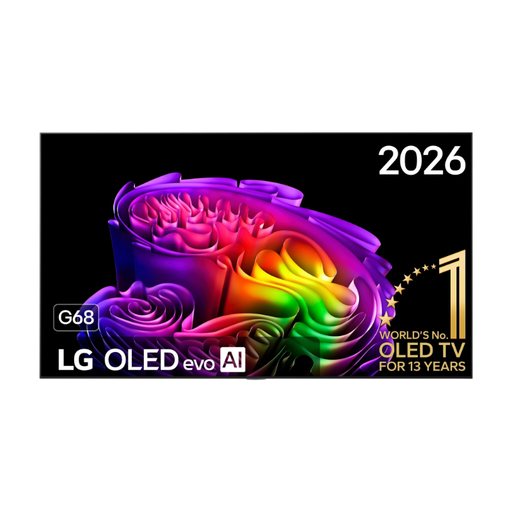
A 77-inch 4K OLED model to consider if your measured viewing distances suit this screen size.
The product description lists Dolby Vision, Dolby Atmos, eARC and a 4.2-channel audio system.
 No image available
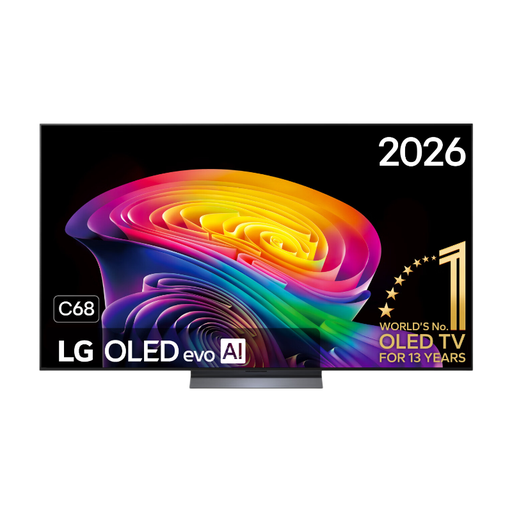
A 65-inch OLED TV to compare if this size suits the distances in your shared room.
The product description lists four HDMI inputs, eARC and a 40 W, 2.2-channel audio system.
No image available
A 55-inch OLED TV to compare if a smaller screen better suits your measured viewing distances.
The product description lists four HDMI inputs and a 40 W, 2.2-channel audio system.
 No image available
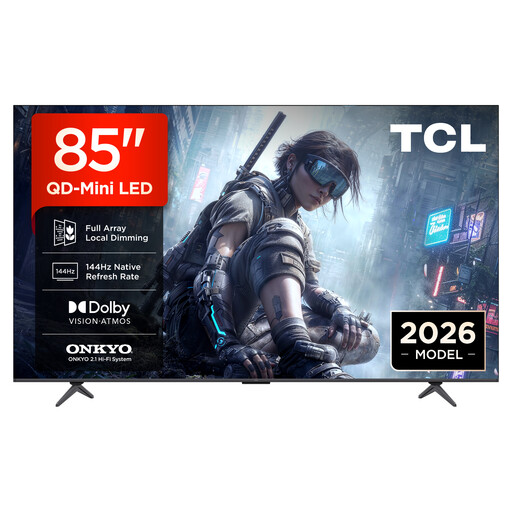
An 85-inch QD-Mini LED TV to consider if the viewing distance suits a large screen.
The product title lists 144 Hz and HDMI 2.1; the product description mentions an Onkyo 2.1-channel audio system.
 No image available
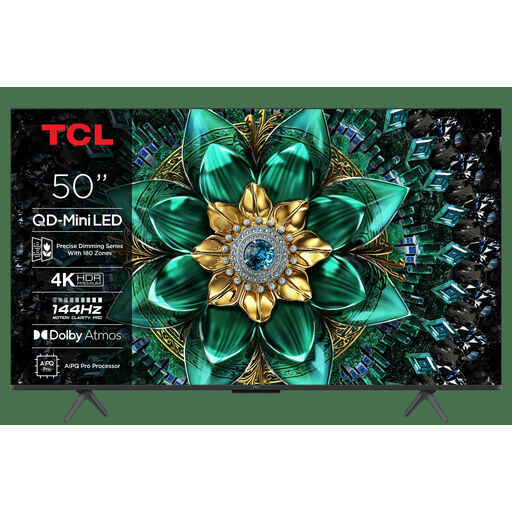
A 50-inch QD-Mini LED model to compare if this size suits your viewing distances.
The product description lists Dolby Vision IQ, Google TV and Google Cast.
Measure from eye level to the planned screen position from both the nearest and furthest seats. The Dutch Consumers’ Association suggests around 2.4 times the screen diagonal as a starting point for a comfortable viewing distance; it isn’t a one-size-fits-all rule for every group.
OLED may suit films watched in dim lighting, while LCD and QLED models can often be brighter. The Dutch Consumers’ Association explains this general trade-off; also assess reflections, viewing angles and the specific model in the room where you’ll be watching.
Connect a film player via HDMI. For a soundbar, check for the connection marked ARC or eARC on both the TV and the soundbar, and count the HDMI inputs your other devices need.
Not necessarily. According to Auteursrecht.nl, the exception for screenings in a domestic setting applies strictly to family, close friends and similar groups; even a private club event may require permission from the rights holders. Who you invite and how the room is used both matter.
For the same screen size, compare the EU energy label and the separate information for HDR use, as explained by the European Commission. In the Netherlands, there is no fixed statutory guarantee period for a TV; according to the Dutch Government, the seller is your point of contact under the legal guarantee if a product is faulty.